Getting your Los Angeles roof ready for Santa Ana winds
Santa Ana winds don't create weak spots on a roof; they find the ones already there. A little work in the fall prevents most wind calls. Here is what to check, fix and do.

By Sadie Yancey, Roofing Guides Editor · Updated September 2026
Santa Ana winds can reach 60 to 80 mph through the passes, with canyon gusts past 100, and they lift whatever is already loose. Before the season, have loose tiles, lifted shingles and ridge caps refastened, trim branches over the roof, clear gutters and valleys, and check vents and flashing.
Why Santa Anas are hard on roofs
Santa Ana winds push through the mountain passes into the LA basin at 60 to 80 mph, with canyon gusts over 100 mph. They are dry as well as strong, so they bake sealants and roofing materials while they pull on every edge.
When a strong event arrives, the damage follows the weak spots. One Santa Ana event with gusts over 90 mph swept from the San Gabriel foothills into Pasadena and Altadena, stripping asphalt shingles and tearing sections of tile roofing. The roofs that failed were mostly the ones with something already loose.
What you can check from the ground
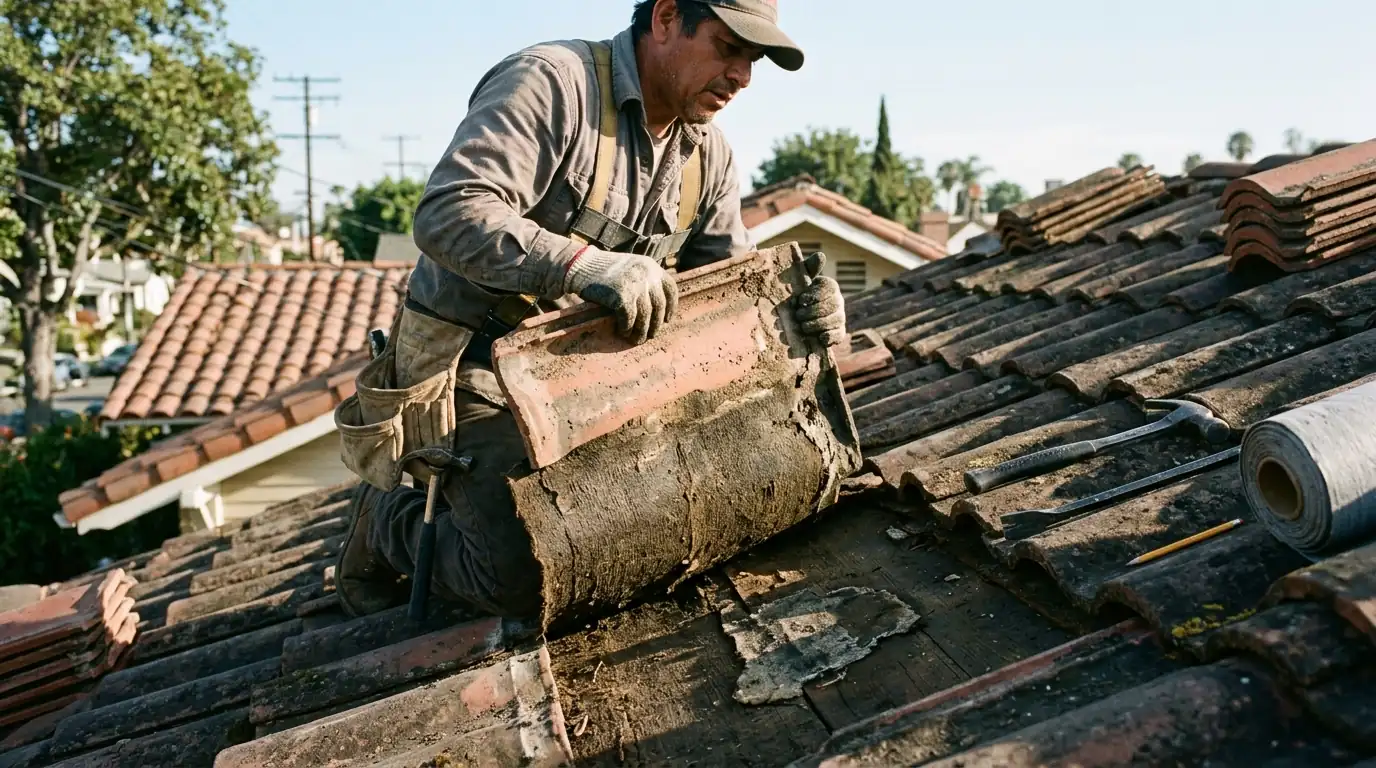
You don't need to climb up to spot trouble. Walk around the house with binoculars or a phone camera zoomed in, and look for:
- Shingles that are lifted, curled or missing tabs
- Tiles out of line, cracked or missing along edges
- Ridge and hip caps with gaps or crumbling mortar
- Bent flashing at walls, chimneys or vents
- Branches touching or hanging over the roof
- Gutters full of leaves, palm fronds or granules
What a roofer should do before the season
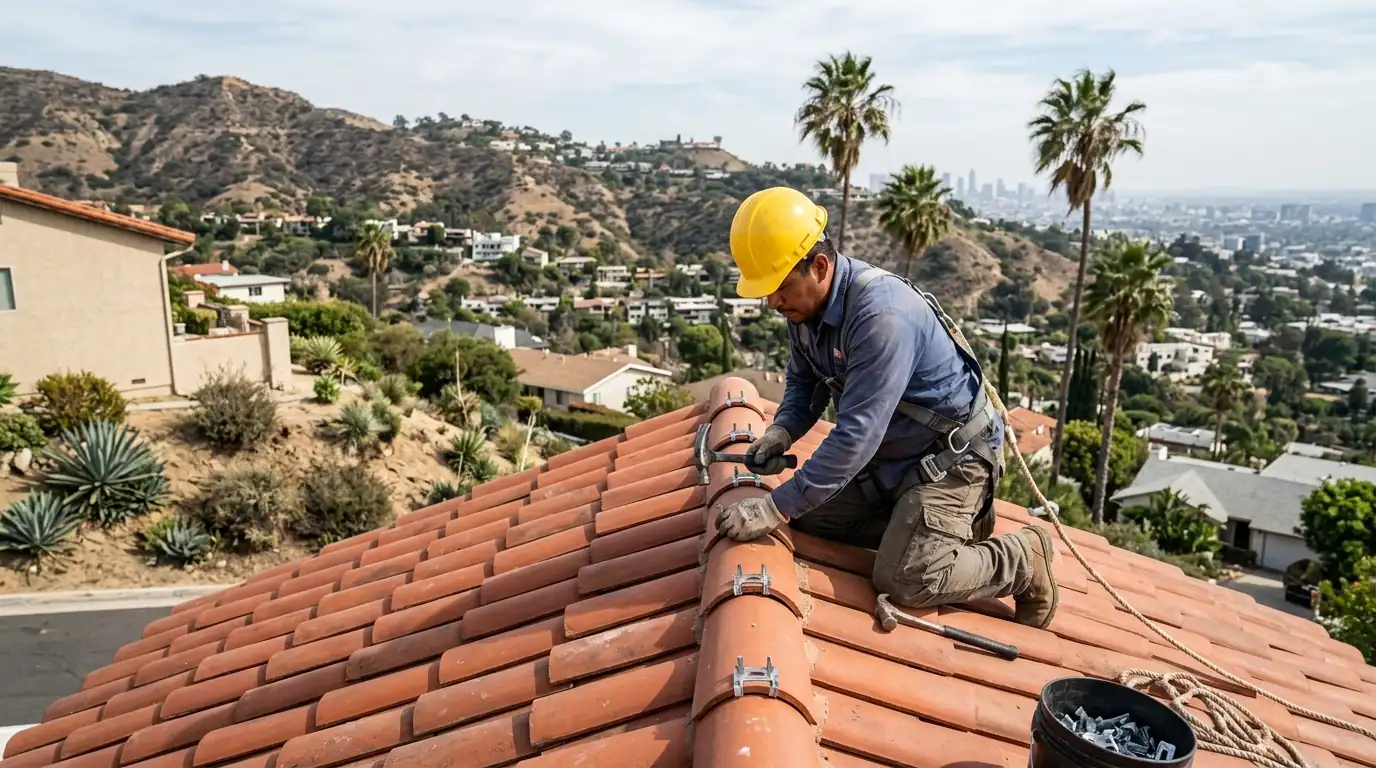
A pre-season visit refastens what the wind will look for: ridge and rake tiles get clips or foam adhesive, lifted shingle tabs are hand-sealed, slipped tiles are reset, and loose flashing and vent caps are secured. Solar panel mounts and rails get a look too. It is essentially fall roof maintenance with a wind focus.
This is small, inexpensive work compared with a wind repair, and it's easiest to schedule before the season rather than in the week after a storm, when every roofer's phone is ringing.
Trees, debris and fire
Trim branches that overhang the roof; in wind they scrape shingles and snap onto tiles. Clear gutters, valleys and flat-roof drains so the first rain after the wind season can drain.
In fire zones, dry debris on and around the roof is also fuel for wind-blown embers, and the attic vents are an entry point. Ember-resistant vents and clean gutters are part of Santa Ana prep in the hills, as the fire zone guide explains.

Want the roof checked before the wind?
Call and we will refasten the loose pieces now, before the season starts.
During a wind event
Stay off the roof and away from windows on the windward side if large branches are nearby. Bring in or tie down patio furniture and anything that could become a projectile. If you hear tiles or shingles moving, note where; it helps the roofer find them later.
If a limb comes through the roof or water starts coming in, protect the room, move away from the damaged area and call for an emergency cover once it's safe.
After the wind: checking for damage
Walk the property when the wind drops. Look for shingles or tile pieces in the yard, a bare ridge, bent flashing, and granules piled at downspouts. Photograph everything with the date for insurance.
If you find damage, have it covered before the next rain. Storm and wind damage repair starts with a proper tarp and ends with matched materials, and the first-hour leak guide covers what to do if water is already inside.
Solar panels and wind
Panels add surface area to the roof, and wind pulls on their rails and mounts. Before the season, check that rails are tight, that clips holding panels are in place, and that nothing has worked loose at the mounts where they pass through the roofing.
If a mount has been leaking, fix it before the wind season rather than after. Lifting only the affected panels covers lifting only the affected panels to reflash a mount without taking down the array.
Santa Ana wind questions
Quick answers to the questions this topic raises most.
Other ways to reach usSanta Ana winds are most common from fall into winter, so early fall is the time to prepare.
Edges and ridges: rake tiles, ridge caps and the first shingle courses at the eave.
It means working on the roof, which is risky. A roofer hand-seals them with the right product.
Yes. Branches over the roof scrape shingles and break tiles when the wind moves them.
Many policies cover sudden wind damage, but terms vary. Photos taken right after help.
Protect the room and call; emergency covers are done as soon as it's safe to go up.
More guides for Los Angeles roofs
Roof Leak in Los Angeles: What to Do First
A first-hour plan: protect the room, find the source, cover the roof safely.


Signs a roof needs replacing in Los Angeles
How to tell a roof that needs repair from one that is done.