Cool roofs in Los Angeles: when Title 24 applies to your re‑roof
Cool-roof rules come up on almost every Los Angeles re-roof, and they are simpler than they sound. Here is when they apply, what a rated product is, and what it means for cost and color.
By Sadie Yancey, Roofing Guides Editor · Updated September 2026
In Los Angeles, a residential re-roof that replaces more than half of the roof needs a Cool Roof Rating Council certified product, and California's Title 24 energy code calls for cool roofing across the LA climate zones 8 through 10. Rated materials can add 10-15% to material cost, and they come in ordinary colors.
What makes a roof cool
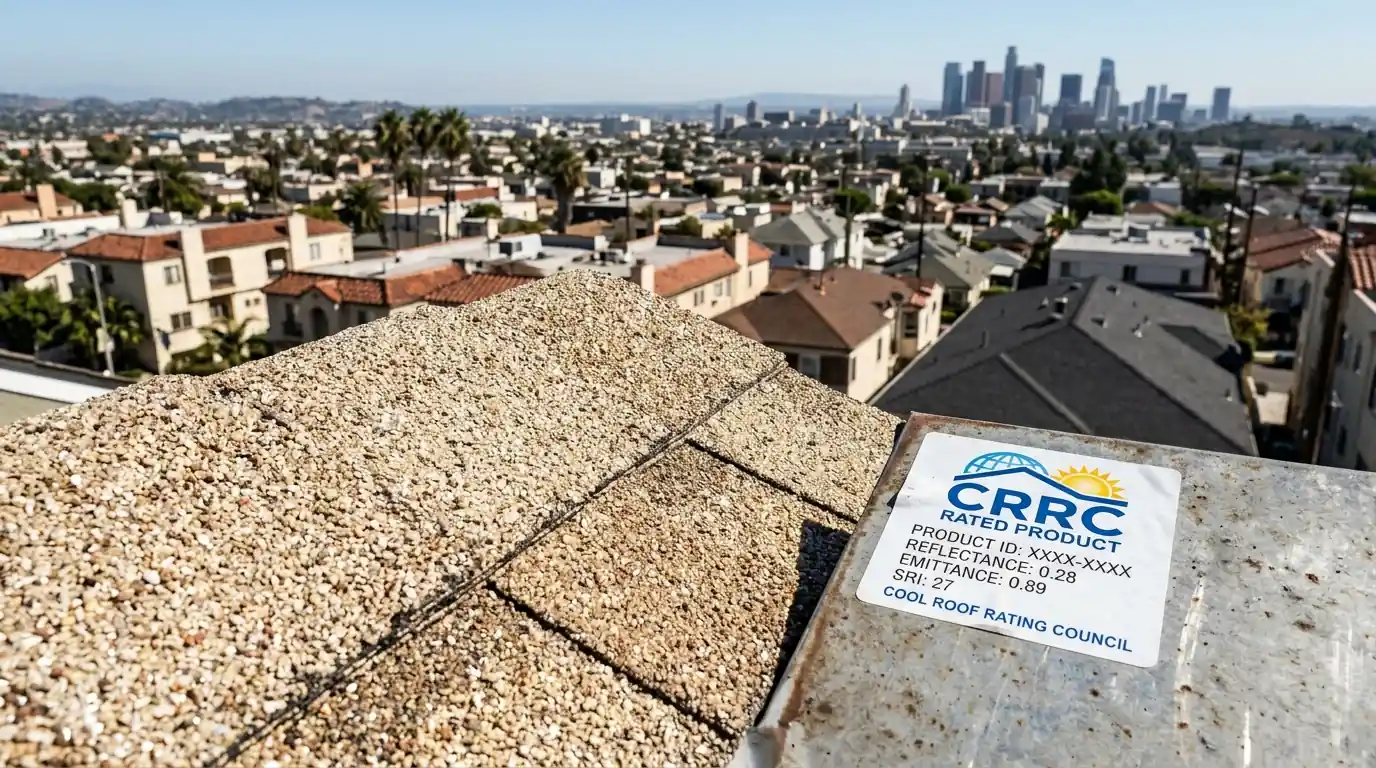
A cool roof reflects more of the sun's energy and releases the heat it does absorb more readily than a standard roof. Two numbers describe that: solar reflectance, how much sunlight bounces off, and thermal emittance, how well the surface sheds heat.
The Cool Roof Rating Council, or CRRC, tests roofing products and lists their ratings. When a rule calls for a cool roof, it means a product with a CRRC listing that meets the required values, not just a light color chosen by eye.
When the rule applies to your roof
In the City of Los Angeles, a residential replacement of more than half of the roof needs a CRRC-certified cool roof product, and California's Title 24 energy code requires cool roofing materials in the LA climate zones 8 through 10. Small repairs don't trigger the rule; a full or majority re-roof does.
The exact values depend on roof slope and product type, and the permit review is where it gets confirmed. A good roofer checks the requirement for your address before ordering, not after the inspector asks.
Cool roofs don't have to be white
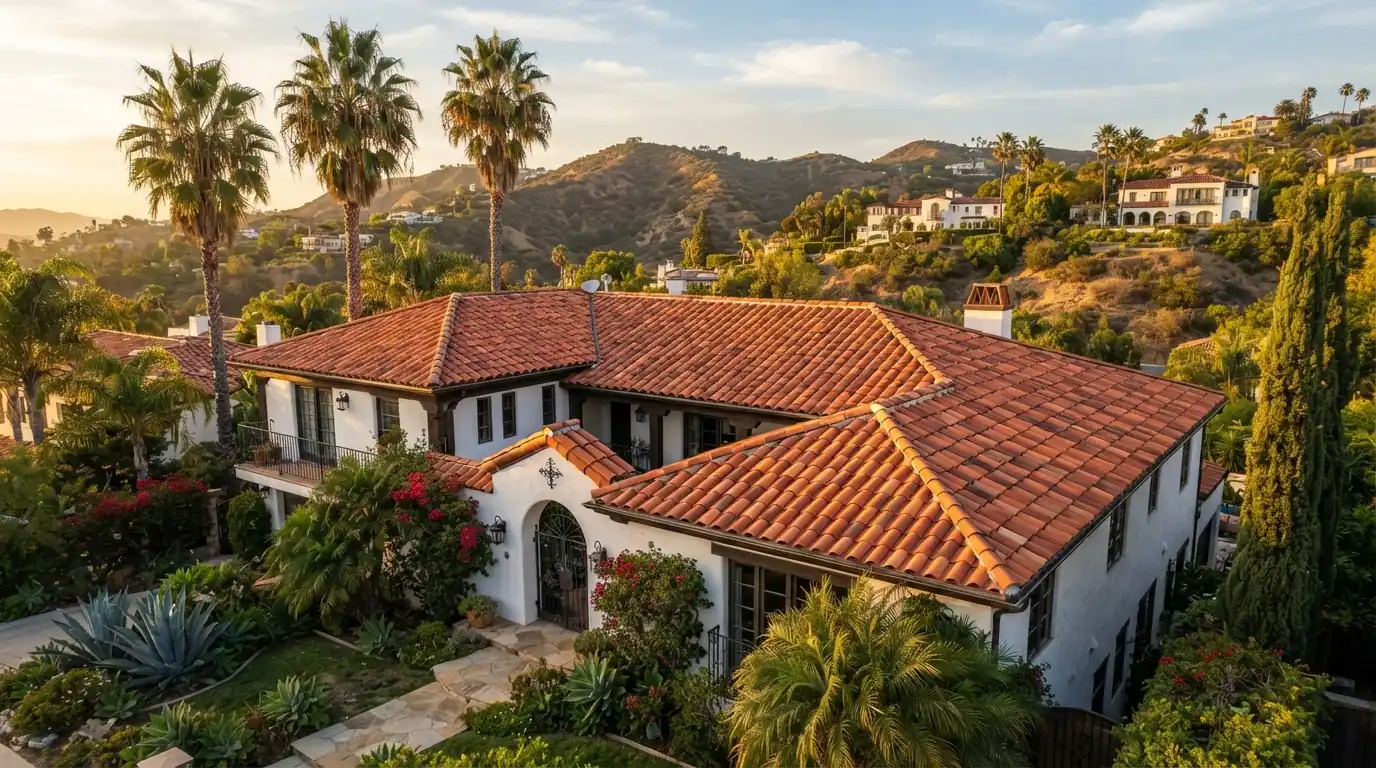
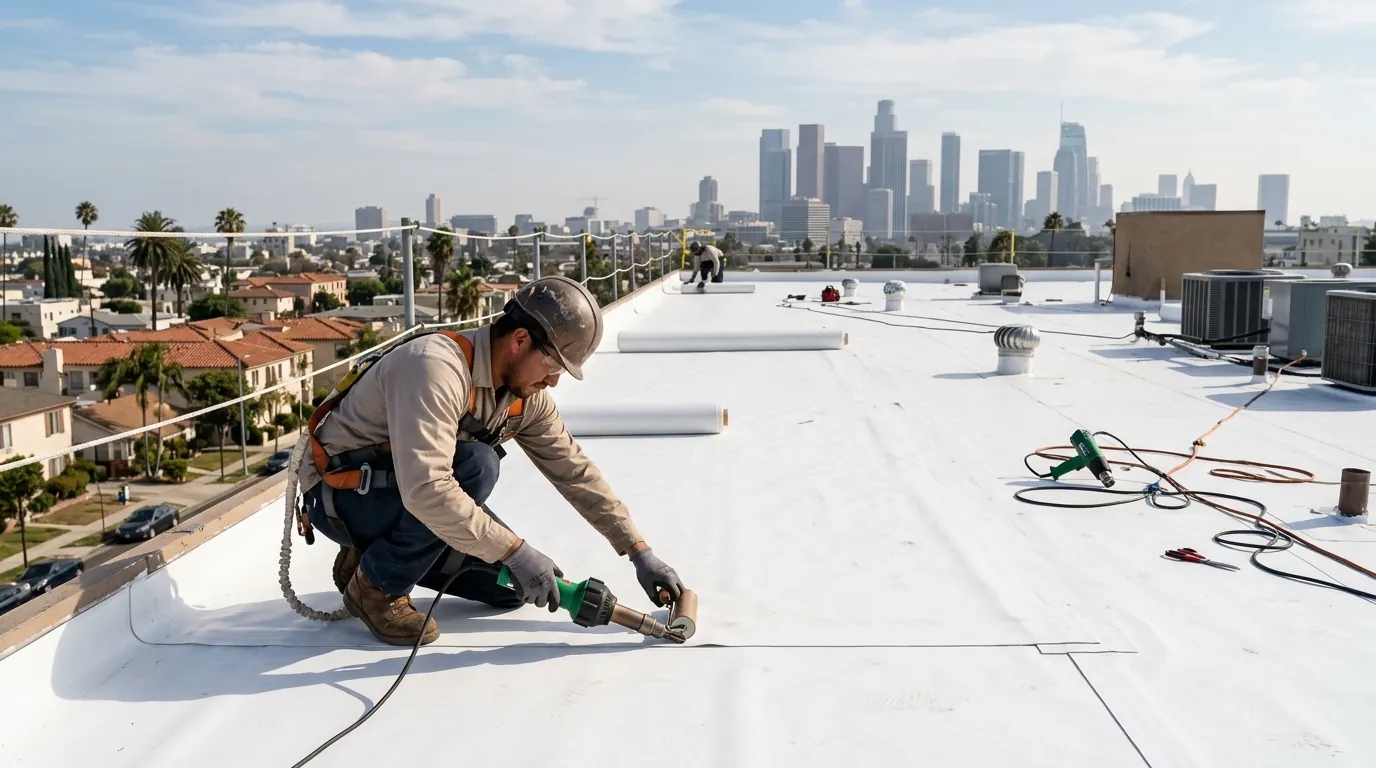
On flat roofs, cool usually means white: a white TPO membrane, a reflective cap sheet or a white coating. On sloped roofs, manufacturers make cool-rated shingles and tiles in the grays, tans, browns and terracottas people actually want, using reflective granules and pigments.
That means the rule rarely forces a look you wouldn't choose. It does narrow the product list, which is why the rating sheet belongs in the scope. For flat roofs, a rated roof coating is one of the simplest ways to reach the numbers.
What it costs
Cool-roof rated materials can add 10-15% to material cost compared with standard products. On a shingle roof that premium applies to the shingles, not to the labor, tear-off or deck work, so the effect on the total is smaller than the percentage suggests.
For a sense of the whole job, our roof replacement cost guide lists published ranges by roof type.
Not sure if the rule applies to you?
Call and we will check your roof and address, then name the rated product in the scope.
Does a cool roof actually help in Los Angeles?
It lowers the roof surface temperature and the heat reaching the attic or the rooms below. The difference is most noticeable on flat roofs over living space, like a bedroom addition or a top-floor apartment, where there is no attic to buffer the heat.
On sloped roofs, a cool roof works best alongside good attic ventilation, which moves the heat that does get through out of the attic before it reaches the ceiling.
How to make sure your roof qualifies
Ask for the product name and its CRRC listing in the written scope. Keep the rating sheet with your records; it's what the inspector checks, and it helps when you sell.
If the job is borderline, such as a large repair close to half the roof, ask how it will be permitted. Where the rule applies, the roofer should handle it as part of the job, as we do on every shingle re-roof.
Cool roofs on older homes
Older Los Angeles houses often have thin attic insulation, blocked soffit vents and ducts running through a hot attic. A cool roof reduces the heat entering that attic, which makes every one of those weaknesses less painful in August.
It doesn't replace insulation or ventilation, and it doesn't fix ducts. If your upstairs rooms are hard to cool, a re-roof is a good moment to open the soffits, add ridge ventilation and ask whether the insulation needs attention, since the roof is already open.
Cool roof questions
Quick answers to the questions this topic raises most.
Other ways to reach usIf it replaces more than half of the roof in Los Angeles, a CRRC-certified cool product is generally required.
No. Cool-rated shingles and tiles come in grays, tans, browns and terracottas.
Rated materials can add 10-15% to material cost; labor is unchanged.
Small repairs don't. Full or majority replacements do.
The Cool Roof Rating Council's listing of a product's tested reflectance and emittance values.
Usually yes, since flat roofs over living space pass heat straight into the rooms below.
More guides for Los Angeles roofs
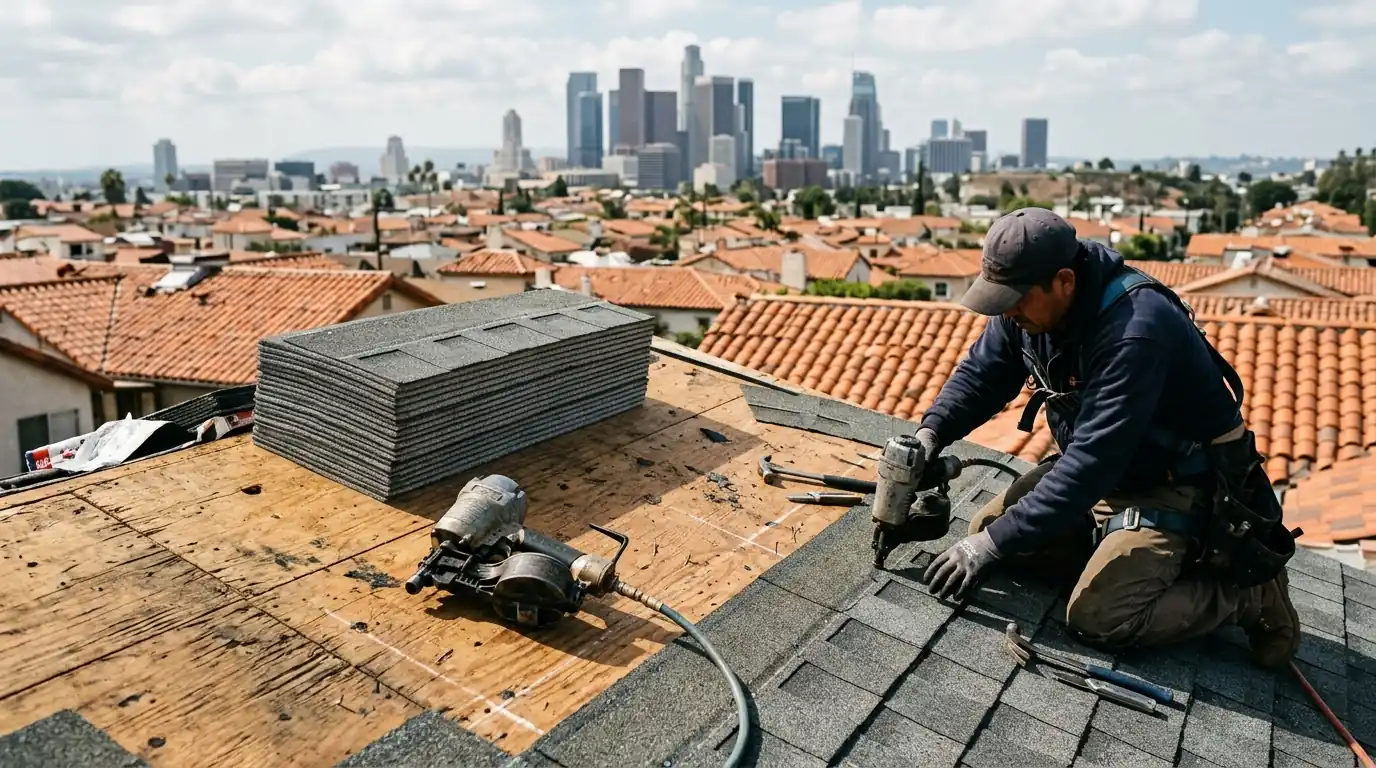
Roof replacement costs in LA, explained
Published 2026 ranges by roof type, and the line items that move a quote.
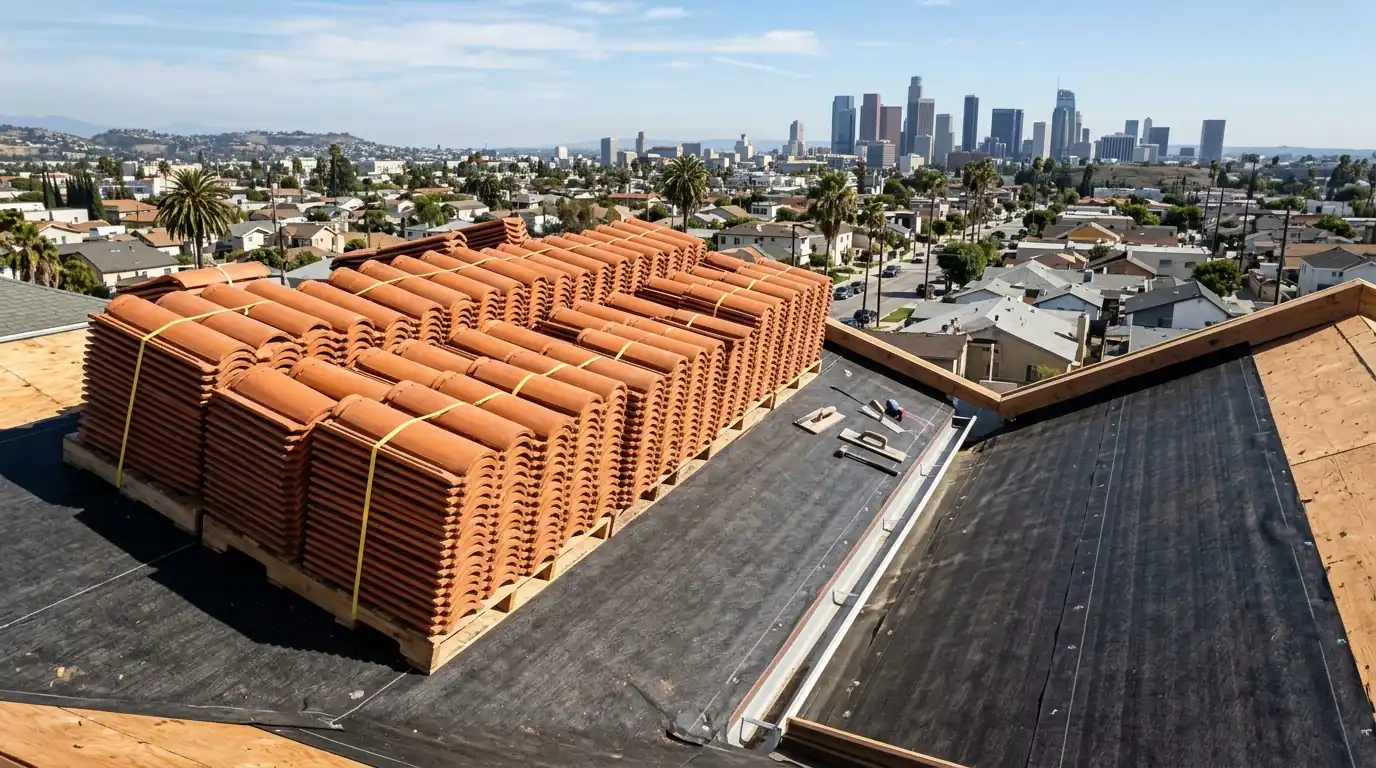
Tile vs Shingle Roofs for Los Angeles Homes
Cost, weight, lifespan and style, side by side for LA homes.