Attic ventilation for Los Angeles roofs that bake all summer
A hot attic cooks the roof from underneath, strains the AC and traps damp air in winter. We balance intake at the eaves with exhaust at the ridge, and use ember-resistant vents wherever fire rules call for them.
- Answered 24/7
- Balanced intake and exhaust
- Ember-resistant vents
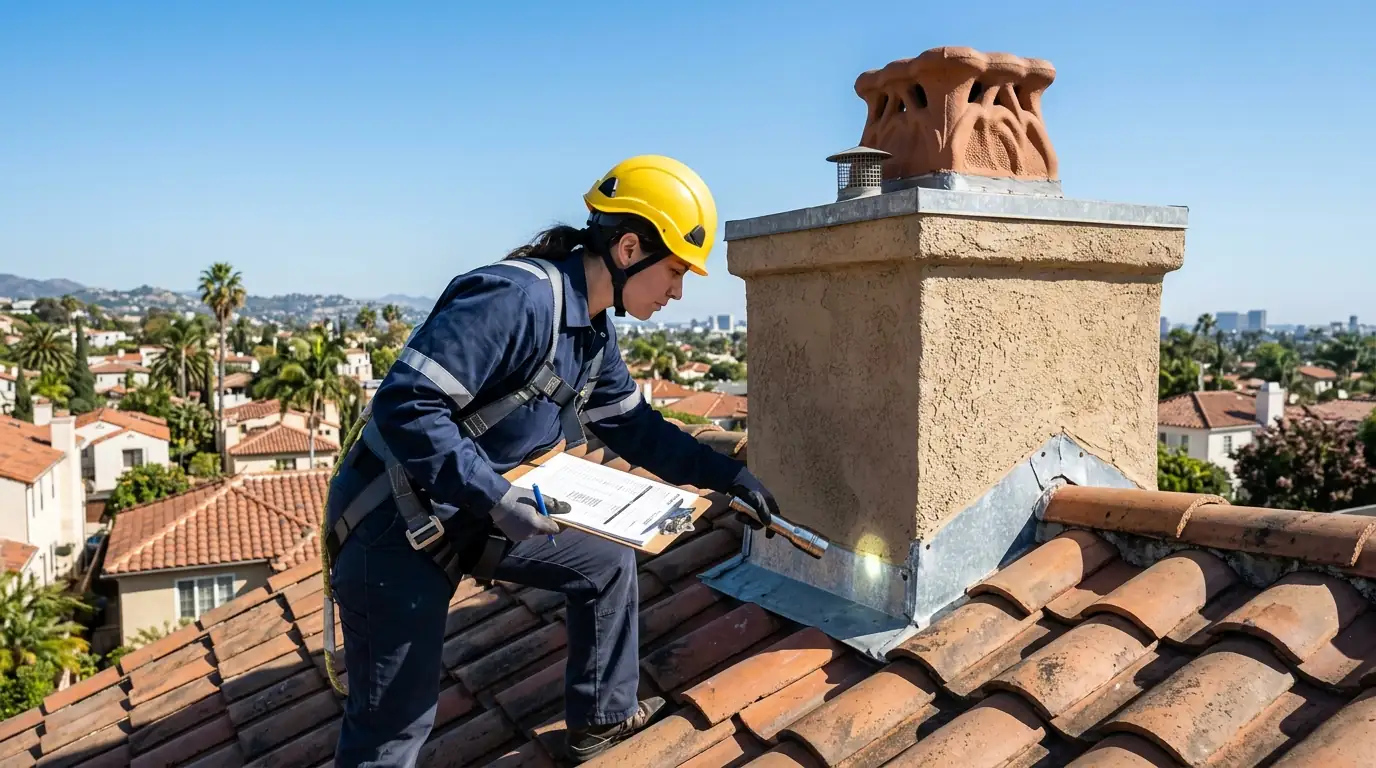
Attic ventilation in Los Angeles works on one rule: air comes in low at the eaves and leaves high at the ridge, in roughly equal amounts. We measure what your attic has, open blocked soffits, add ridge vents or solar fans, and fit ember-resistant vents in fire zones.
Updated September 2026
A trapped-heat attic ages the roof from below
On a summer afternoon an unvented attic runs far hotter than the air outside. That heat bakes the underside of the deck and shingles, softens sealants and presses on the ceiling below, so the AC runs longer. In cooler months the same stale air lets moisture from the house condense on nails and sheathing.
The usual culprits are simple: soffit vents painted shut or buried in insulation, one gable vent doing the work of six, or a ridge with no exhaust. Ventilation is cheapest during a re-roof, when the ridge is open anyway; if one is coming, see what a full replacement includes.
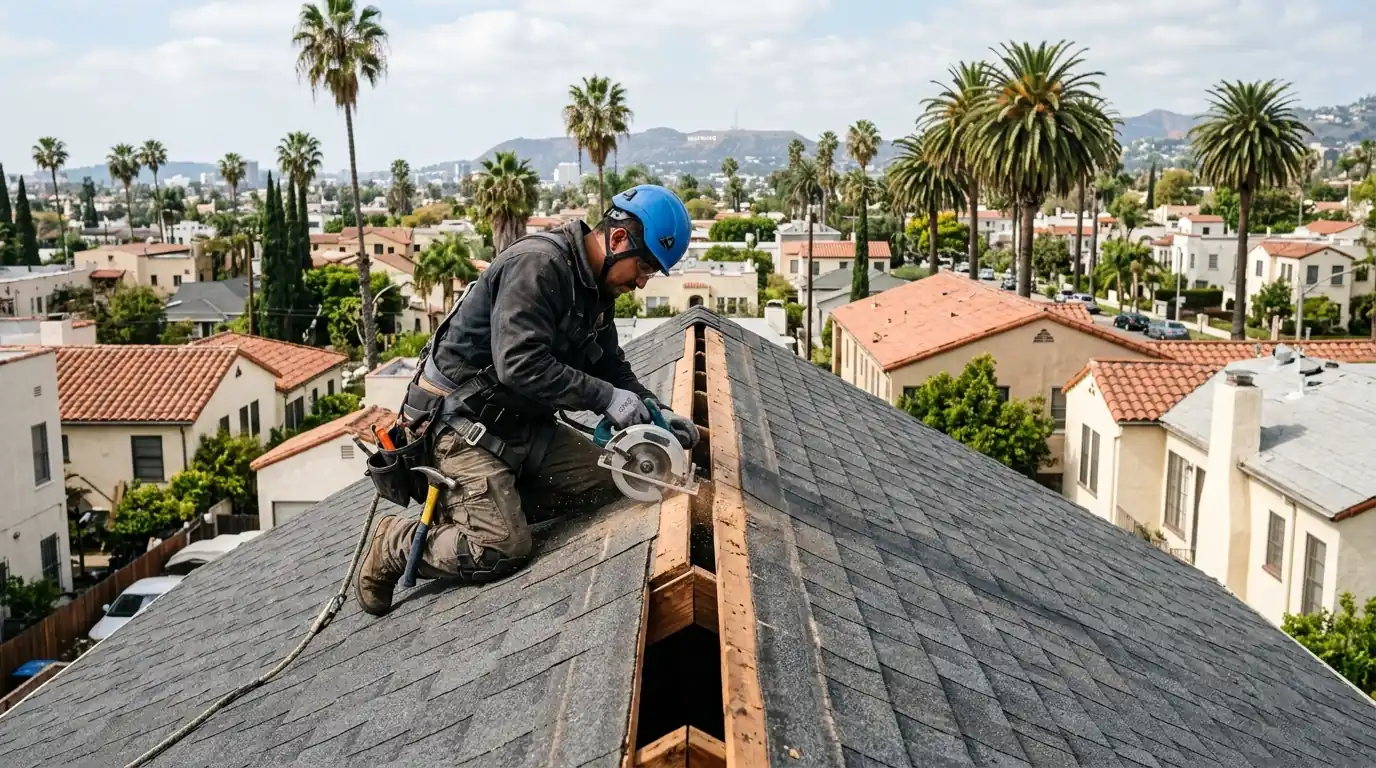
What an attic ventilation check covers
We follow the whole path the air takes, not just the vents you can see.
- Intake and exhaust measured against the attic floor area
- Soffit vents checked for paint, insulation or debris
- Baffles added where insulation is packed against the deck
- Bath and kitchen fans traced to the outside, not the attic
- Heat damage on the underside of the roof deck
- Moisture, rusted nails and stained sheathing
- Fire-zone vent requirements for your address
Three ways we get air moving through an attic
Ridge vent installation
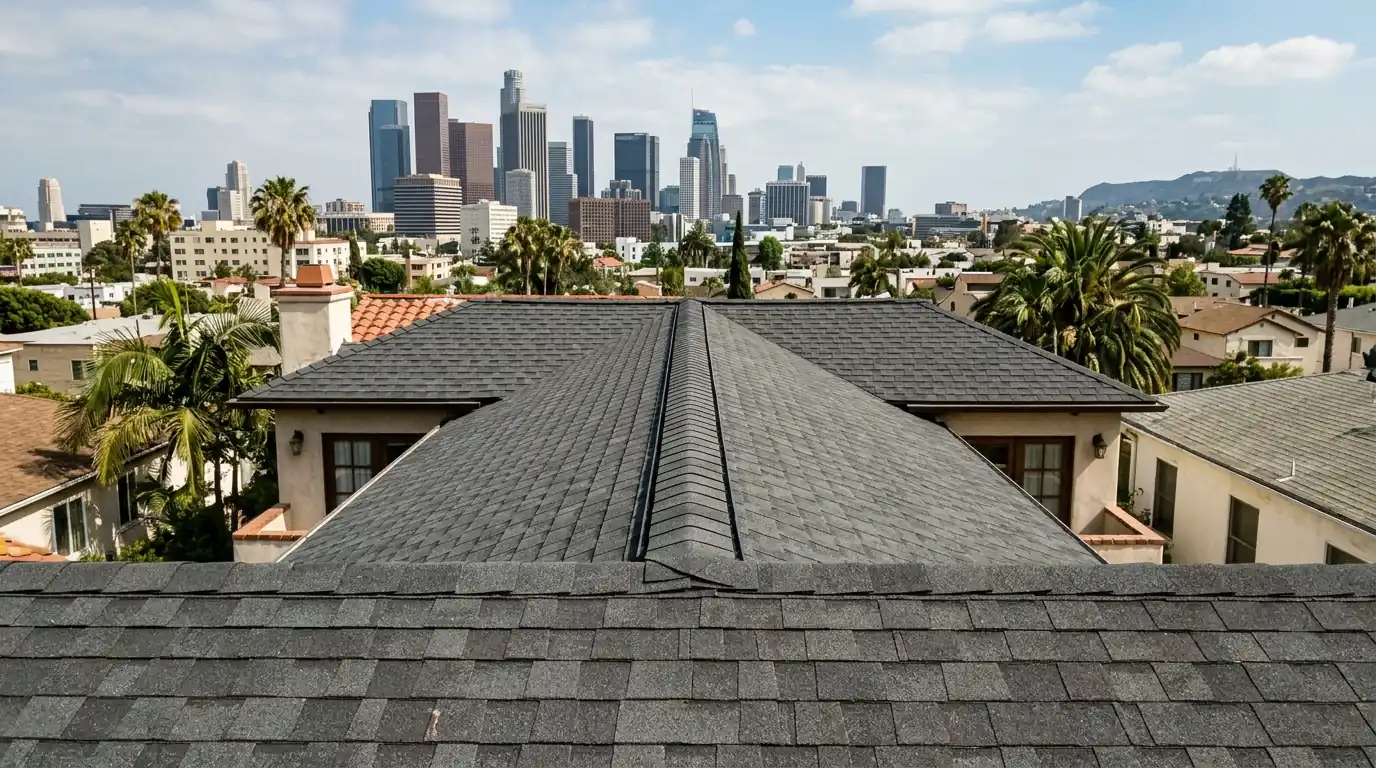
A ridge vent is a continuous slot along the peak, covered by a low cap, that lets hot air escape along the whole roof. We cut the slot short of the ridge ends, install a baffled vent that sheds wind-driven rain, and cap it with matching shingles. It only works with intake at the eaves, so we open soffits at the same time. On a hip roof with only short ridges, we'll tell you when a ridge vent alone can't move enough air and a second exhaust option is needed.
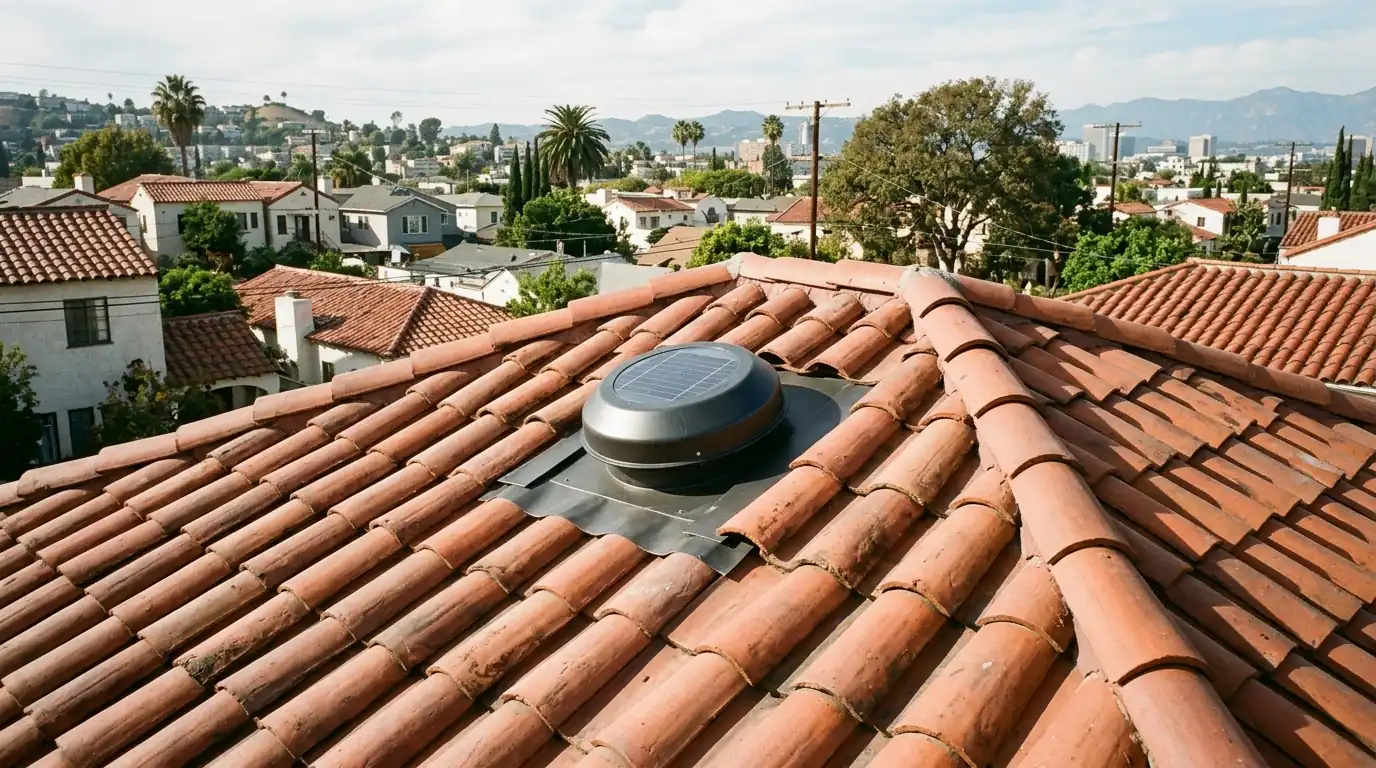
Solar attic fans
Where the roof shape leaves little ridge to work with, or a hip roof needs more exhaust, a solar attic fan moves air without adding to the power bill. We mount it on a rear slope, flash it in like any other penetration, and size it to pull from the soffits rather than from the house. A fan that pulls harder than the soffits can feed ends up drawing cooled air out of the house through ceiling gaps, which is why intake comes first.
Ember-resistant vents for fire zones
In a very high fire hazard zone the attic is an ember target. Standard vents let wind-blown embers straight in; ember-resistant vents use fine mesh or baffles to stop them while still passing air. We fit them at soffits, gables and ridge on hillside homes and on any re-roof the fire code covers. They're a sensible upgrade just outside the mapped zones too, since wind carries embers a long way, and they add little cost when the roof is already open.
Brands we install and service
In Chatsworth and Granada Hills many homes date from the San Fernando Valley's 1960s and 1970s building wave, and much of the Valley's northern edge sits inside the very high fire hazard zone. That puts two jobs on one attic: moving summer heat out and keeping embers from getting in. Any vent we add there is an ember-resistant model, counted as part of the roof assembly.
Ridge vent, solar fan or gable vents compared
Exhaust options differ in cost, in how much air they move and in where they fit.
| Exhaust type | How it works | Best fit | Tradeoff |
|---|---|---|---|
| Ridge vent | Passive, runs the full ridge | Gable roofs with a long ridge | Needs good soffit intake |
| Solar attic fan | Powered by its own panel | Hip roofs, short ridges | One more roof penetration |
| Gable or box vents | Passive openings | Small attics, add-ons | Less air per opening |
What changes the cost of attic ventilation work
Ventilation work is small next to a re-roof, and it's cheapest during one. The price moves with:
- Timing
Adding a ridge vent during a re-roof costs far less than cutting one later.
- Soffit condition
Blocked or missing soffit vents need opening, framing or replacing.
- Exhaust type
Solar fans cost more than passive vents to buy and install.
- Fire-zone rules
Ember-resistant vents cost more than standard screens.
- Attic access
Tight attics make baffle and insulation work slower.
How an attic ventilation job runs
Measure the attic
We work out the floor area and the vent area it has now.
Find the blockages
Painted soffits, packed insulation and dead-end fans get photographed.
Plan the balance
Intake low, exhaust high, sized so neither side starves.
Install and flash
Vents go in, roof cuts are flashed, and baffles keep insulation clear.
Check the airflow
We confirm air moves from eave to ridge before we leave.
Attic ventilation questions
Straight answers to what people ask us most about this job.
Other ways to reach usA very hot upstairs, a ceiling warm to the touch, rusty nails in the attic, or shingles aging fast on one slope.
Mixing exhaust types, like a ridge vent plus a powered fan, can short-circuit the airflow. Balance matters more than vent count.
A baffled vent with the right cut and cap sheds wind-driven rain. Leaks come from slots cut too long or capped poorly.
On hip roofs or short ridges, yes. With a long ridge and open soffits, a passive ridge vent usually does the job.
In a very high fire hazard zone, yes for new or replaced vents. We check the zone for your address.
It cuts the heat load from the attic. How much depends on insulation, attic ducts and roof color.
It should be, since the ridge is open anyway. See how we build a new shingle roof.
Other inspections & maintenance jobs we handle
Solar detach and reset for re-roofs
Solar Panel Roof Work.
Radiant barrier sheathing on re-roofs
Radiant Barrier Installation.
Roof certification for home sales
Roof Inspection and Certification.
Minor repairs during service
Roof Maintenance.
Standing seam metal roofs
Metal Roofing.