Torch down modified bitumen roofs for Los Angeles flat roofs
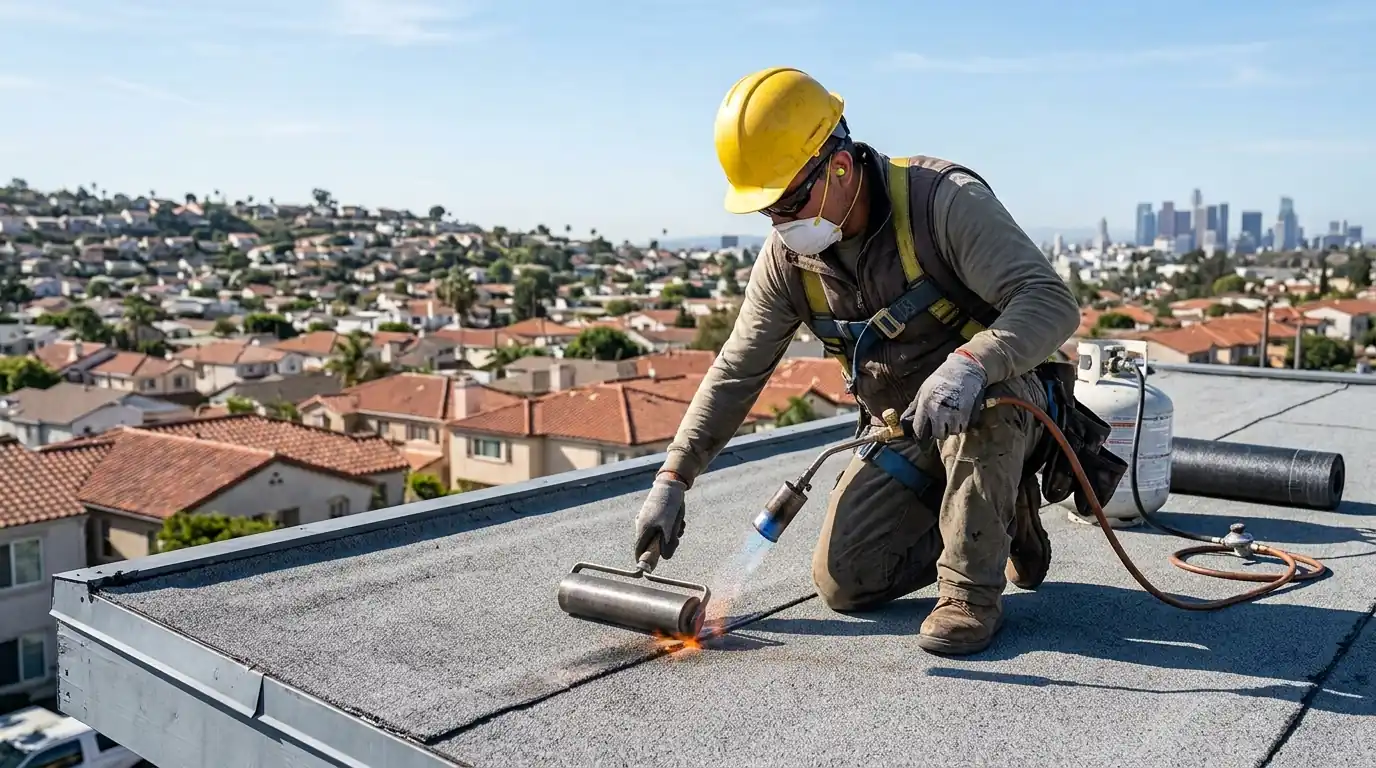
Two-ply torch down is still the workhorse on LA's flat and low-slope roofs: garages, duplexes, additions and hillside decks. We strip to the deck, weld a base and a cap sheet, and finish with a reflective cap that meets cool-roof rules.
- Answered 24/7
- Reflective cap sheets
- LADBS permit handled
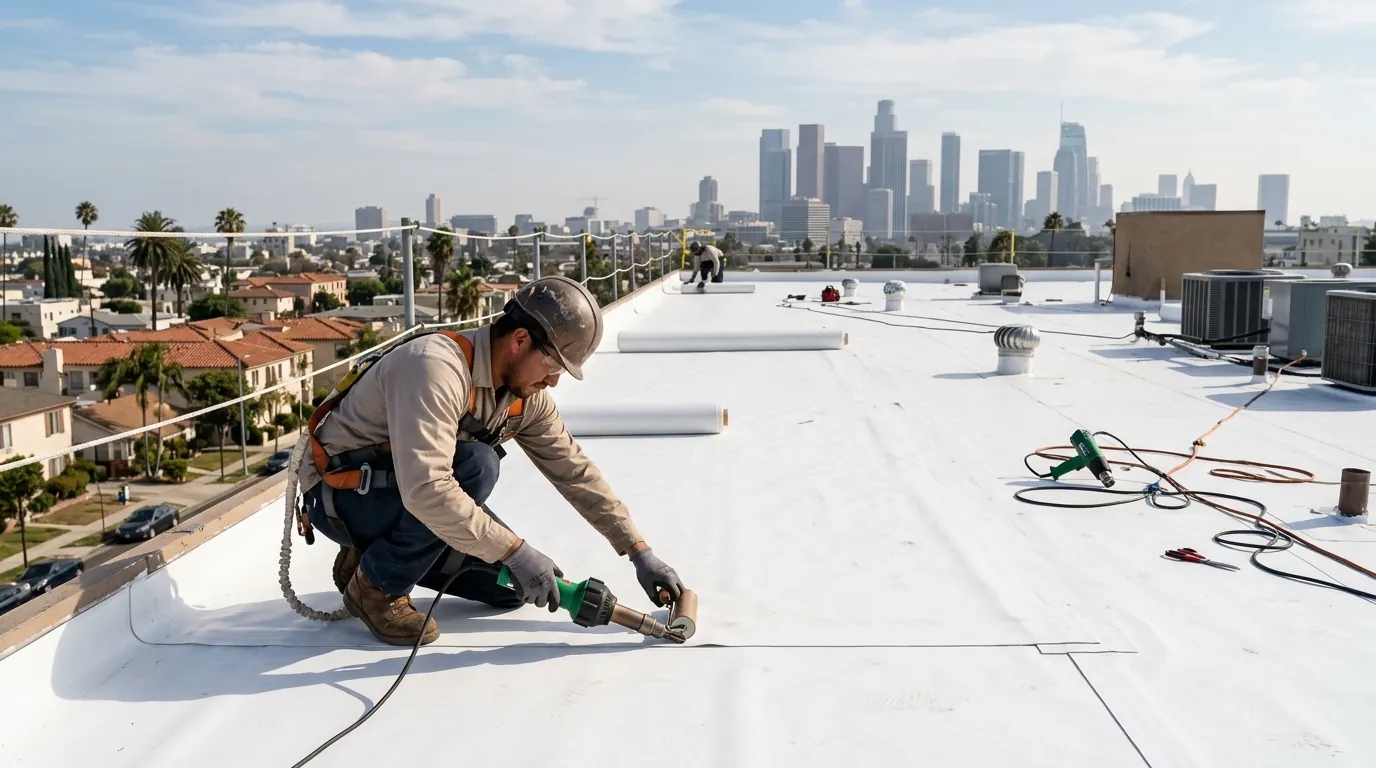
Torch down roofing in Los Angeles is a two-ply modified bitumen membrane heat-welded to a flat or low-slope deck, and published LA flat roof replacement ranges run $8-$14 per sq ft. We tear off, weld a base and a cap sheet with offset laps, and use a reflective cap where cool-roof rules apply.
Updated September 2026
Two welded layers instead of one thin sheet
Modified bitumen is asphalt blended with rubber-like polymers and rolled into sheets. A base sheet is fused to the deck or a nailed anchor sheet, then a granule-surfaced cap is welded over it with staggered laps. The two-layer membrane takes foot traffic and mechanical units, and handles long dry summers better than the hot-mopped roofs it usually replaces.
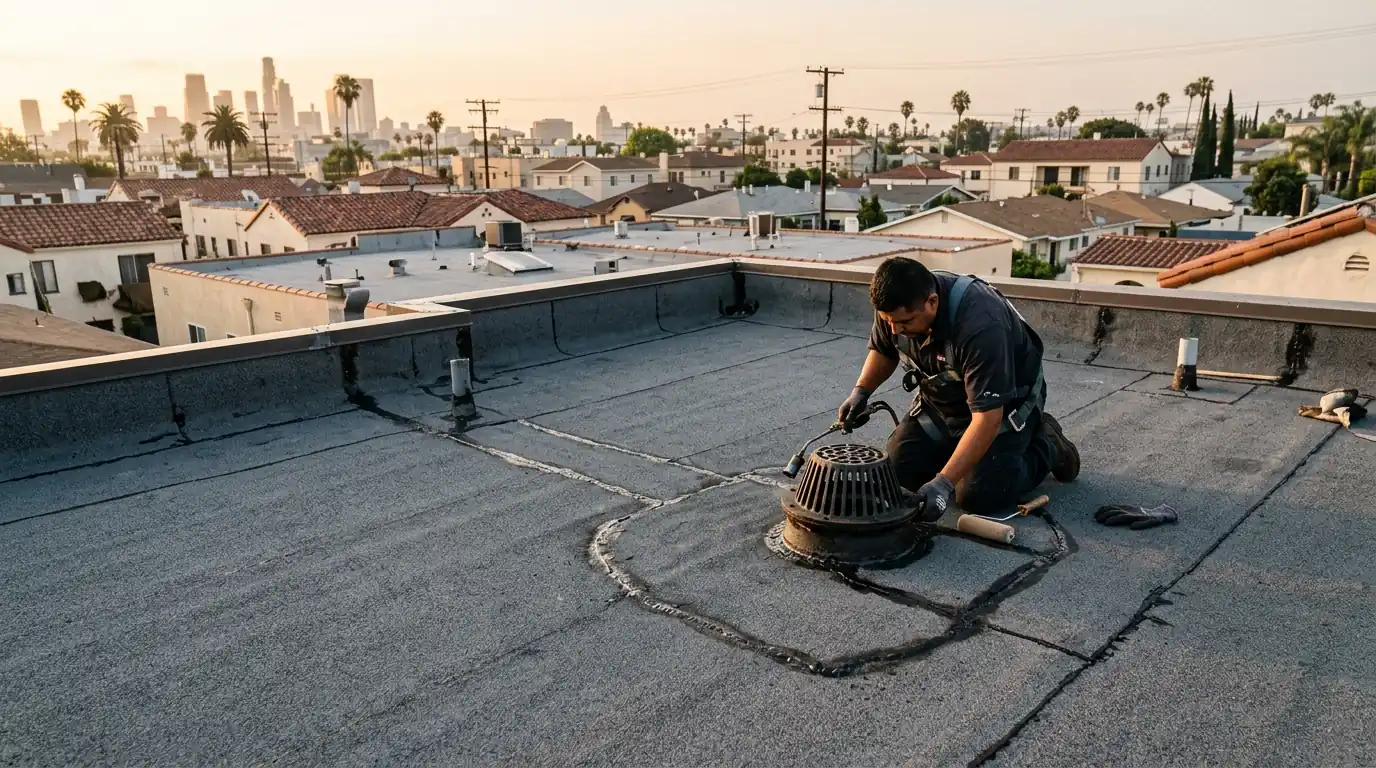
Most of our torch down goes on duplexes, garages, room additions and the flat sections of hillside homes. Membrane runs up parapets and gets counterflashed, crickets go in where water ponds, and on wood decks the base is nailed so the flame never touches the sheathing.
What moves the price of a torch down roof in Los Angeles
Published LA planning ranges put flat roof replacement at $8-$14 per sq ft, with totals commonly $12,000-$28,000.
- Layers to tear off
Every extra layer of old roofing adds labor and dump fees before a new sheet goes down.
- Deck condition
Soft or delaminated plywood found after tear-off is replaced by the sheet.
- Drainage fixes
Crickets, tapered insulation or a new scupper to stop ponding add material and time.
- Parapets and walls
Every foot of wall flashing is slow, detailed work.
- Cap sheet choice
A CRRC-listed reflective cap costs more than a standard granule cap.
Torch down, TPO or a coating: which fits your flat roof
A large roof with little foot traffic may suit a single-ply TPO membrane, and a dry, well-bonded roof can often buy years with a silicone or acrylic coating.
| System | How it goes down | Where it fits | Main tradeoff |
|---|---|---|---|
| Torch down mod-bit | Two plies, heat-welded | Duplexes, garages, foot traffic | Open flame on site |
| TPO single-ply | One ply, welded seams | Larger flat roofs | Less forgiving of punctures |
| Silicone coating | Sprayed over the old roof | Roofs still dry underneath | Only as good as the roof below |
Three ways we build or renew a torch down roof
Two-ply torch down systems
The signs are obvious: alligatored asphalt, blisters that pop underfoot, a ceiling stain under standing water. We tear off to the deck, replace soft sheathing, install a nailed or self-adhered base, weld the cap with staggered laps, and flash every drain, vent and wall, adding crickets where ponding caused the damage. Walkway pads go down along the paths to rooftop units, so service techs don't wear through the cap sheet on their way to the equipment year after year.
Cap sheet replacement
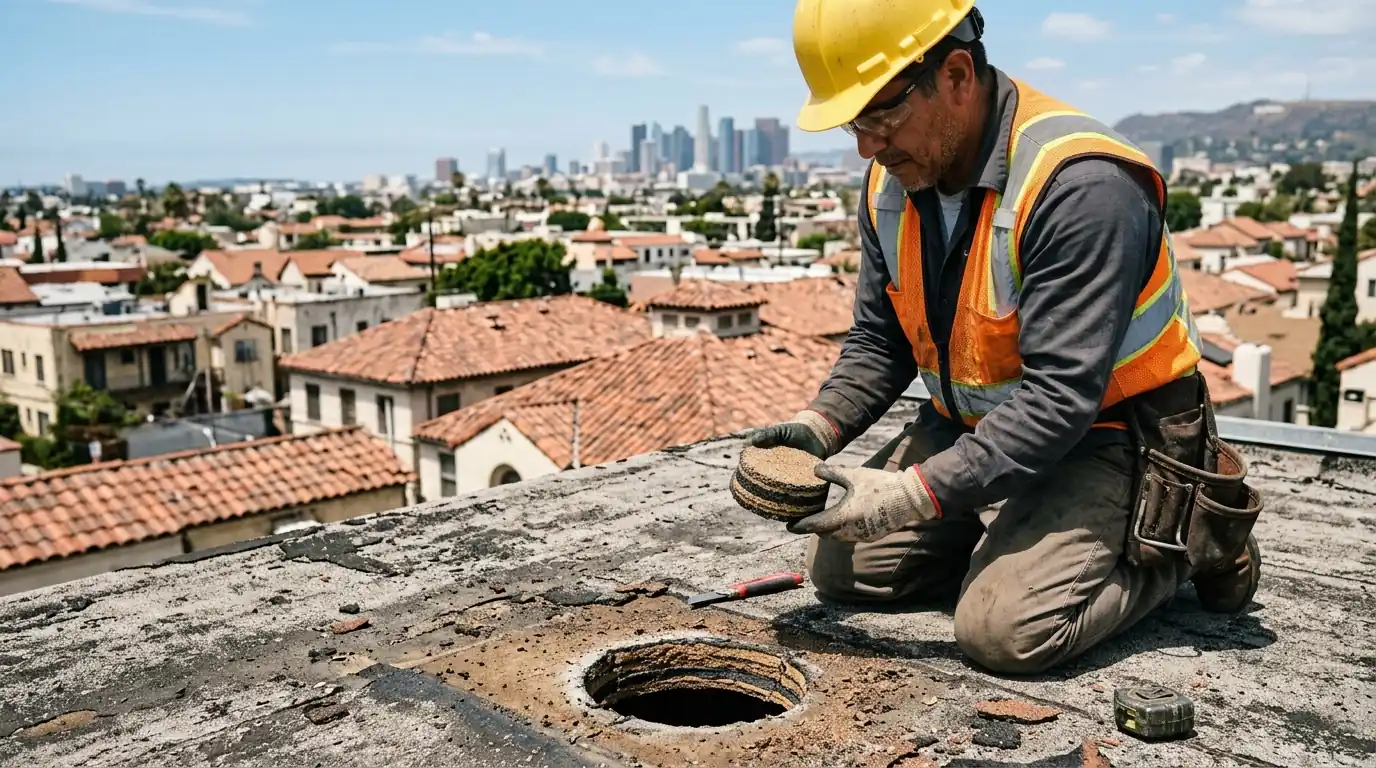
When the base is dry and bonded but the cap has shed its granules and cracked at the laps, a full tear-off isn't always needed. We cut test cores, clean and prime the surface, and weld a new cap over it. This works once: a roof that already carries a recover layer has to come off. A new cap is also the chance to switch to a reflective finish, which helps the rooms below and can meet the cool-roof rule if the job qualifies.
Cold-applied modified bitumen
Some roofs can't take an open flame safely: a deck tight against wood siding, or an addition with exposed rafters just below. There we use cold-applied or self-adhered modified bitumen, which bonds with adhesive or its own backing. It costs more per square and needs warm weather to seat, but it takes the fire risk off the job. Cold-applied systems also suit roofs over occupied offices or shops where open flame and smoke would disrupt the business below during working hours.
Brands we install and service
Any Los Angeles re-roof that replaces more than half of a house's roof has to use a Cool Roof Rating Council listed product, so the cap sheet we specify on residential flat roofs is a white or light reflective granule, not the black cap most older roofs carry. That product choice can add 10-15% to material cost. On a flat roof over a bedroom, it's also the difference you feel in August.
How a torch down re-roof runs, start to finish
Roof and ceiling check
We walk the roof, find the ponding and wet areas, and look at the ceiling below.
Permit and materials
We pull the LADBS permit and order base, cap and flashing sized to your roof.
Tear-off to the deck
Old layers come off, soft sheathing is replaced, and the deck is swept clean.
Base, cap and flashing
The base goes down, the cap is welded with staggered laps, and walls, drains and vents are flashed.
Fire watch and cleanup
The roof is watched after the torch is off, debris is hauled and the inspection is booked.
Torch down questions we hear on flat roof calls
Straight answers to what people ask us most about this job.
Other ways to reach usA well-built two-ply roof that drains properly lasts far longer than patched single layers. Sun is the main enemy here, so a reflective cap matters.
Once, if the existing roof is dry, bonded and a single layer. We cut cores to check; anything wetter or thicker gets a tear-off.
Yes, with a nailed base, the flame kept off edges and gaps, and a watch after the torch is off. Otherwise we use cold-applied sheets.
Generally yes, through LADBS, and we pull it. A residential replacement of more than half the roof also needs a cool-roof rated cap.
It reflects far more sunlight than a dark cap, which cools the roof surface and the rooms below. It is also what the cool-roof rule asks for.
Most garage and duplex roofs take a few working days once materials arrive.
Often. Split laps, blisters and failed flashings get matching membrane. If the roof is soft across large areas, see when a flat roof patch won't hold.
Other flat & low-slope roofing jobs we handle
Metal mobile home roof coating
Mobile Home Roofing.
Built-up roof repair
Hot Mop Built-Up Roofing.
Tapered insulation for drainage
TPO and PVC Flat Roof Installation.
Silicone roof coating
Roof Coating.
Walkable deck coatings
Roof Deck Waterproofing.