Tile or shingle: choosing a roof for a Los Angeles home
Clay tile, concrete tile and architectural shingle all make good Los Angeles roofs. The right one depends on your house, your framing and your budget. Here is how they compare.
By Sadie Yancey, Roofing Guides Editor · Updated September 2026
For most Los Angeles homes the choice is cost versus lifespan: architectural shingle runs about $7-$12 per sq ft installed, concrete tile $15-$22 per sq ft installed and clay $18-$25 per sq ft installed. Tile lasts far longer and suits Spanish-style homes but is heavy; shingle is lighter and cheaper.
What each roof actually is
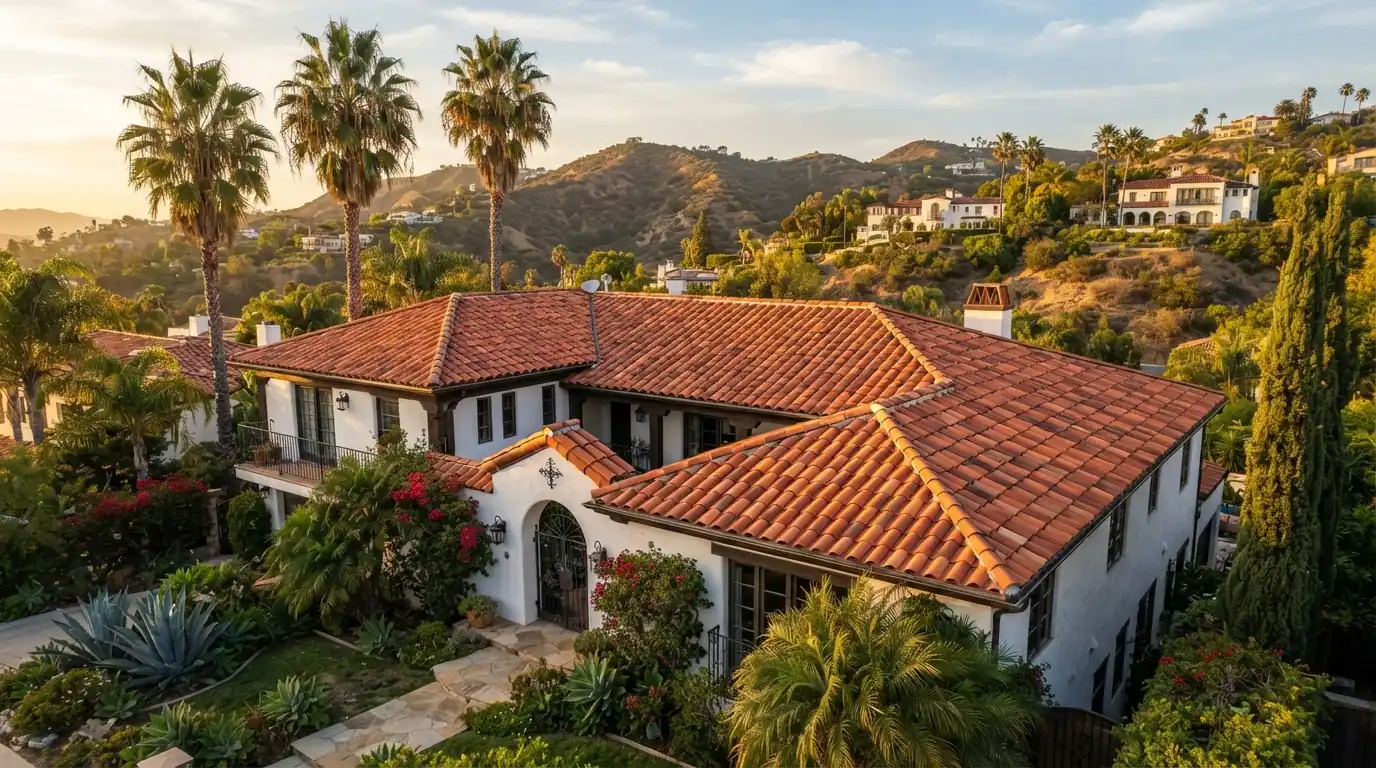
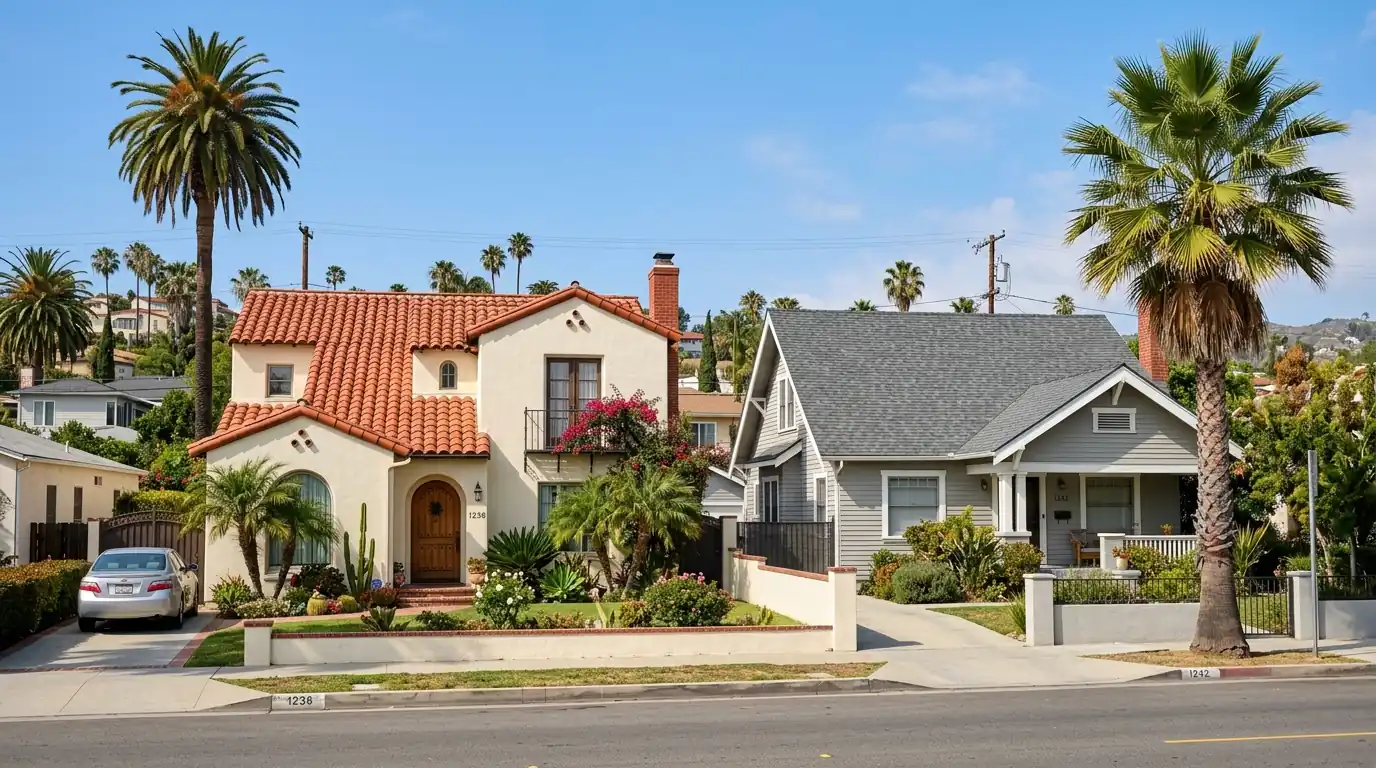
Clay tile is fired clay, the traditional roof of Spanish revival and Mediterranean homes, in S, mission and two-piece barrel shapes. Concrete tile is cast from sand and cement, cheaper than clay, and comes in flat, S and barrel profiles. Architectural shingle is a laminated asphalt shingle, thicker and more wind-resistant than the old flat three-tab kind.
Roughly one third of Los Angeles homes are roofed in clay or concrete tile. Clay concentrates on older Spanish and Mediterranean homes in neighborhoods like Hancock Park and Los Feliz, while concrete tile is the common value choice across the San Fernando Valley and in Pasadena.
Cost, side by side
The published ranges below are for full replacement, including tear-off and underlayment on a typical home.
| Roof | Published LA range | Weight | Style fit |
|---|---|---|---|
| Architectural shingle | $7-$12 per sq ft installed | Light | Ranch, bungalow, modern |
| Concrete tile | $15-$22 per sq ft installed | Heaviest | Ranch, Spanish on a budget |
| Clay tile | $18-$25 per sq ft installed | Heavy | Spanish, Mediterranean, mission |
Weight and your framing
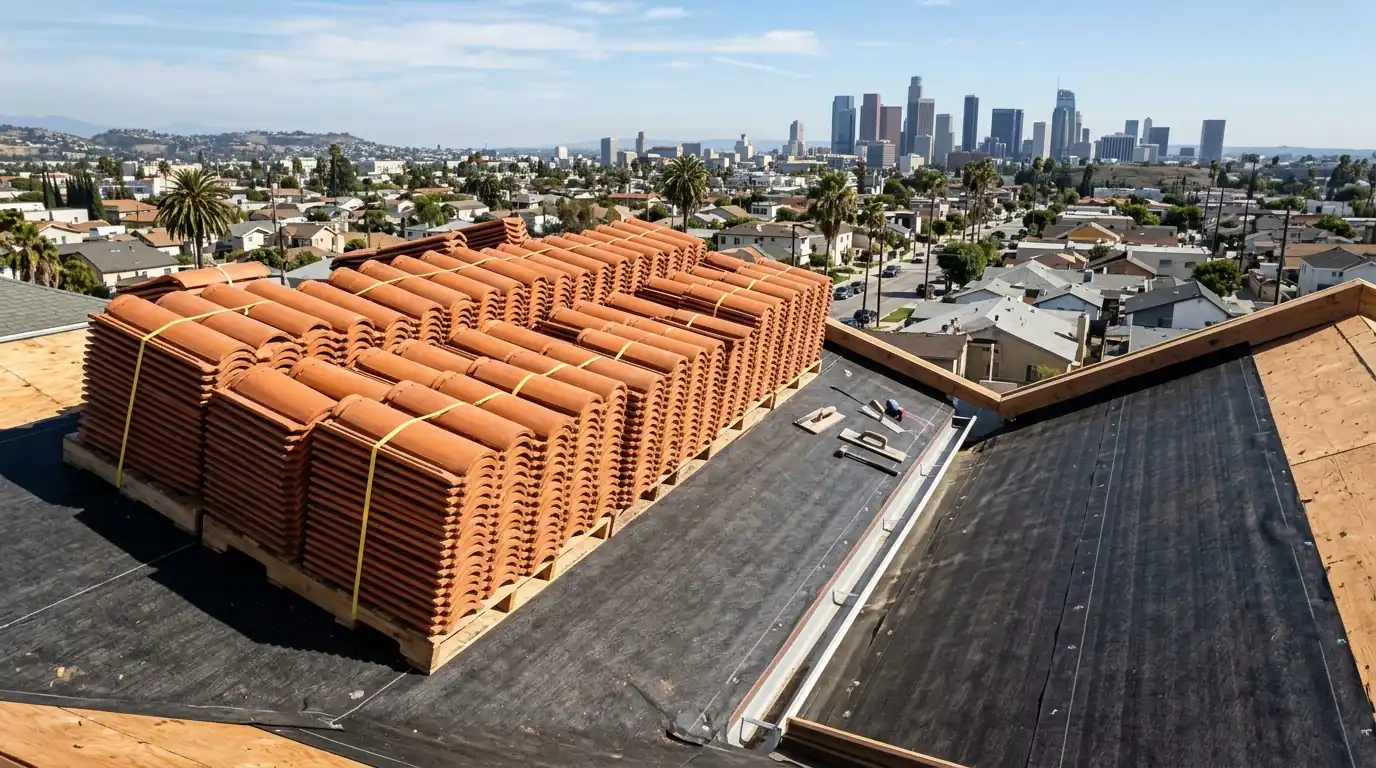
Tile is heavy, and standard concrete tile is usually the heaviest of the three. A house built for tile can carry it; a house built for shingle may need its framing checked, and sometimes reinforced, before tile goes on.
Lightweight concrete tile narrows that gap considerably, and it's often the practical way to switch from shingle to tile. Going the other way, from tile to shingle, never raises a framing question. Our framing reinforcement page covers what reinforcement involves when it's needed.
Lifespan: the tile outlasts the paper
Both clay and concrete tile can last for decades, far longer than shingle. What wears out on a tile roof is the underlayment beneath it, which dries and cracks in LA heat. When that happens, the tile can be lifted and relaid over new underlayment rather than replaced.
Architectural shingle has a shorter life, and the south and west slopes age first under the sun. Good ventilation and correct nailing make a real difference to how long a shingle roof lasts here.

Stuck between tile and shingle?
Call and we will look at the house and the framing, then tell you which roof fits it and why.
Fire and cool-roof rules apply to both
Concrete tile and composition shingle already carry Class A fire ratings, and clay is noncombustible, so all three work in a very high fire hazard zone as long as the whole assembly, underlayment included, qualifies. Our Class A and fire zone guide explains the details.
When a replacement covers more than half of a house's roof, Los Angeles requires a cool-roof rated product. Cool-roof shingles and tiles come in ordinary colors; the cool roof guide covers what that means for your choice.
Which one fits your house
Let the architecture lead. A Spanish revival or Mediterranean home looks right under clay tile, and replacing it with shingle usually hurts both the look and the value. A 1960s Valley ranch often suits concrete tile or shingle equally well.
Then weigh budget against time. If you plan to stay for decades, tile's lifespan pays back its cost. If you need the roof done well for less, architectural shingle is the practical choice, and it's the lightest option for older framing.
What about metal?
Metal sits between shingle and tile on price, at a published $10-$15 per sq ft installed in Los Angeles. It is light, so framing is rarely an issue, it sheds water well even at low pitches, and with a rated underlayment it makes a dependable Class A assembly for hillside fire zones.
Standing seam suits modern homes and some ranch houses, and stone-coated steel imitates tile or shake for owners who want the look without the weight. It isn't the right answer for a Spanish revival home, but for many others it's worth a look; see standing seam and panel options.
Tile and shingle questions
Quick answers to the questions this topic raises most.
Other ways to reach usTile, by a wide margin, though its underlayment needs replacing over the decades.
Homes built for tile can carry it. A house built for shingle needs a framing check first.
Yes, and framing is never a problem that direction, though it can change the look of a Spanish-style home.
Clay holds its color and suits historic homes; concrete costs less. Both are durable.
Yes, as Class A assemblies with the right underlayment.
Both perform well when fastened correctly. Loose ridge tiles and shingles nailed too high are what fail.
More guides for Los Angeles roofs
Roof replacement costs in LA, explained
Published 2026 ranges by roof type, and the line items that move a quote.
Class A Roofs and LA Fire Hazard Zones Explained
Fire ratings, hazard zones, the 50% rule, vents and eaves.
Cool roofs and Title 24 in Los Angeles
When the cool-roof rule applies to a re-roof and what it changes.