TPO and PVC flat roofs for Los Angeles homes and buildings
Single-ply membranes suit the larger flat roofs on apartment buildings, shops and modern homes. We tear off, fix drainage with tapered insulation, and weld every seam so the roof is one continuous white sheet that meets cool-roof rules.
- Answered 24/7
- Hot-air welded seams
- Cool-roof rated white
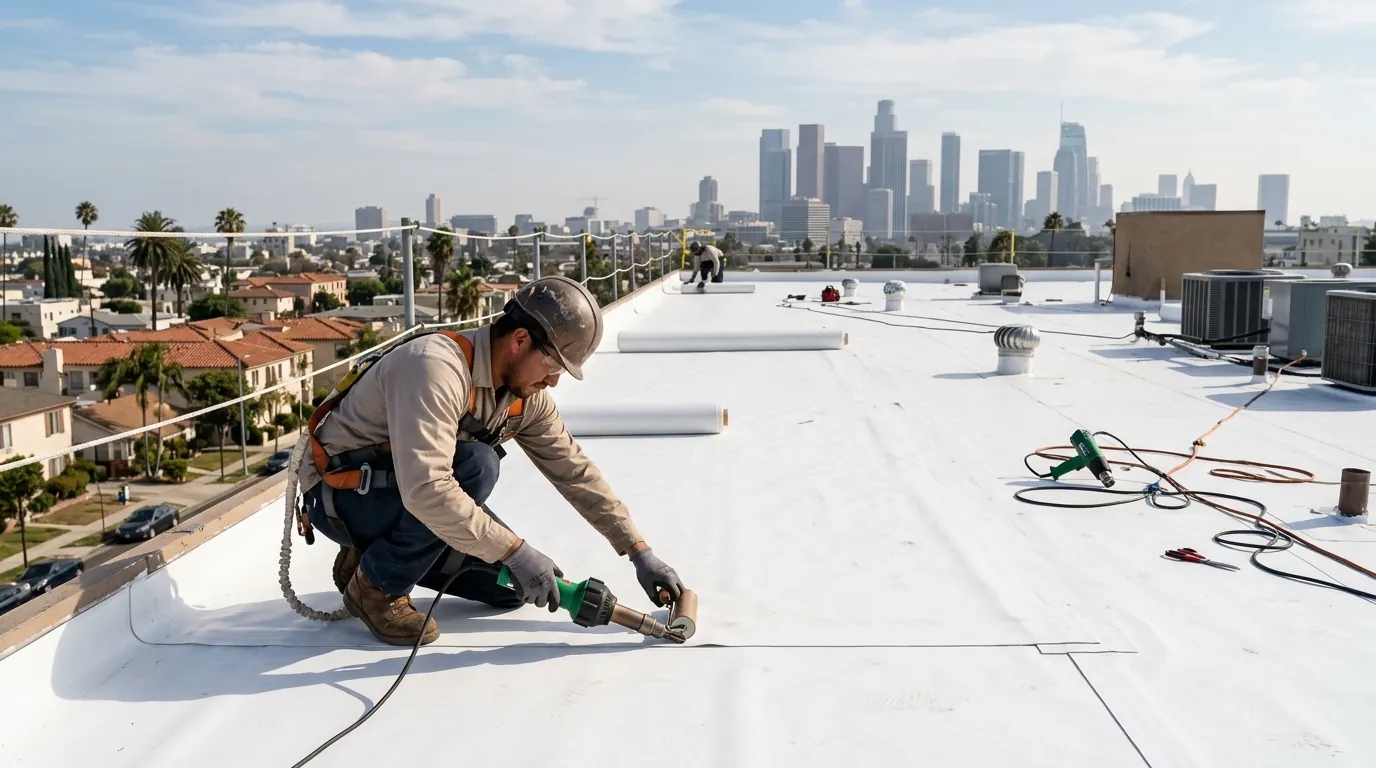
TPO and PVC flat roofing in Los Angeles is a single-ply white membrane, fastened or adhered over insulation, with every seam hot-air welded; published LA flat roof ranges run $8-$14 per sq ft. TPO suits most roofs at lower cost, while PVC resists grease and chemicals around restaurant and rooftop equipment.
Updated September 2026
One welded sheet instead of layered asphalt
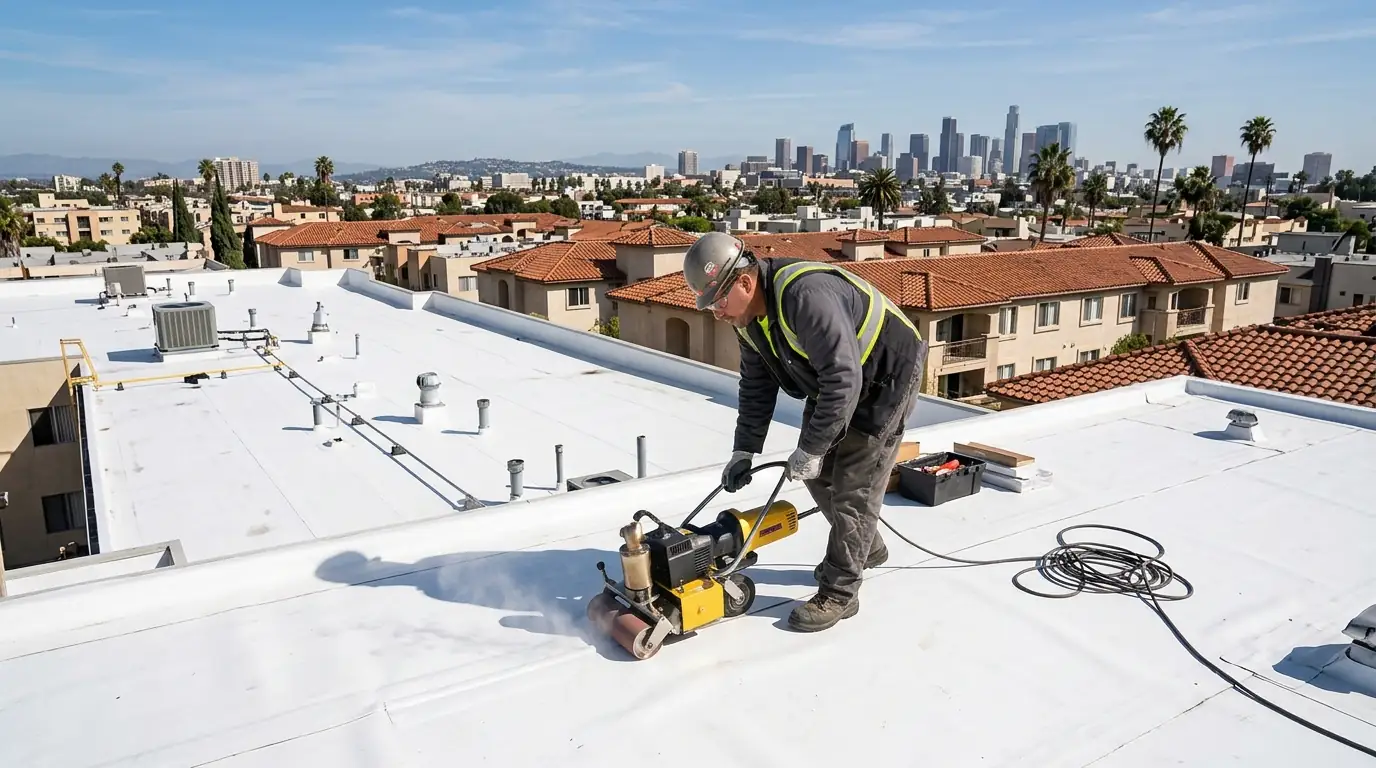
TPO and PVC come in wide rolls laid over insulation board and fastened or glued down. The overlaps are welded with hot air, so the seams become part of the sheet rather than an adhesive joint. The white surface reflects most of the sun, keeping the roof and the rooms below cooler.
Single-ply rewards careful detailing at drains, curbs and parapets, and punishes shortcuts there. On small residential roofs with foot traffic, two-ply torch down is often the tougher choice, and we will tell you which suits your roof.
What a TPO or PVC roof costs depends on
Published LA ranges put flat roof replacement at $8-$14 per sq ft, with totals commonly $12,000-$28,000.
- Membrane type
PVC costs more than TPO; thicker sheets cost more than thin.
- Insulation
Tapered systems and added insulation raise material cost.
- Tear-off
Removing old layers runs $1,000-$3,000 on a typical roof.
- Penetrations and curbs
Every vent, drain and unit needs its own welded flashing.
- Access and hoisting
Taller buildings need a hoist or crane for materials.
TPO, PVC or torch down for your flat roof
All three are good systems on the right roof.
| System | Seams | Best fit | Tradeoff |
|---|---|---|---|
| TPO | Hot-air welded | Most flat roofs, apartments, homes | Less forgiving of foot traffic |
| PVC | Hot-air welded | Restaurants, equipment areas | Higher cost than TPO |
| Torch down | Two heat-fused plies | Small roofs with foot traffic | Open flame; dark unless capped white |
How we build a single-ply roof
TPO single-ply installation
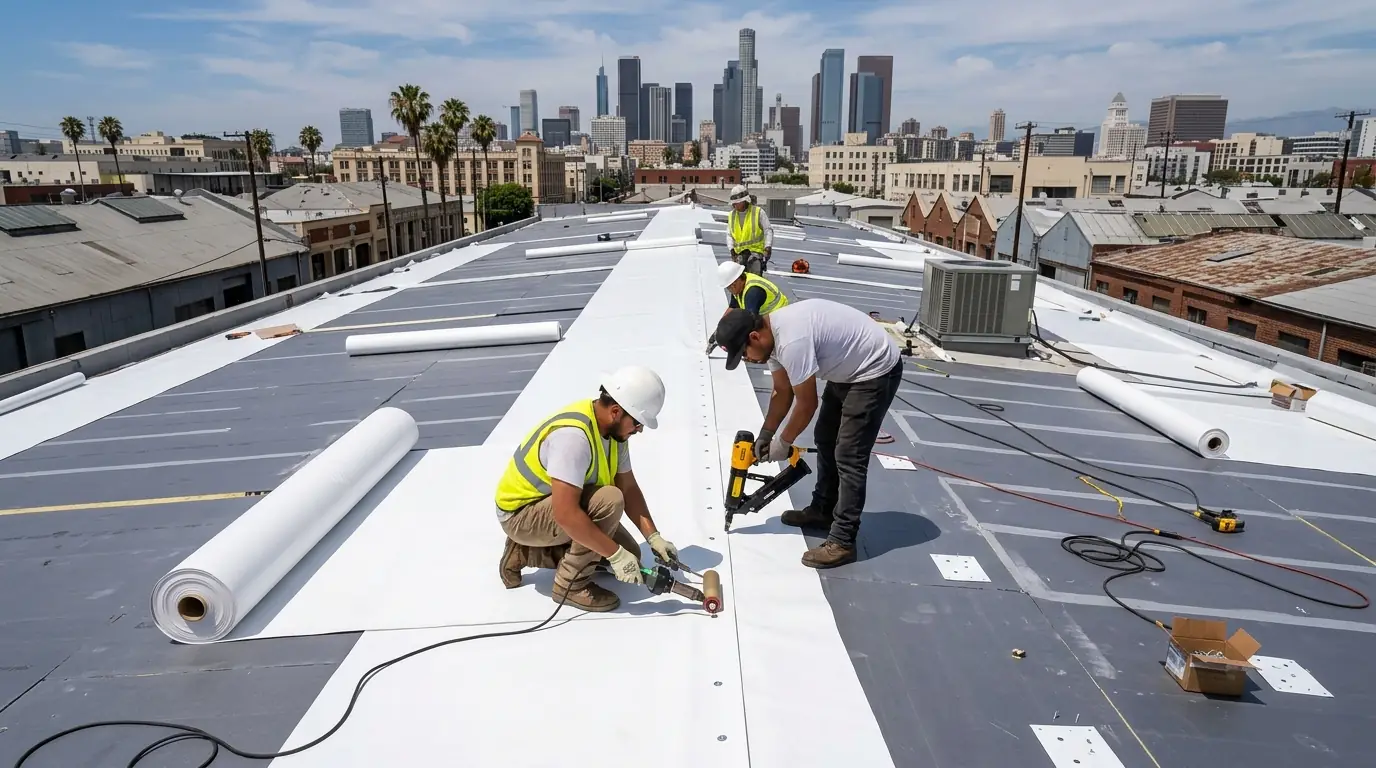
TPO is affordable, bright white and welds cleanly. We install it over new insulation, fasten or adhere it to suit the deck and wind exposure, and weld and probe every seam before flashing curbs, drains and walls. Walkway pads go down along service paths to equipment. Every welded seam is probed with a hand tool after it cools, since a cold weld can look perfect and still leave a gap, and any weak spot is rewelded before we move on.
PVC membrane roofing
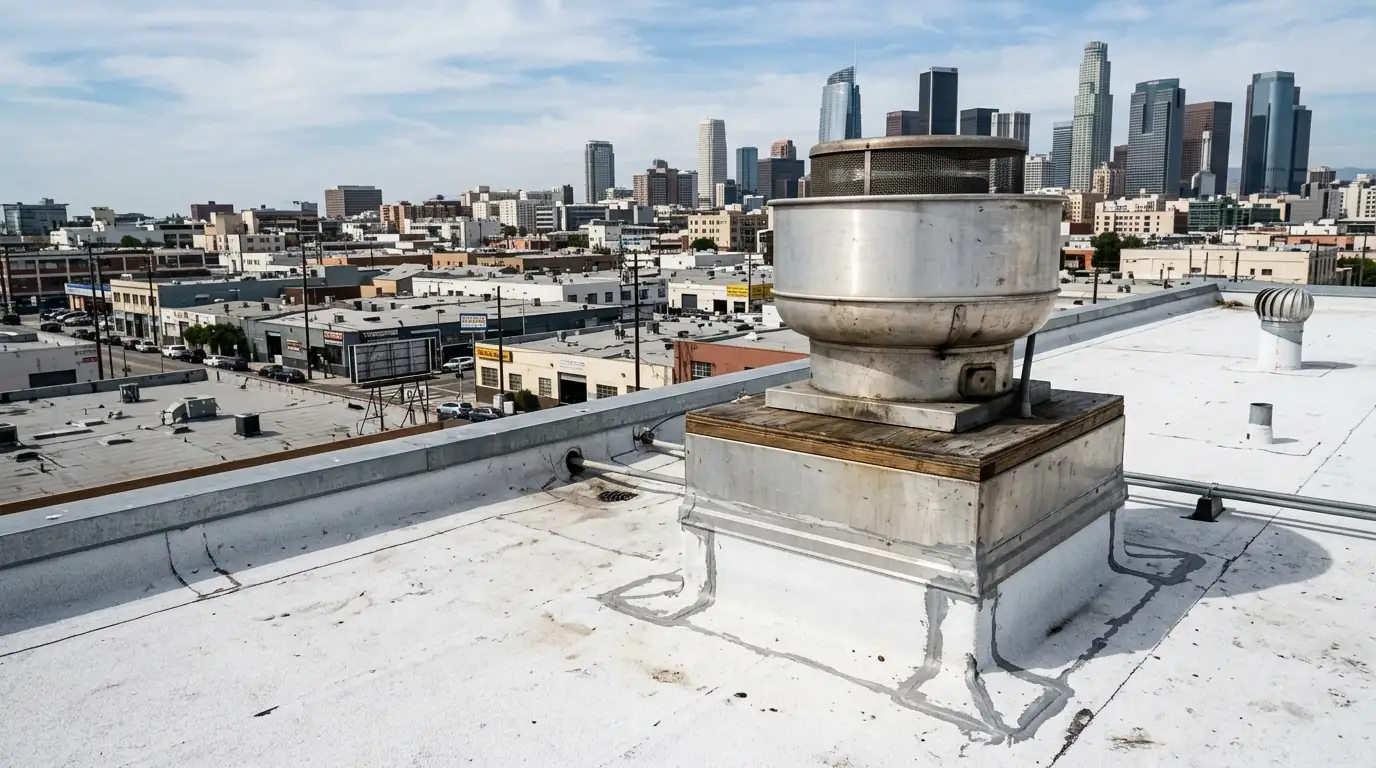
PVC costs more than TPO but stands up better to grease, oils and some chemicals, which matters around restaurant exhaust fans and rooftop equipment. It also welds easily years later for repairs and additions. We use it where the roof sees those exposures or the owner wants the extra margin. Restaurant roofs also get grease containment at the exhaust fans, since grease that pools on any membrane shortens its life and makes the surface slippery for anyone servicing the fans.
Tapered insulation for drainage
Flat roofs that pond were usually built dead level or have sagged. Tapered insulation boards slope the new roof toward drains and scuppers, and crickets split water around curbs and chimneys. It is one of the best upgrades for a flat roof's lifespan, and replacement is the time to add it. We design the taper layout before ordering, so the boards arrive cut to the plan and every section slopes toward a drain or scupper without low spots at the edges.
Brands we install and service
In Los Angeles, replacing more than half of a roof triggers the cool-roof rule, and a white TPO or PVC membrane is one of the easiest ways to meet it because rated sheets come off the roll that way. Code also generally allows only one re-cover before a tear-off, so on a building that already carries two old roofs, the new membrane goes onto a stripped deck, not another layer.
How long a single-ply roof takes to install
A duplex or small apartment roof usually takes a few working days once materials arrive; larger buildings take longer. Tear-off and new membrane go down in sections, so the building is watertight each night.
Tapered insulation and extra drains add time, and occupied buildings need scheduling around tenants and rooftop equipment.
How a single-ply roof goes on
Survey and cores
We check layers, deck and drainage before quoting.
Plan the slope
Tapered insulation is laid out to move water to the drains.
Tear-off in sections
Old roofing comes off in areas we can seal the same day.
Install and weld
Insulation, membrane and welded seams, probed as we go.
Flash and inspect
Curbs, drains and walls are flashed and the roof is inspected.
TPO and PVC questions
Straight answers to what people ask us most about this job.
Other ways to reach usTPO suits most homes and apartments at lower cost. PVC earns its price near grease, oils or heavy rooftop equipment.
Once, if there is only one dry, sound layer. Otherwise we tear off to the deck.
Listed white TPO and PVC sheets meet the reflectivity rules for flat roofs.
Carefully. Walkway pads go down along equipment paths to protect the membrane.
Tapered insulation and crickets slope water to drains and scuppers during installation.
Yes, with ballasted or flashed mounts. See solar mounts on a flat roof.
Yes. Our roofing for shops, offices and apartments work covers shops, offices and apartment buildings.
Other flat & low-slope roofing jobs we handle
Hot mop built-up roof replacement
Hot Mop Built-Up Roofing.
Cool roof coating for Title 24
Roof Coating.
Torch Down Modified Bitumen Roofing in Los Angeles
Torch Down Modified Bitumen Roofing.
Warehouse and industrial roofs
Commercial Roofing.
Walkable deck coatings
Roof Deck Waterproofing.