Roof flashing repair at chimneys, walls and skylights in Los Angeles
Flashing is the metal that seals every place the roof meets something else, and it's where many roof leaks start. We remove failed or tarred-over flashing, install new metal woven into the roofing, and seal it the way it was meant to work.
- Answered 24/7
- Step and counter flashing
- No tar patches
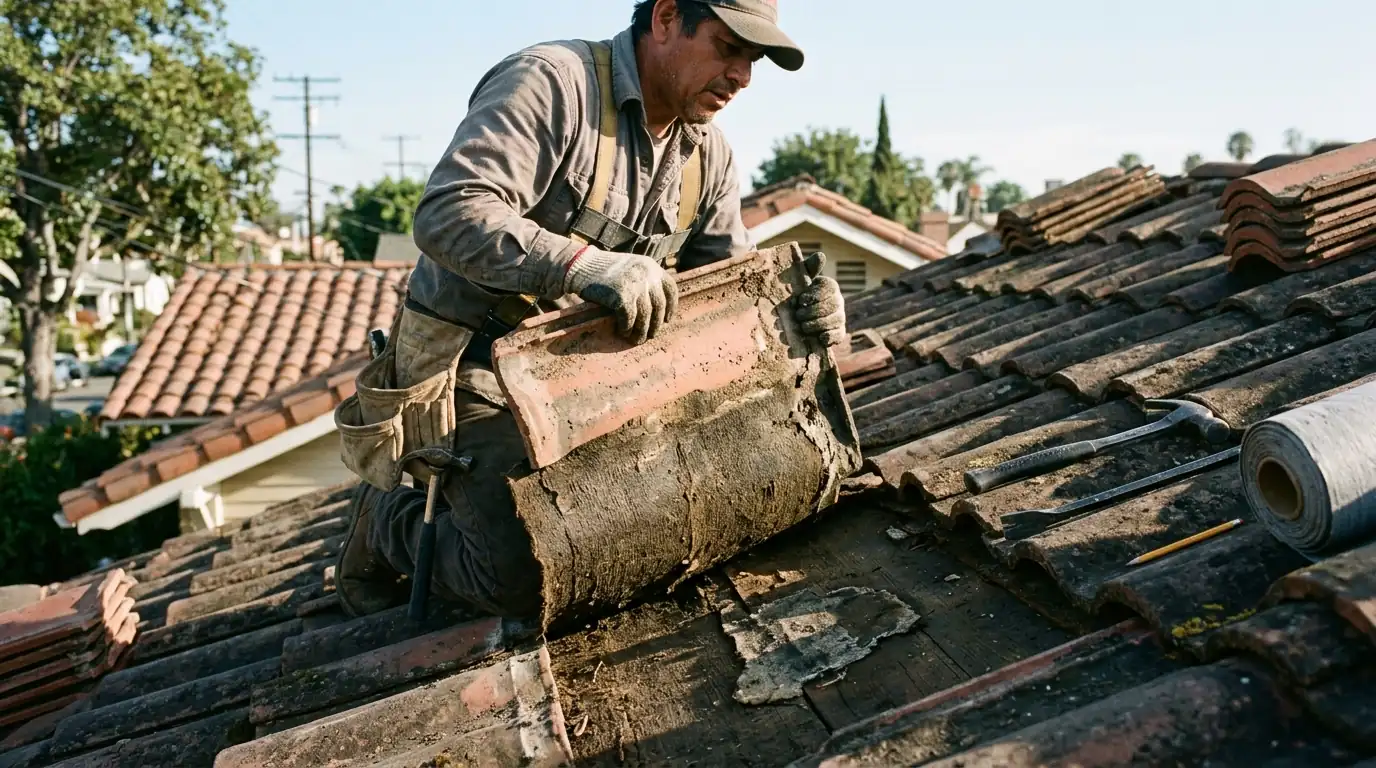
Roof flashing repair in Los Angeles replaces the metal that seals chimneys, walls, skylights and vents, where leaks commonly begin. We remove failed or tar-covered flashing, weave new step and counter flashing into the roofing, cut counterflashing into the wall where needed, and water-test the joint before we leave.
Updated September 2026
Every leak search starts at the transitions
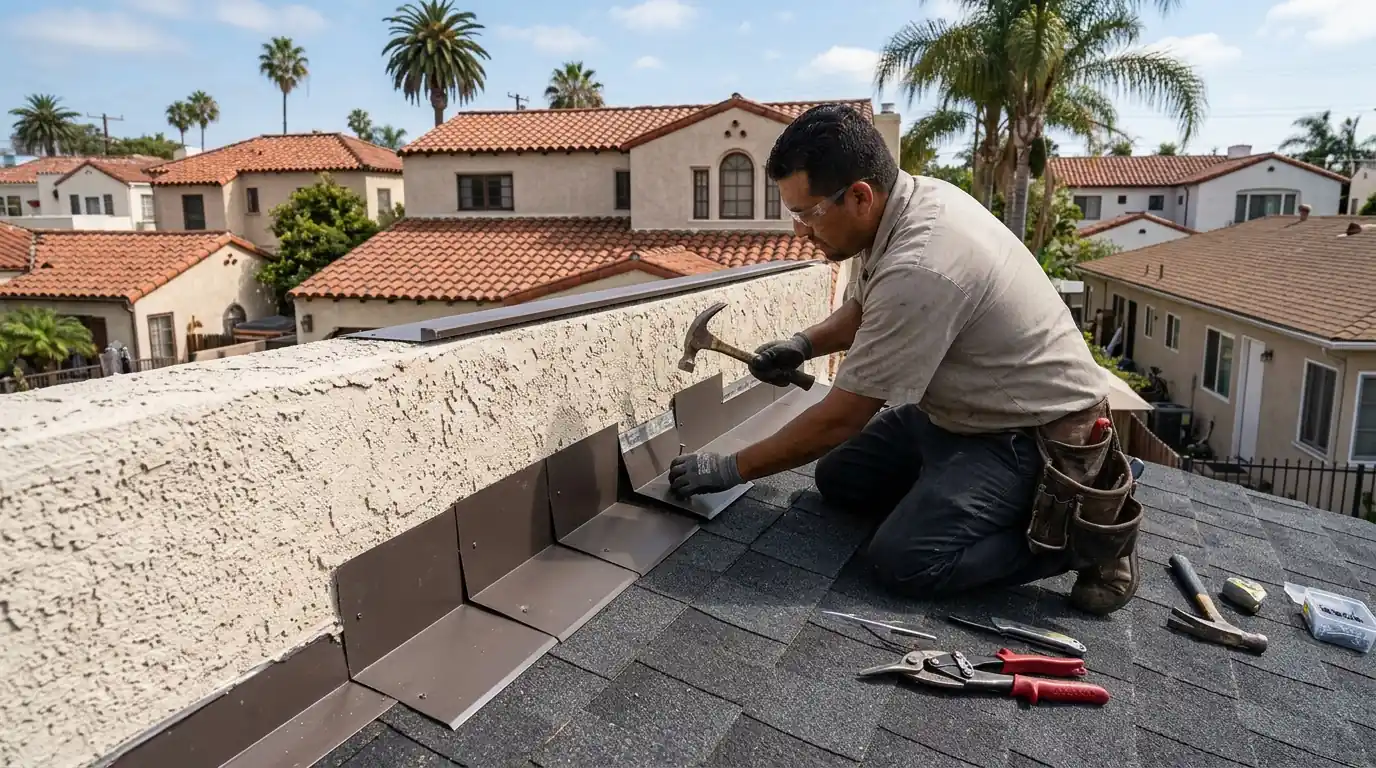
Roofing sheds water on open slopes, but every wall, chimney, skylight and vent interrupts it. Flashing bridges those gaps in overlapping layers so water always runs over, never behind. When it rusts, loosens, or was replaced with a bead of caulk, water gets in behind the stucco or down the chimney.
A common flashing mistake is tar spread over the joint in place of metal. It cracks within a season and hides what failed. We remove it, rebuild the flashing with new metal and cut counterflashing into the wall where needed. If the leak turns out to be elsewhere, our leak tracing finds it.
Signs of failed flashing
Stains where ceiling meets wall
Water running behind the wall flashing.
Leaks around the chimney
Failed step, counter or cricket flashing.
Tar or caulk at roof joints
A past patch hiding flashing that failed.
Rust streaks on the roof
Corroded metal below the rust.
Loose metal at the wall
Counterflashing pulled out of the stucco or brick.
Drips around skylights or vents
Collars and kits past their life.
Stucco cracking at the roofline
Water getting behind the wall covering.
What flashing repair costs depends on
For scale, flashing and accessory work on a full re-roof runs $150-$1,000 depending on penetrations in published LA figures. A standalone repair moves with:
- Location
Chimneys and long walls take more work than a single vent.
- Roof covering
Tile has to be lifted and reset; shingle is quicker.
- Wall material
Stucco and brick need cutting and patching for counterflashing.
- Hidden damage
Rotted decking or framing behind the leak.
- Metal type
Galvanized, painted steel or copper differ in cost.
Chimneys, walls and roof penetrations
Chimney flashing
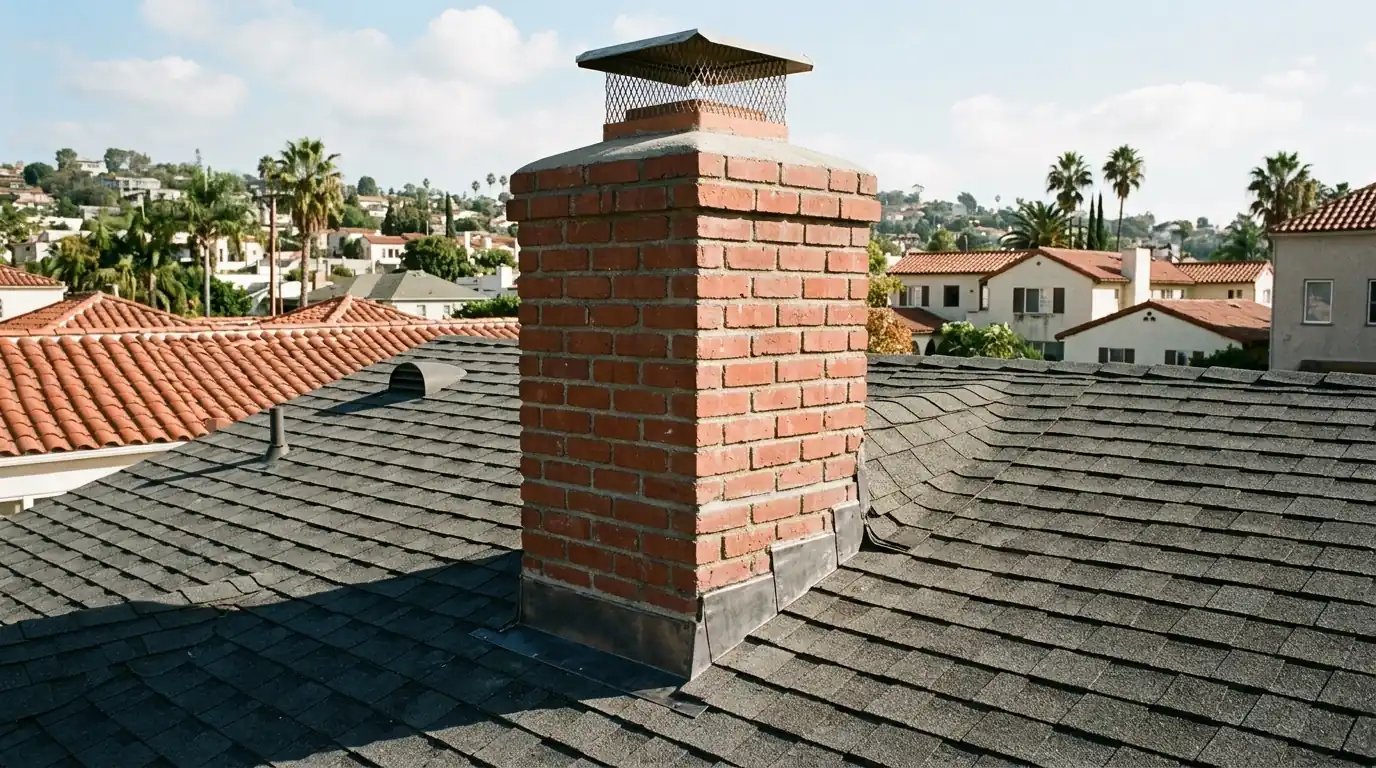
Chimneys need step flashing along the sides, a cricket on the uphill side, and counterflashing set into the masonry. We replace rusted or loose pieces, add a cricket where water pools behind the chimney, and cut a reglet into the brick so the counterflashing seals into the mortar joint instead of being glued to the face. We also check the chimney crown and cap while we're there, since cracks at the top let water run down inside the chimney, which can look exactly like a flashing leak.
Step and wall flashing
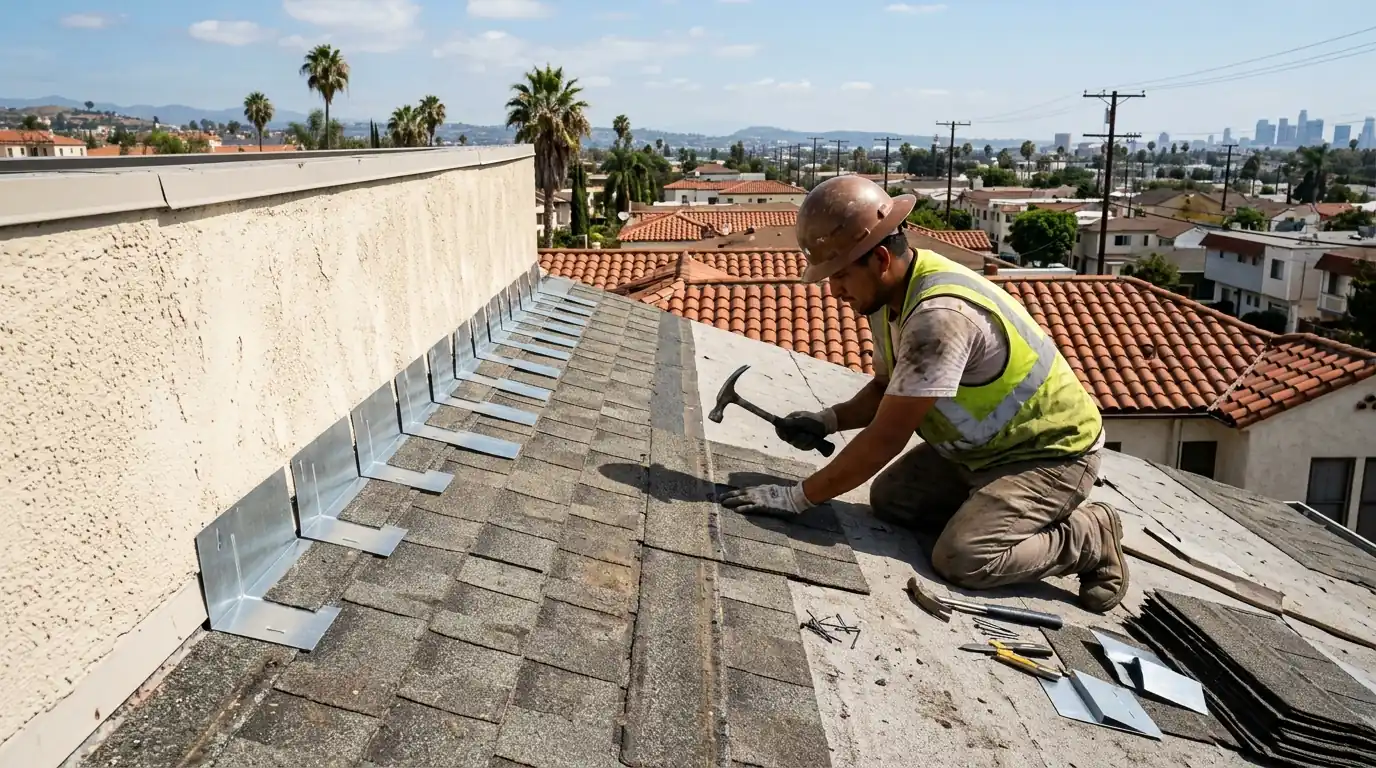
Where a roof slope runs along a wall, each course of shingles or tile needs its own step flashing piece, with the wall covering lapped over it. We open the wall line, install new step flashing course by course, and restore the stucco or siding over it with counterflashing. Where stucco was applied tight to the roof, we cut a clean line so the new flashing can be tucked behind it, then patch the stucco so it matches and sheds water.
Skylight and vent flashing
Skylights, pipe vents, exhaust fans and furnace flues each need a flashing collar or kit woven into the roofing above and below. We replace cracked boots, rusted collars and site-built skylight flashing with proper kits, sized to the penetration. Old exhaust fans and flues that no longer serve anything are better removed than reflashed, so we'll point them out and close the opening with new decking and roofing. It's one less hole in your roof to look after.
Published figures put Los Angeles re-roofing at about double the national average, which makes a well-done flashing repair one of the cheapest ways to add years to a roof that's otherwise sound. In El Sereno, where homes sold at a median near $800,000 in November 2025, a leak running quietly behind the stucco can damage framing worth far more than the repair.
Why tar and caulk aren't flashing repairs
Roof cement and caulk bond poorly to old metal and crack as the roof heats and cools. Within a season they open up, and meanwhile they hide what actually failed.
If you see a leak at a wall or chimney, put a bucket under it, photograph the spot from the ground, and call. New metal flashing is the lasting fix.
How a flashing repair runs
Find the failed joint
Stains, tar patches and loose metal are traced.
Open roof and wall
Roofing lifted and the wall line opened.
Replace the metal
New step, counter or collar flashing installed.
Restore the finish
Roofing relaid and stucco or brick patched.
Water test
The joint is tested before we leave.
Flashing repair questions
Straight answers to what people ask us most about this job.
Other ways to reach usLeaks at walls, chimneys, skylights or vents usually point to flashing.
Yes. We open only the area around the joint, replace the metal and relay the roofing.
Caulk cracks within a season as the roof heats and cools. Metal flashing lasts.
Yes. Tile is lifted, the flashing replaced, and tile cut and reset around the chimney.
Often, where counterflashing is cut in. We patch it and leave it ready for paint.
Most take a day; chimneys that need a new cricket can take longer.
Every piece should be; see what a full replacement includes.
Other repairs & leaks jobs we handle
Sagging roofline correction
Structural Roof Repair.
Blown-off shingles and tiles
Storm and Wind Damage Roof Repair.
Nail pops and lifted seams
Shingle Roof Repair.
Valley leak repair
Roof Leak Repair.
Loose and leaking fasteners
Metal Roof Repair.