Hot mop built‑up roofing for Los Angeles flat roofs
Hot mop built-up roofs, layers of felt set in hot asphalt, sit on a lot of older LA apartments, garages and commercial buildings. We repair them where the plies are sound and replace them when they aren't.
- Answered 24/7
- Repair or replace
- Cool-roof surfacing
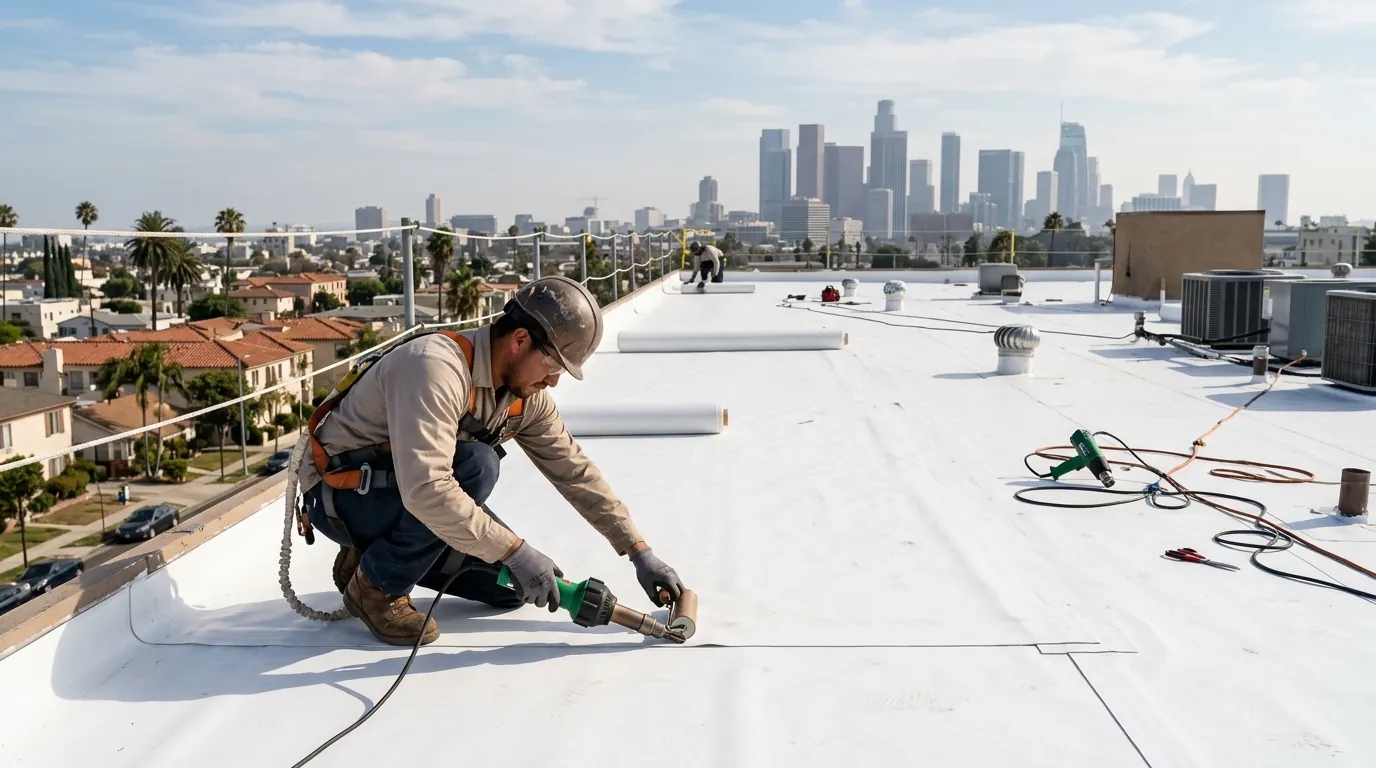
Hot mop built-up roofing in Los Angeles is a flat roof made of three or more plies of felt laid in hot asphalt, finished with gravel or a mineral cap sheet. We repair blistered or split built-up roofs, and replace failed ones with a new multi-ply system or a modern alternative, surfaced to meet the city's cool-roof rule.
Updated September 2026
Layers of felt and asphalt, built on the roof
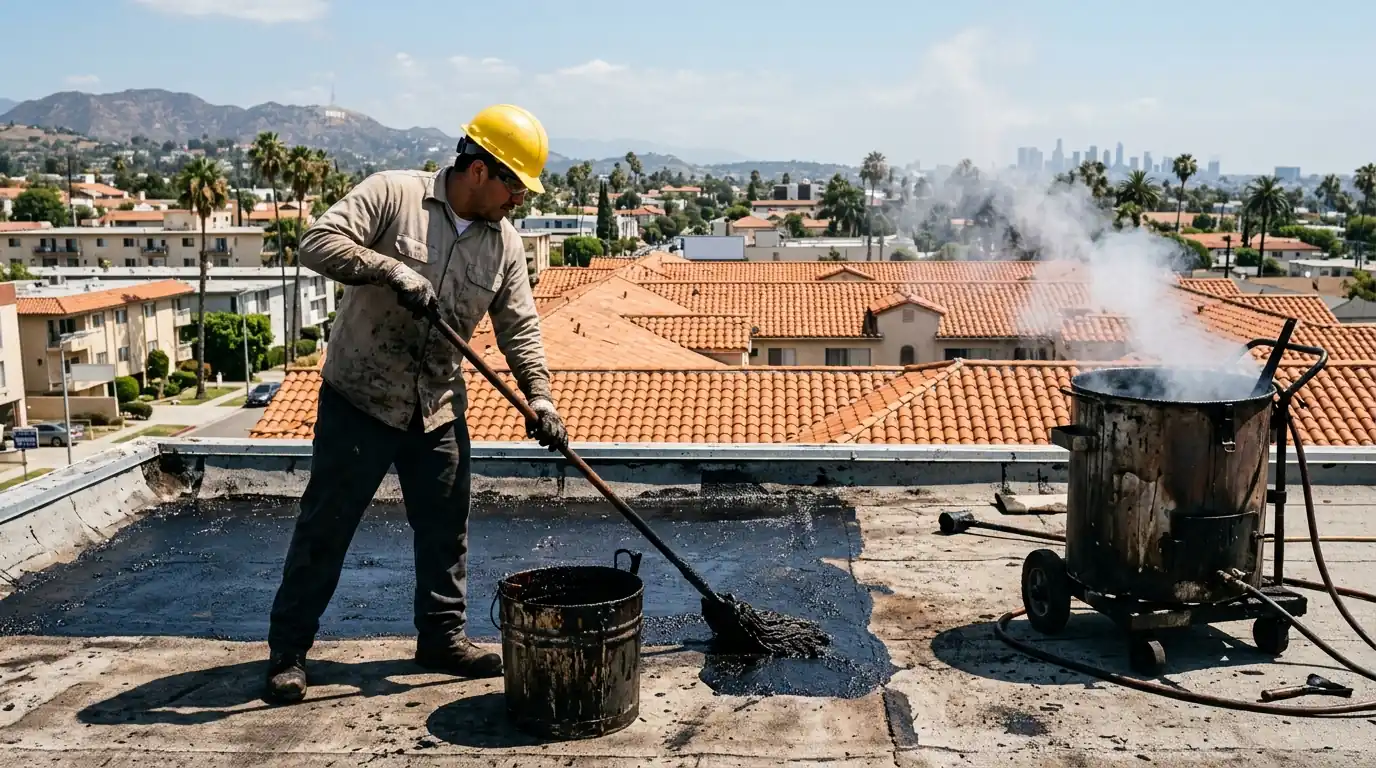
A built-up roof is assembled in place: a base sheet nailed to the deck, then alternating plies of felt and hot asphalt mopped on from a kettle, and a top surface of gravel set in asphalt or a granulated cap sheet. The layers make a thick, redundant membrane that has covered flat roofs in Los Angeles for generations.
Built-up roofs age by drying out: the asphalt oxidizes, the surface cracks into an alligator pattern, blisters form between plies, and gravel drifts off the high spots. While the plies are bonded, repairs and a new surface add years; once water has soaked the felts, the roof comes off. Torch down and single-ply TPO are the usual alternatives.
What a built-up roof costs depends on
Published LA flat roof ranges run $8-$14 per sq ft for replacement. A built-up job moves with:
- Layers to remove
Old built-up roofs are heavy, and gravel adds haul-away weight.
- Number of plies
More plies mean more material and labor.
- Surfacing
Gravel, cap sheet or coating each price differently.
- Deck repairs
Soft decking under wet felts is replaced first.
- Rooftop equipment
Units and curbs need flashing and sometimes lifts.
Built-up, torch down or TPO for a flat roof
All three are proven on LA flat roofs; they differ in thickness, method and upkeep.
| System | How it goes down | Best fit | Tradeoff |
|---|---|---|---|
| Built-up (hot mop) | Three or more plies in hot asphalt | Heavy foot traffic, equipment | Heavy; hot asphalt on site |
| Torch down | Two heat-fused modified plies | Duplexes, garages | Open flame on site |
| TPO single-ply | One ply, welded seams | Large simple roofs | Thinner, less forgiving |
Replace, resurface or repair
Hot mop built-up roof replacement
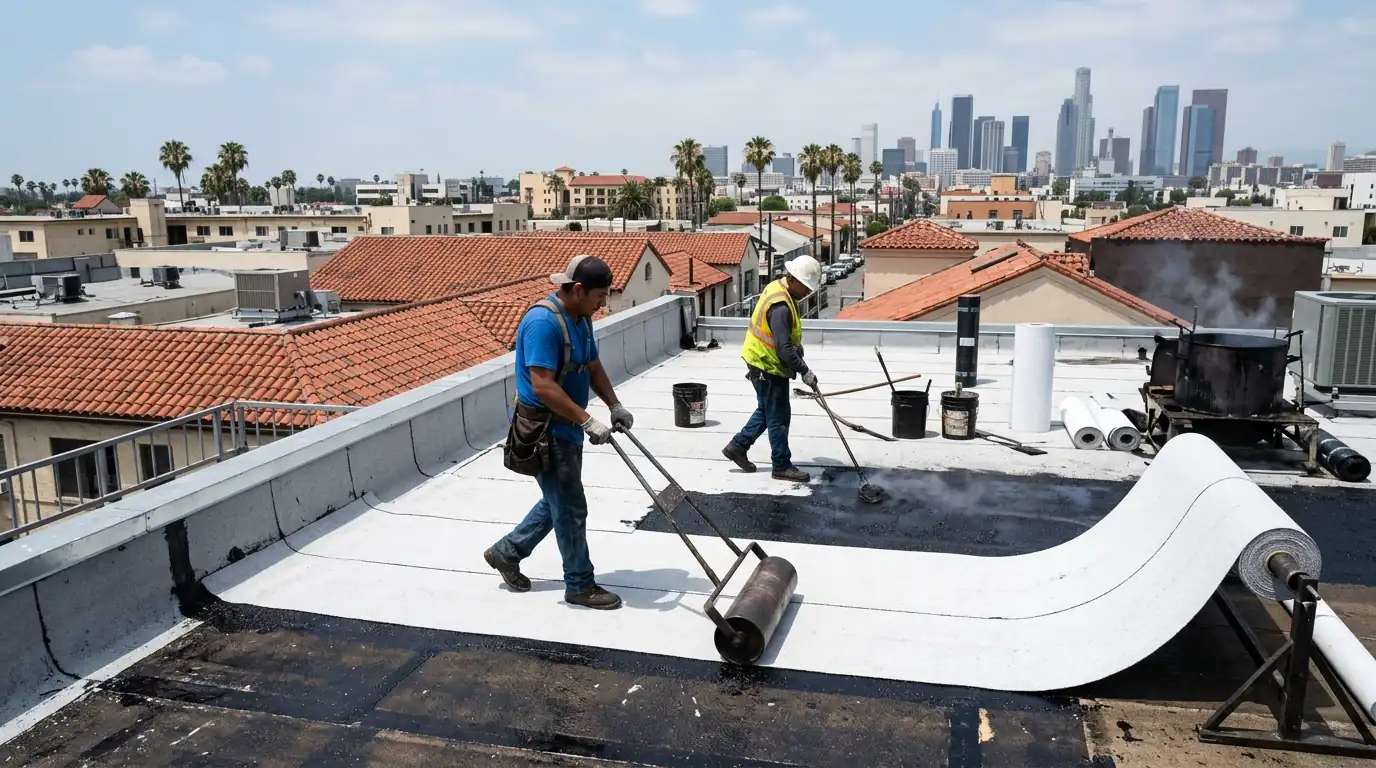
When the felts are wet or the roof already carries a recover, we tear off to the deck, repair it, nail a base sheet, and build three or more plies in hot asphalt with a granulated cap or gravel surface. Built-up is still a strong choice for roofs with heavy foot traffic or rooftop equipment, where its thickness pays off. It's also the system many older LA buildings were designed around, so drains, parapets and roof hatches often fit it better than a thin membrane would.
Gravel and cap sheet surfacing
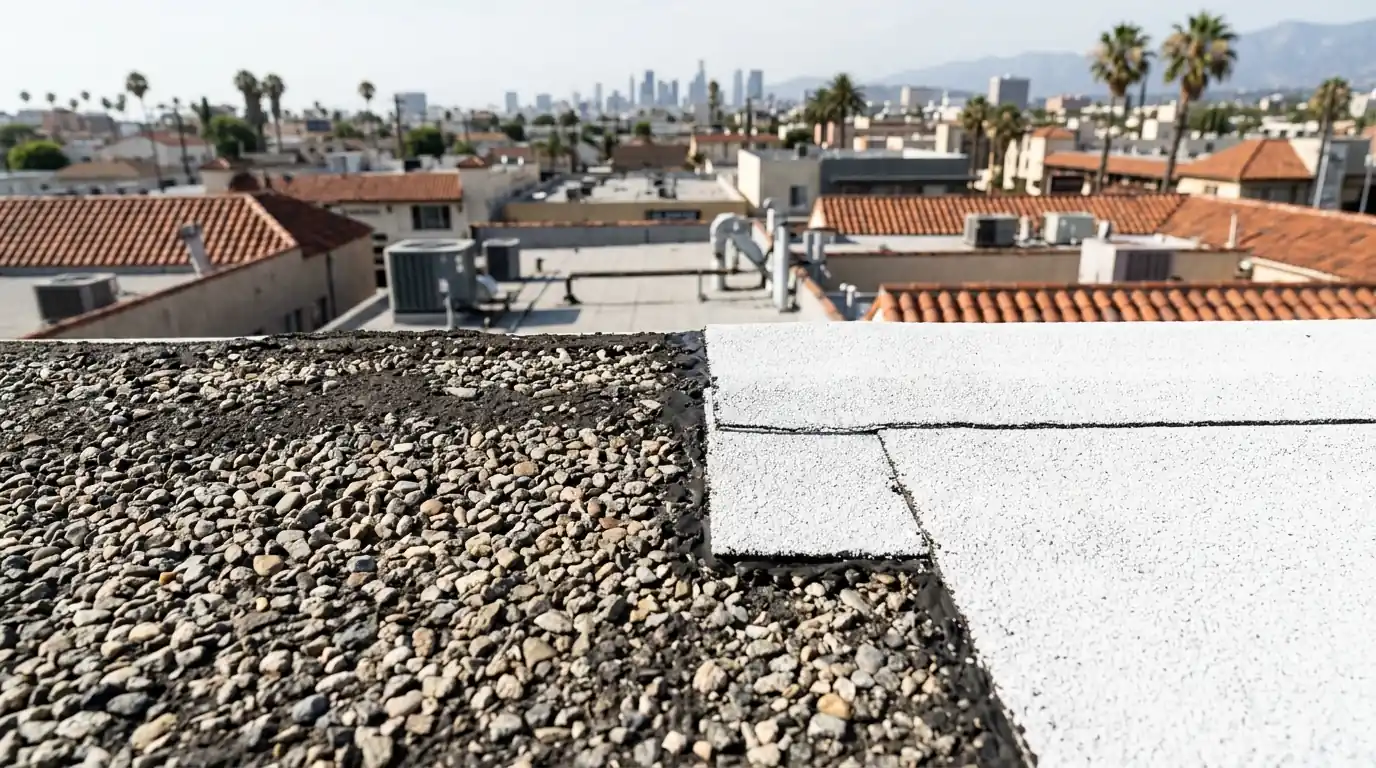
The surface protects the plies from sun. Gravel set in a flood coat shields well but hides problems and adds weight; a white granulated cap sheet is lighter, easier to inspect and reflects heat. On a resurface we choose the finish that meets the cool-roof rule and suits how the roof is used. Gravel can be removed, stockpiled and reused on the same roof when the plies beneath are rebuilt, which saves material and haul-away on larger commercial roofs.
Built-up roof repair
Blisters, alligator cracking, split seams and bare spots are repaired by cutting out the damaged plies, drying the area, and building it back with matching felt and asphalt or a compatible modified sheet. Flashing at parapets and drains is rebuilt at the same time, since that's where built-up roofs usually leak first. A small repair done early keeps water out of the felts; once plies are soaked, repairs stop holding and the whole section has to be rebuilt from the deck.
In Los Angeles, a replacement covering more than half of a roof has to use a Cool Roof Rating Council listed product, so a new built-up roof here is finished with a reflective cap sheet or coating rather than the dark gravel many older roofs carry. Cool-rated materials can add 10-15% to material cost, and on a flat roof over apartments that difference shows up as cooler top-floor units.
Why hot mop work is never a homeowner job
Built-up roofing uses asphalt heated in a kettle to several hundred degrees. Burns from hot asphalt are severe, and kettles need trained handling and fire precautions. It is crew work with the right equipment, not a weekend repair.
What you can do is keep drains clear, stay off blistered areas, and call when you see cracking or standing water.
How a built-up roof job runs
Survey and cores
We core the roof to see how many plies are wet or dry.
Repair or replace
The cores decide between a repair, a resurface or a new roof.
Tear-off and deck
Old plies and gravel come off, and the deck is repaired.
Build the plies
Base sheet, felts in hot asphalt and flashing at every edge.
Surface and inspect
Cap sheet, gravel or coating, then the inspection.
Built-up roofing questions
Straight answers to what people ask us most about this job.
Other ways to reach usA well-built multi-ply roof lasts a long time while its surface is maintained; the plies fail once the surface wears through.
Yes, when the plies are still bonded and mostly dry. Cores tell us.
Yes, with surfacing that meets the cool-roof rule on qualifying replacements.
Cap sheets are lighter, easier to inspect and reflect more heat; gravel protects well but hides problems.
Yes, for the day it's applied. We keep kettles away from windows and air intakes.
Once, if it's dry and bonded; otherwise we tear off. For dry roofs, see roof coating.
It depends on foot traffic and equipment. We compare both in writing.
Other flat & low-slope roofing jobs we handle
Foam roof recoating
Spray Foam Roofing.
Cold-applied modified bitumen
Torch Down Modified Bitumen Roofing.
Walkable deck coatings
Roof Deck Waterproofing.
PVC membrane roofing
TPO and PVC Flat Roof Installation.
Mobile home roof-over systems
Mobile Home Roofing.