Roof maintenance for Los Angeles homes, done before the rain comes
Many leaks start small: a cracked pipe boot, a clogged scupper, a slipped tile. A maintenance visit finds and fixes them while they are still small, ideally in the fall before the first winter storm.
- Answered 24/7
- Fall pre-season visits
- Photo report
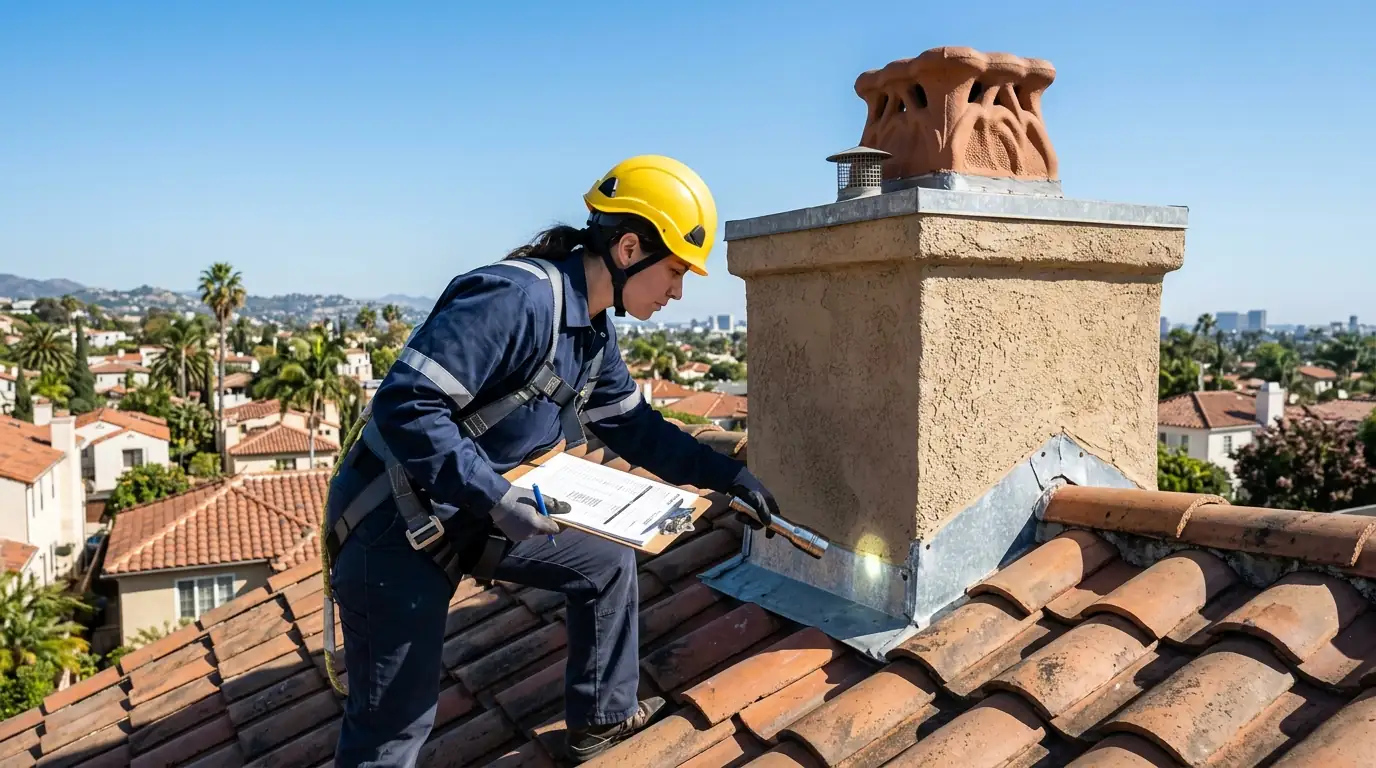
Roof maintenance in Los Angeles is a once-a-year visit, ideally in the fall, that clears drains and valleys, reseals pipe boots and flashings, resets loose tile or shingles, and photographs anything that needs a real repair. It costs far less than the leak it prevents.
Updated September 2026
Small fixes on a schedule, not emergency calls in January
Los Angeles roofs spend months in dry heat, then take a season's rain in a few storms. Sealants shrink, pipe boots crack, leaves pile into valleys and flat-roof drains, and nobody notices until the first heavy rain finds the gap. A maintenance visit is a planned look at those weak points first.
Each visit ends with photos and a short written list: what we fixed on the spot, what can wait, and what needs a proper repair. Damage beyond maintenance gets its own scope, such as flashing work at a wall or chimney, never a surprise bill.
What a maintenance visit covers
Every visit follows the same list, so nothing gets skipped.
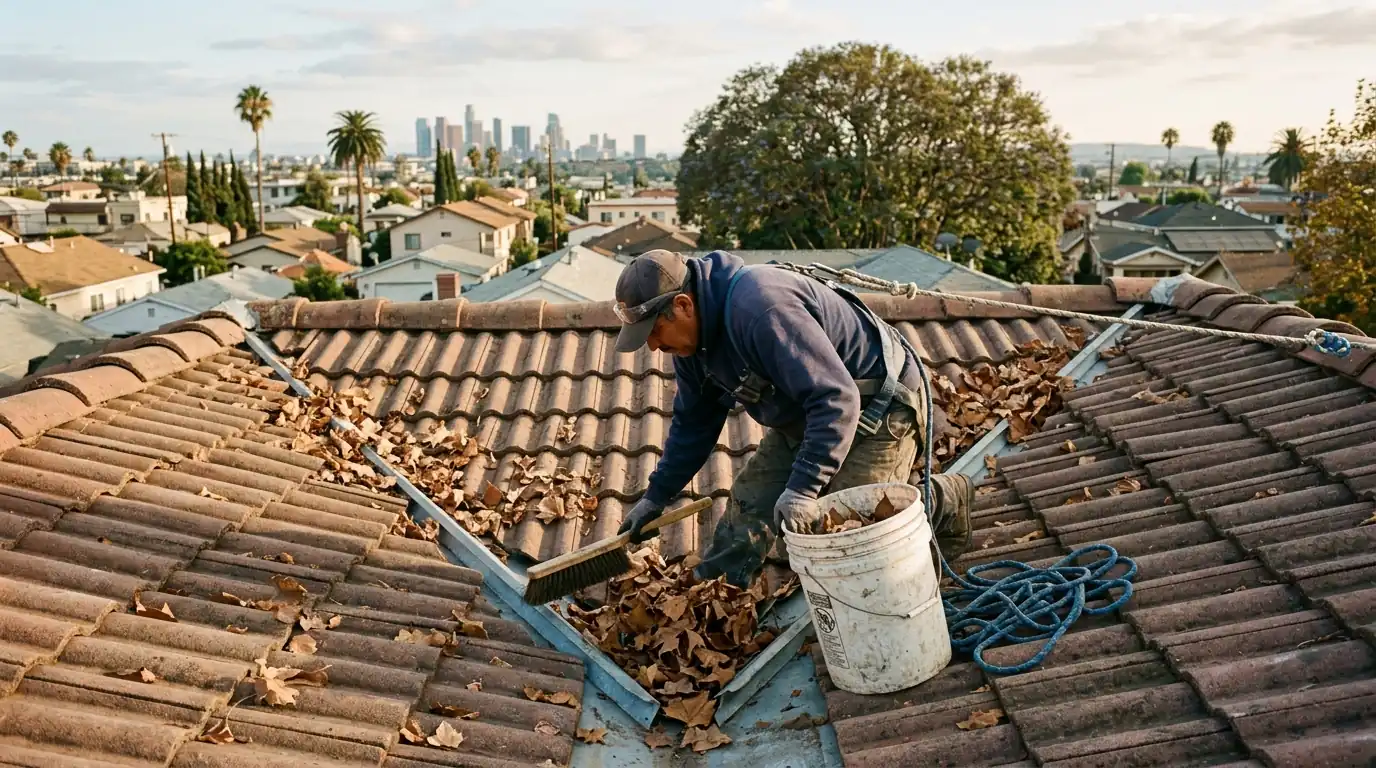
- Gutters, valleys, scuppers and flat-roof drains cleared
- Pipe boots, vent collars and flashing joints resealed
- Slipped tiles and lifted shingles reset or sealed
- Skylight curbs and chimney flashing inspected
- Attic checked from inside for stains, daylight and damp
- Branches over the roof noted for trimming
- Photo report sorted into fixed, watch and repair
What a maintenance visit actually does
Debris and drain clearing
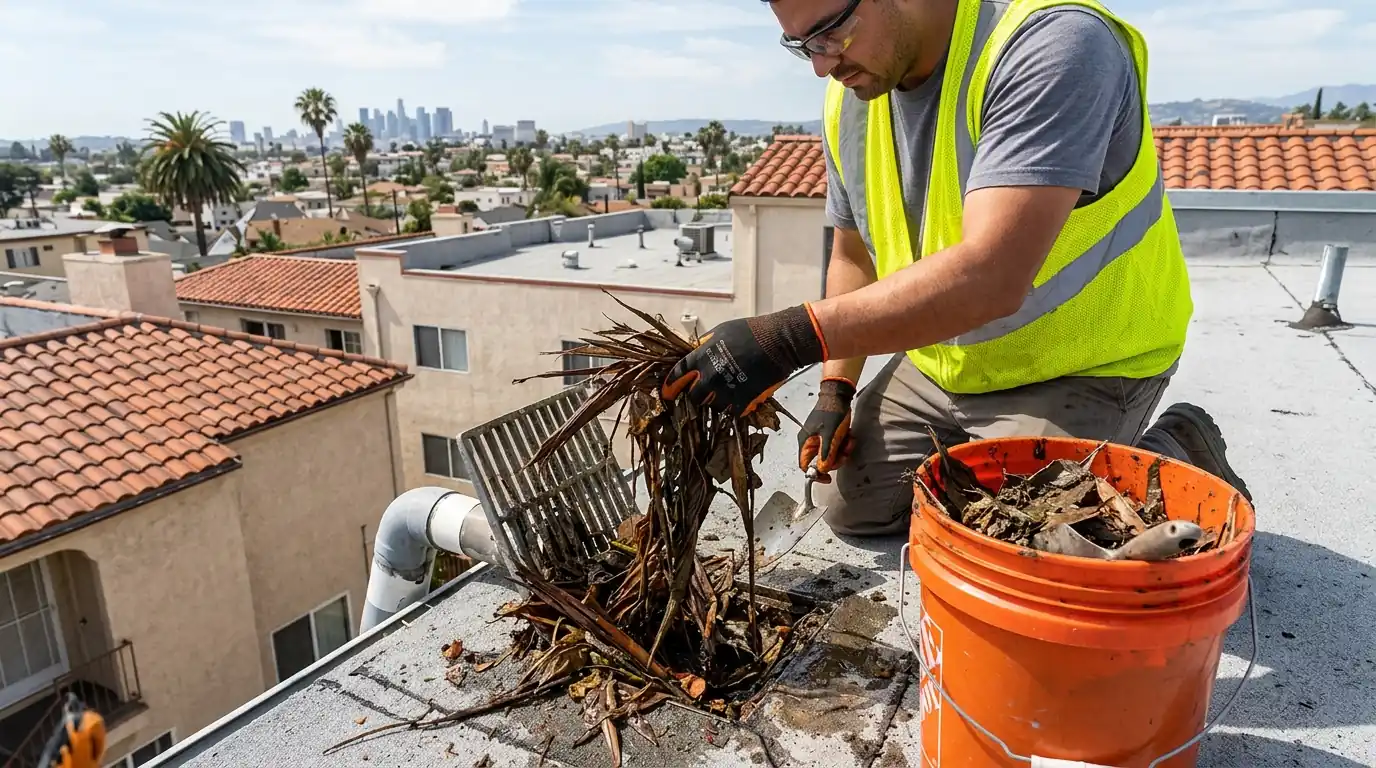
Leaves and palm debris collect in valleys, behind chimneys and around flat-roof drains, and a blocked drain turns a flat roof into a shallow pond. We clear valleys, gutters, scuppers and drains, check that downspouts run free, and note branches that need trimming back from the roof. On tile roofs, leaves pile up behind each course and hold water against the underlayment, so we clear the upper side of tiles around valleys where that debris tends to collect.
Sealant and pipe boot refresh
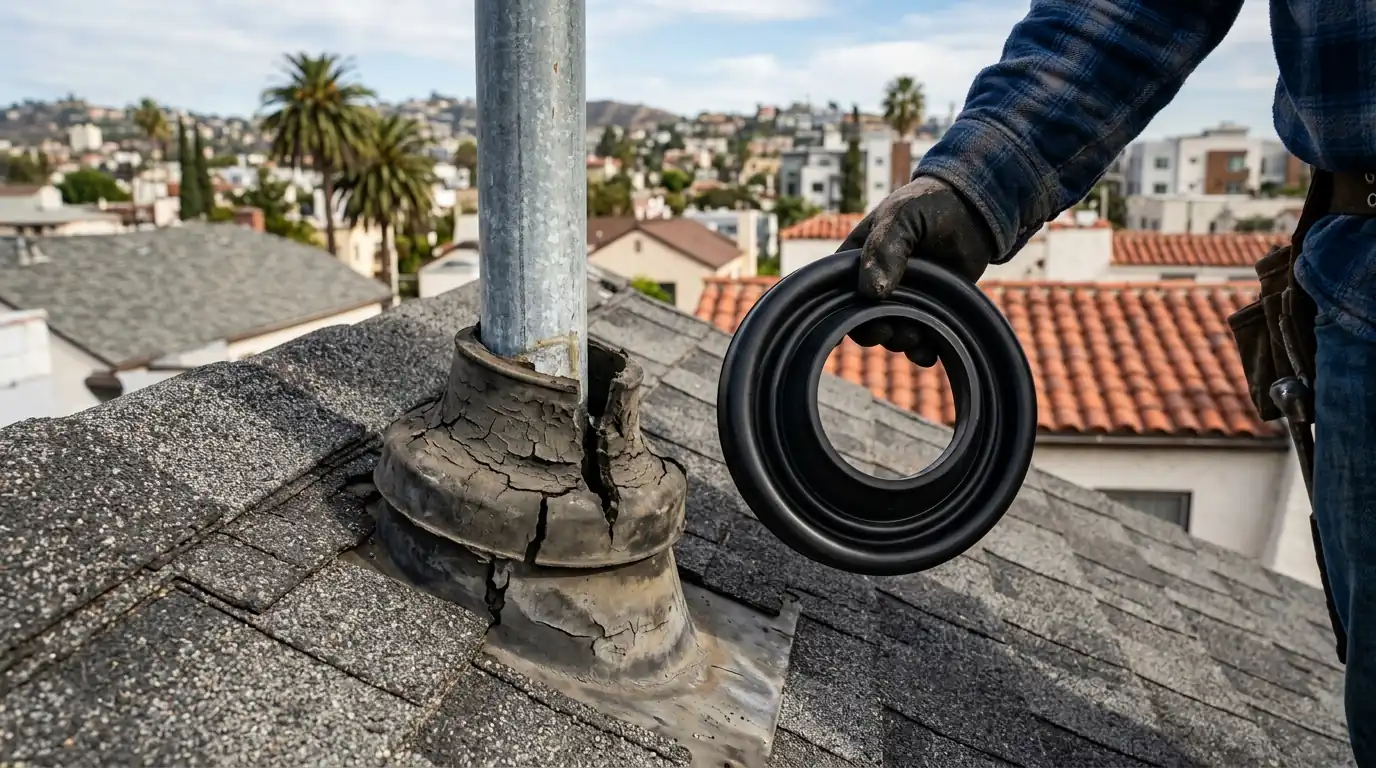
Rubber pipe boots and sealant beads age fastest in the sun. We check every boot, vent collar, flashing joint and skylight curb, replace cracked boots, and reseal joints with a compatible sealant instead of smearing tar over them. We also check the seal where the roof meets any satellite dish or antenna mount, since those holes often get drilled after the roof goes on and nobody reseals them. Old mounts that aren't used anymore are removed and the holes sealed.
Minor repairs during service
Small problems are fixed during the visit: slipped tiles reset, lifted shingle tabs hand-sealed, exposed nail heads sealed, a loose ridge cap refastened. Anything larger is photographed and written up so you can decide on the repair separately. Each small fix is photographed before and after, so you can see what was done without climbing up, and the list shows which items we expect to need attention next year. That way the next visit starts where this one left off.
Santa Ana winds reach 60 to 80 mph through the passes, and they do two things to a roof: dry out sealants and loosen anything poorly fastened. With roughly one third of Los Angeles homes roofed in clay or concrete tile, the loosened pieces are often tiles and ridge caps. That is why we schedule maintenance in the fall, after the dry season and ahead of the first real rain.
What a maintenance visit costs depends on
Maintenance is priced per visit on the roof in front of us. Five things set it:
- Roof size and pitch
Larger and steeper roofs take longer to walk safely.
- Roof type
Tile needs careful footing; flat roofs have drains and seams to check.
- Debris load
Heavy leaf and palm debris adds clearing time.
- Penetrations
More vents, boots and skylights mean more to reseal.
- Small repairs found
Parts like pipe boots and tiles add to the visit.
What you can safely check between visits
From the ground and indoors you can catch the early signs: gutters overflowing in rain, stains on ceilings or in closets, granules piling at downspouts, and tiles or shingles in the yard after wind. Our fall wind checklist lists more, and the first steps when a leak starts covers the rest.
Leave the roof itself to us. Tile cracks underfoot, and any pitch is a fall risk.
How a maintenance visit runs
Book the visit
Fall is ideal, before the first real storm of the season.
Inside first
We check the attic and ceilings for stains or damp.
Walk and clear
Drains, valleys and gutters are cleared as the roof is walked.
Fix small things
Boots, sealant, slipped tiles and lifted tabs are handled on the spot.
Report and plan
You get photos and a list: fixed, watch and repair.
Roof maintenance questions
Straight answers to what people ask us most about this job.
Other ways to reach usOnce a year for most homes, ideally in the fall. Roofs under heavy trees or with flat sections may need a spring visit too.
Yes. New roofs still collect debris and have sealants that age in sun; early checks keep small problems from shortening its life.
Maintenance cleans and fixes small things. An inspection documents condition for a sale or insurer; see roof inspections and certifications.
Yes. We step on the lower third of each tile over the batten and replace anything already cracked with matched tile.
Yes. Gutters, downspouts, valleys and flat-roof drains are cleared on every visit.
You get photos and a separate written scope. Nothing beyond small fixes is done without your go-ahead.
Yes. Flat roofs need drains cleared and seams checked more than any other type, on the same yearly schedule.
Other inspections & maintenance jobs we handle
Roof repair under existing panels
Solar Panel Roof Work.
Radiant barrier sheathing on re-roofs
Radiant Barrier Installation.
Roof Inspection and Certification in Los Angeles
Roof Inspection and Certification.
Ridge vent installation
Attic Ventilation.
Drain and scupper detailing
Roof Deck Waterproofing.