Structural roof repair for sagging roofs and damaged framing in Los Angeles
When the frame under a roof sags or cracks, no covering will stay watertight for long. We find out why the structure moved, repair or reinforce rafters, trusses and ridge beams, and rebuild the roof on a straight, solid frame.
- Answered 24/7
- Rafters, trusses, ridges
- Framing before roofing
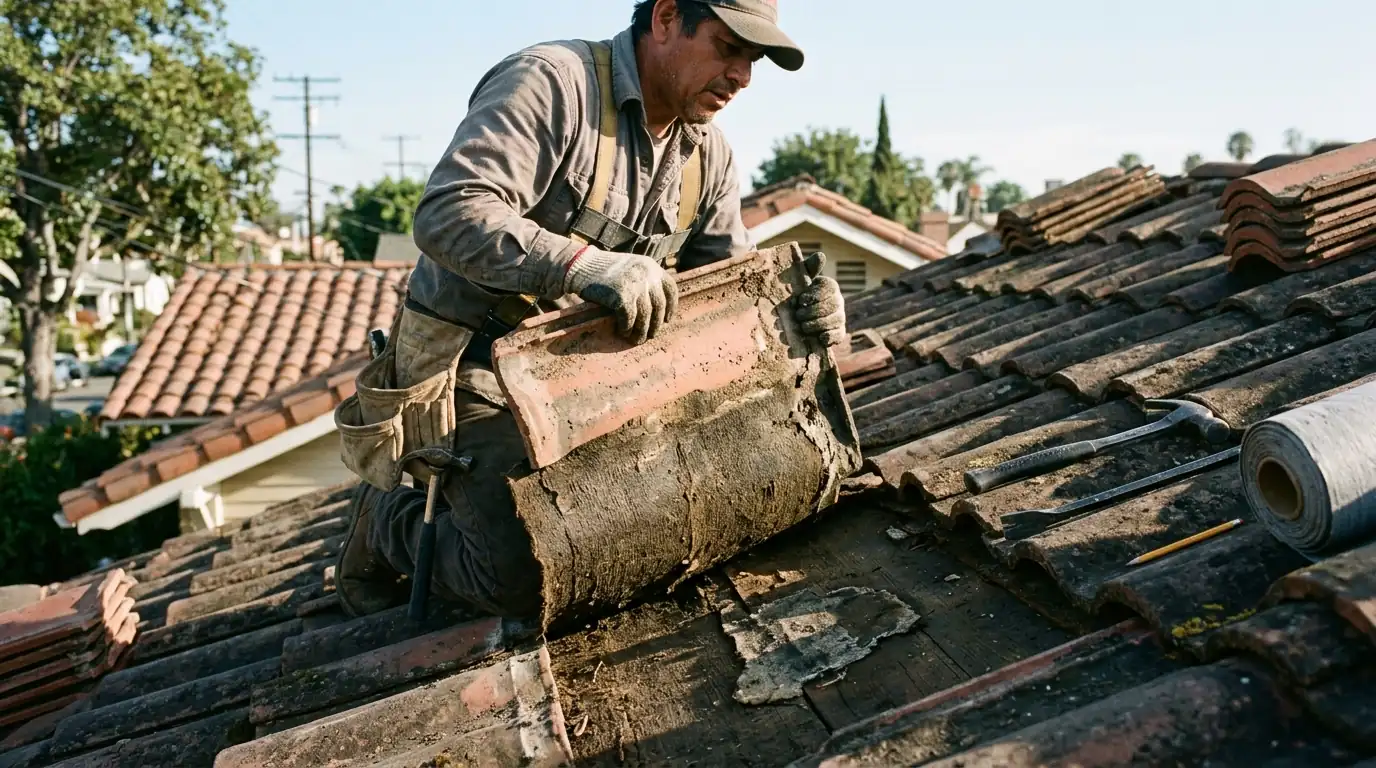
Structural roof repair in Los Angeles fixes the framing under the roof: sagging rooflines, cracked or rotted rafters and trusses, and ridge beams that have dropped. We find the cause, sister or replace damaged members, add support where the original design fell short, and rebuild the covering over a sound frame.
Updated September 2026
A sag is the frame telling you something failed
Roofs sag for a handful of reasons: rafters undersized for a heavy tile roof, long-term leaks that rotted the wood, a ridge without enough support, walls spreading outward, or impact from a tree. The sag is a symptom; repairing the roof without finding the cause just brings it back.
Many repairs are done from the attic without removing the roof: sistering rafters, adding collar ties or struts, resetting a ridge. When damage is severe or the deck is rotten, we open the roof, repair the framing and rebuild with new decking. Some work needs an engineer's letter and a permit, which we coordinate.
Signs your roof framing needs attention
A ridge that dips
A sagging peak points to ridge or rafter trouble.
A wavy roof surface
Bellies between rafters show through the covering.
Cracked rafters
Splits at knots or near old leaks, seen in the attic.
Doors that start sticking
A spreading roof can push walls and rack openings.
Cracks at wall-ceiling joints
Movement in the structure above.
Dark, soft wood
Rot from long-term leaks weakens framing.
A tree impact
Even without a leak, a hit can crack framing.
What structural roof repair costs depends on
Framing repairs are priced once the cause and extent are clear. Five things set the cost:
- Extent of damage
A few rafters and a whole slope are different jobs.
- Access
Attic-side work costs less than opening the roof.
- Engineering
Some repairs need an engineer's letter and permit.
- Roof covering
Tile has to be lifted and stored if the roof opens.
- Related repairs
Rotted decking and the leak that caused the damage.
Straightening and strengthening the roof frame
Sagging roofline correction
A dip in the ridge or a belly between rafters shows from the street long before it leaks. We measure the sag, find where the load is failing, jack the framing back toward straight in stages, and lock it there with new members or supports so the roof above can be rebuilt flat and tight. We don't try to force a long-standing sag straight in one go, because pushing too fast can crack plaster and drywall below; gradual correction protects the finishes.

Rafter and truss repair
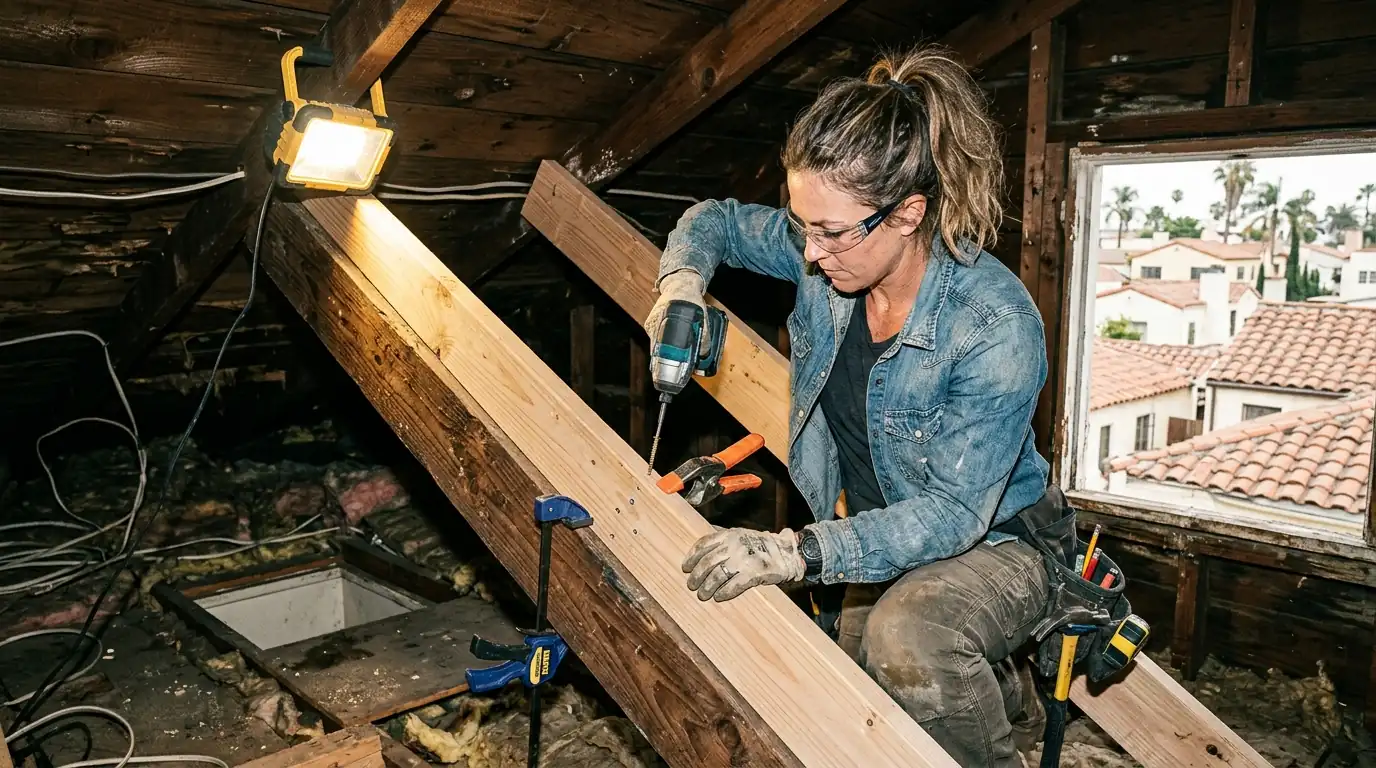
Rafters crack at knots, rot where leaks sat for years, or get cut for vents and skylights without proper headers; trusses get damaged by impacts or unapproved cuts. We sister new lumber alongside damaged members, add blocking and hangers, and replace pieces too far gone to save. Trusses are engineered as a system, so a damaged truss is repaired to an engineer's detail rather than improvised, and we keep that detail with your records for any future buyer.
Ridge beam reinforcement
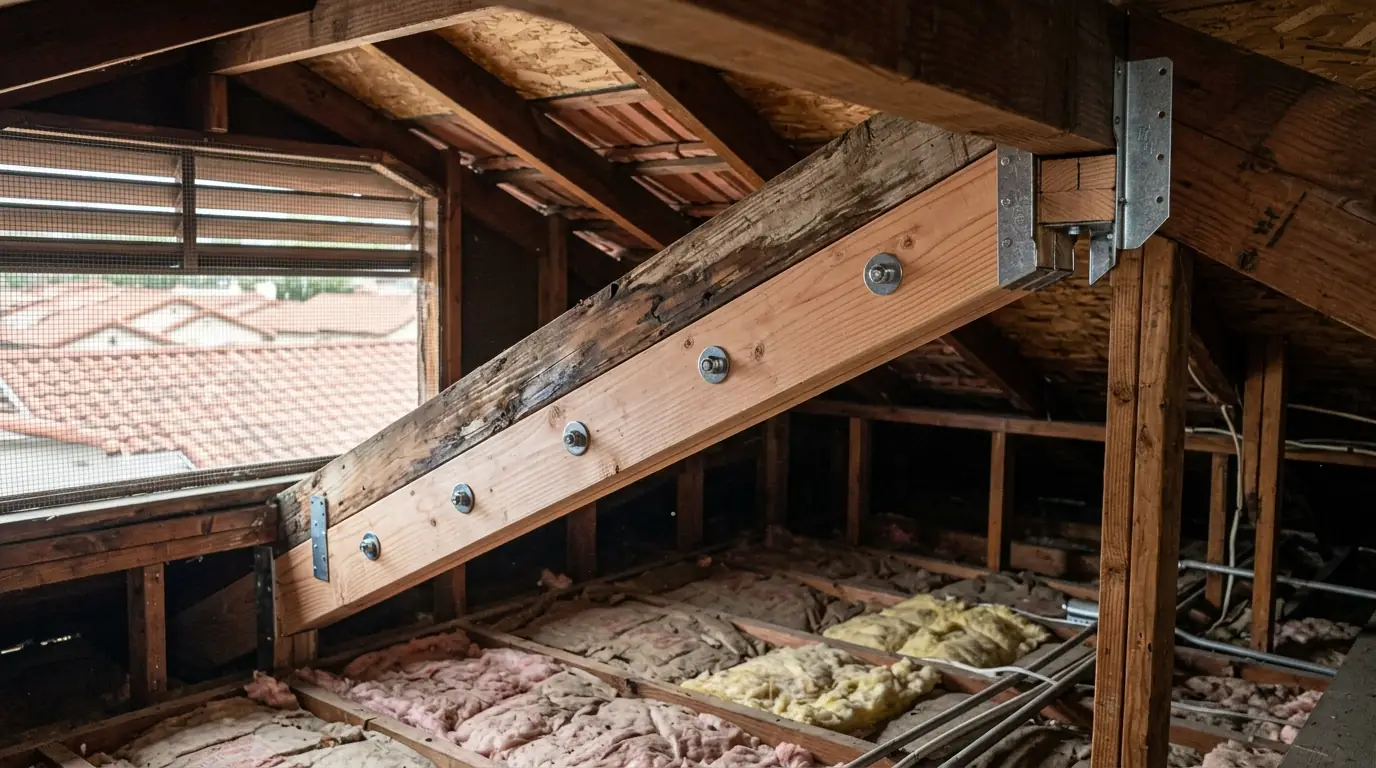
A ridge beam carrying too much load without posts, or one rotted at the ends, lets the whole roof settle. We add posts down to bearing walls, install collar ties or a new beam where needed, and tie the rafters back together so the roof stops spreading. Spreading shows up as a gap between the top of the wall and the ceiling or as doors that stick, so we check those signs inside as well as the framing in the attic.
Los Angeles saw a dramatic housing increase in the 1940s and 1950s, and some neighborhoods are far older: Lincoln Heights was subdivided in 1873 and borders El Sereno and Montecito Heights, where many homes carry roofs framed long before modern codes. Framing that has held for a century often did so under a lighter roof, so before any heavier covering goes on, we check the rafters and ridge first.
How long structural roof repairs take
Attic-side repairs like sistering rafters or adding supports often take a few days. Jacking a sag back gradually and rebuilding the roof above takes longer.
When an engineer's letter or permit is needed, that review sets the start date more than the work itself does.
How a structural roof repair runs
Find the cause
Load, leaks, spreading walls or impact, before any fix.
Measure and plan
The sag is measured and the repair method set.
Shore and repair
Temporary supports, then sistering, posts or new members.
Rebuild the roof
Decking and covering restored over the straight frame.
Inspect
Permit inspections where required, photos for your records.
Structural roof questions
Straight answers to what people ask us most about this job.
Other ways to reach usIt means the frame is under strain. Most sags develop slowly, but have it checked soon, and right away after heavy rain or an impact.
Often, from the attic, by sistering rafters and adding supports. Severe cases need the roof opened.
Some repairs do, especially beam or bearing changes. We coordinate the letter and permit when needed.
Framing built for shingle may not. We check before any switch to tile; lightweight tile can help.
Overloading, knots, old leaks, and cuts for vents or skylights made without proper support.
Yes, framing first, then the roof; see storm and wind damage repair.
A repair that removes the cause and restores proper support lasts as long as the rest of the structure.
Other repairs & leaks jobs we handle
Blown-off shingles and tiles
Storm and Wind Damage Roof Repair.
Ridge and hip mortar repair
Tile Roof Repair.
Heat-damaged shingles and tile
Fire and Smoke Damaged Roof Repair.
Skylight and vent flashing
Roof Flashing Repair.
Metal seam and flashing repair
Metal Roof Repair.