Radiant barrier installation for hot Los Angeles attics
A radiant barrier is a reflective layer under the roof that turns back much of the sun's heat before it reaches the attic floor. Added during a re-roof or fastened into an existing attic, it makes the rooms below easier to cool.
- Answered 24/7
- Re-roof or retrofit
- Title 24 aware
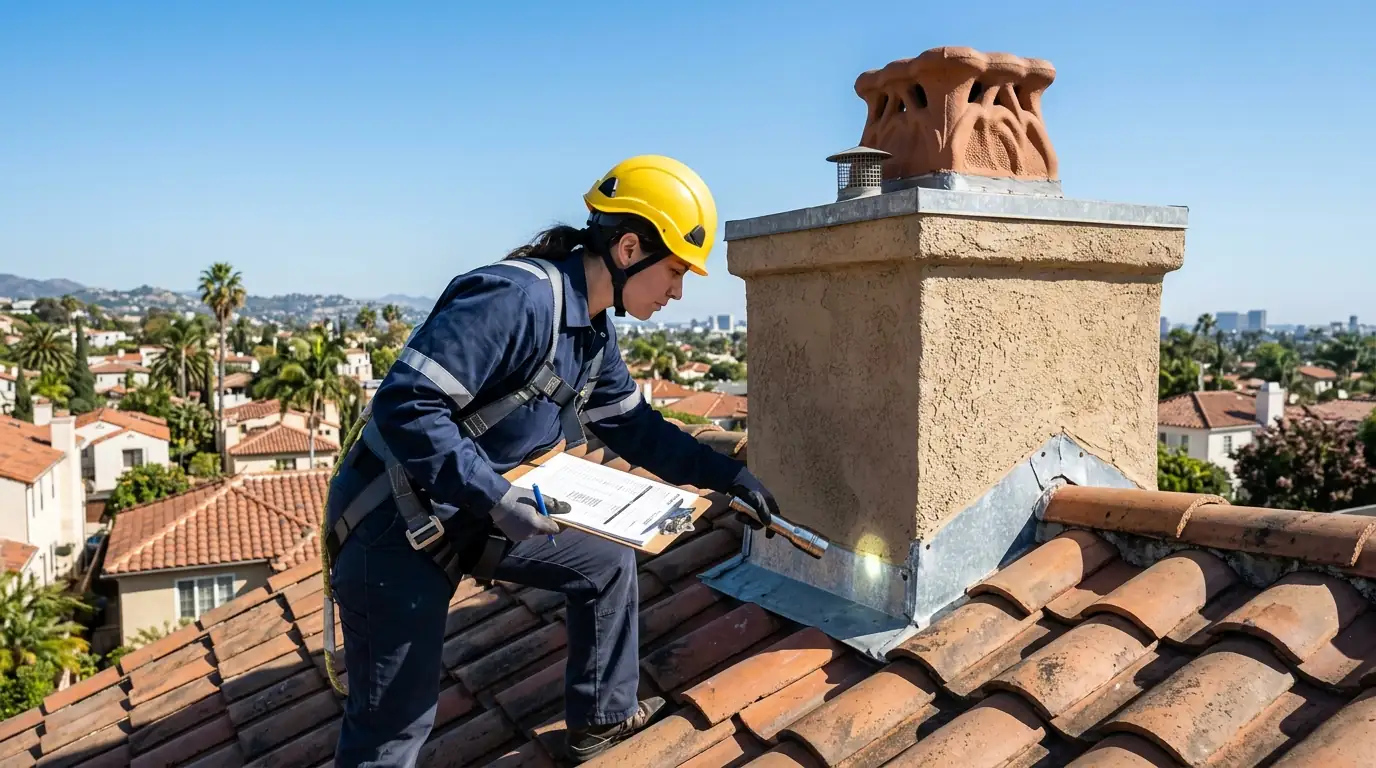
Radiant barrier installation in Los Angeles adds a low-emittance reflective layer under the roof deck, either as foil-faced sheathing during a re-roof or as foil fastened to the rafters in an existing attic. It cuts the radiant heat reaching attic insulation and ducts, and works best alongside balanced attic ventilation.
Updated September 2026
Stop the heat at the roof, not the ceiling
On a sunny day the roof deck gets very hot and radiates that heat down into the attic, onto the insulation and onto any ducts running through it. A radiant barrier is a reflective surface with very low emittance that sends much of that radiant heat back up instead of passing it down.
It isn't insulation and doesn't replace it; the two work together. The biggest gains come in attics with ducts, where cooler air around the ductwork helps the air conditioner. Pair it with balanced attic ventilation so the heat it turns back can leave the attic.
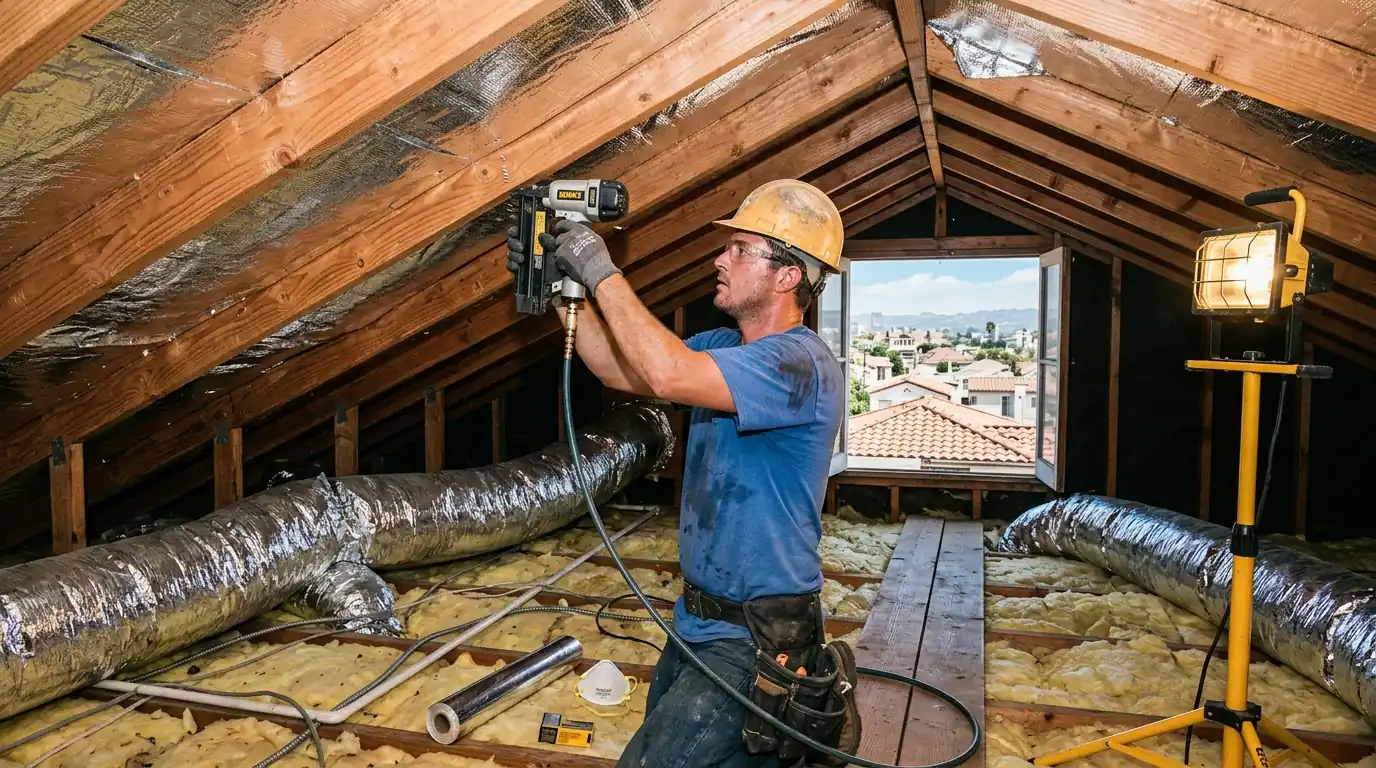
What a radiant barrier job covers
We check the attic before recommending anything.
- Attic temperature, ventilation and insulation check
- Duct location and condition noted
- Barrier type chosen: sheathing or retrofit foil
- Low-emittance product on rafters and gable ends
- Soffit, ridge and gable vents kept clear
- Insulation depth checked and topped up if agreed
- Photos of the finished attic
New sheathing, retrofit foil and insulation
Radiant barrier sheathing on re-roofs
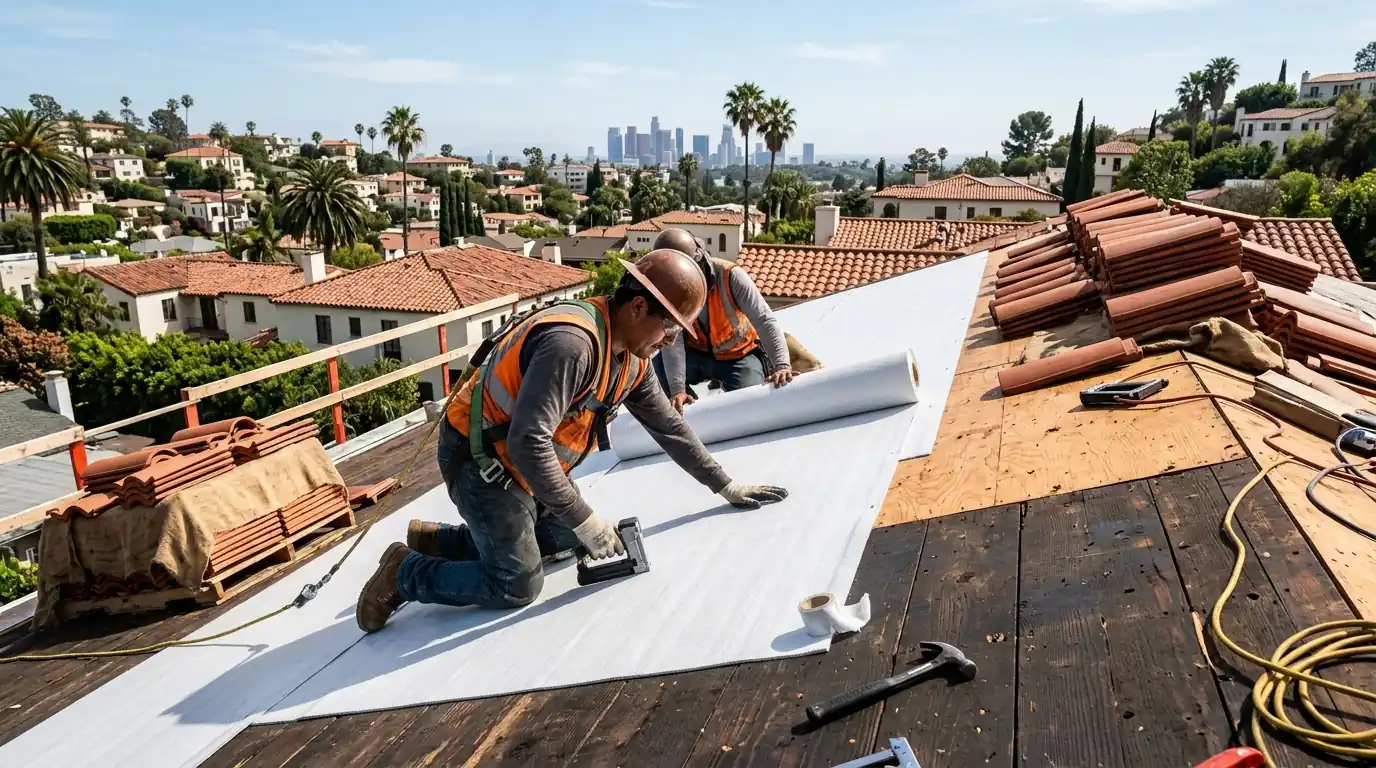
The easiest time to add a radiant barrier is during a re-roof, when foil-faced sheathing replaces damaged decking or goes over the whole roof. The foil faces down into the attic, with no extra attic work needed. We price it as an option in any re-roof scope. Because the foil comes bonded to the panel, there's no gap to maintain and nothing to sag later, which makes it the cleanest option when a re-roof is already planned.
Retrofit foil radiant barriers
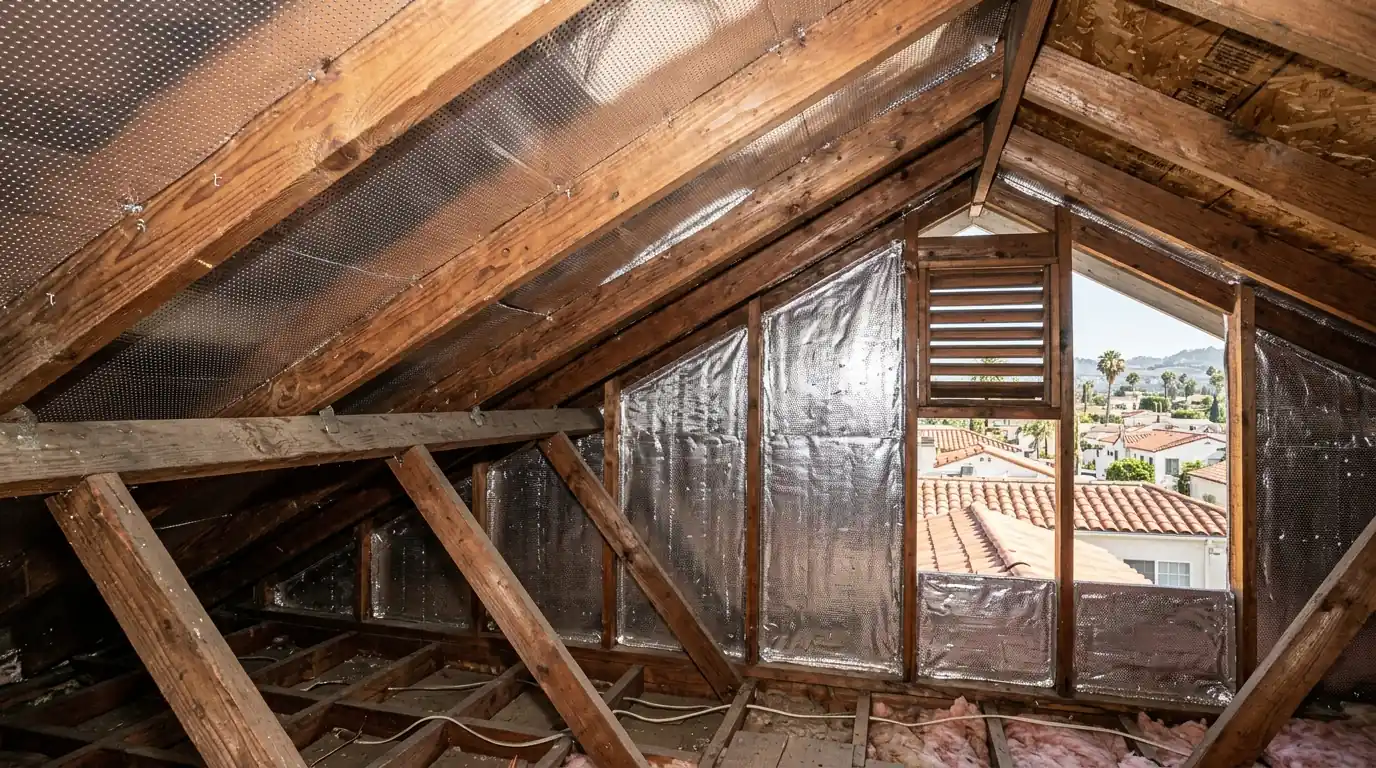
In an existing attic, perforated reflective foil is fastened to the underside of the rafters and gable ends, leaving an air gap and staying clear of vents. It is careful work in a hot, tight space, and it must never cover soffit or ridge vents, or the attic loses its airflow. Foil also has to stay clear of recessed lights, bath fans and flues, so we mark every penetration first and leave the required clearance around each one.
Attic insulation top-up
Many older LA attics have thin or compressed insulation. While we are in the attic for a radiant barrier, we check the depth and can add blown insulation to bring it up, keeping baffles at the eaves so the soffit vents stay open. We also seal obvious gaps around attic hatches and wiring holes before adding insulation, since air leaking up from the house carries heat and moisture that insulation alone won't stop. Then the insulation goes down evenly.
For new construction and additions on Title 24's prescriptive path, California calls for a radiant barrier in climate zones 2 through 15, and the Los Angeles area sits in zones 8 through 10, where the state also requires cool roofing materials. The barrier has to meet a low emittance value and cover the vertical attic surfaces, gable ends included. In existing homes it's an upgrade rather than a requirement, and those same specifications are a sound standard to install to.
What a radiant barrier costs depends on
Radiant barriers are priced by attic area and access. Five things set the cost:
- Sheathing or retrofit
Adding it during a re-roof costs less than a retrofit.
- Attic size
Material and labor scale with roof area.
- Access
Low, tight attics slow the work.
- Insulation work
Topping up insulation is a separate line.
- Ventilation fixes
Blocked vents found during the job are opened.
Should you install a radiant barrier yourself?
Retrofit foil is sold to homeowners, but attic work in an LA summer is dangerous: temperatures can be extreme, footing is only on joists, and foil near wiring or over vents creates new problems. Blocking soffit or ridge vents with foil is a common mistake that makes the attic hotter.
If you do it yourself, work early in the morning, keep the foil clear of vents and fixtures, and don't lay it face up on the insulation, where dust soon ruins its reflectivity.
How a radiant barrier job runs
Attic check
Temperature, vents, insulation and ducts are reviewed.
Pick the method
Foil sheathing on a re-roof, or retrofit foil.
Prepare the attic
Walk boards laid, vents and wiring marked.
Install
Barrier fastened to rafters and gable ends with an air gap.
Check the airflow
Vents confirmed clear and photos taken.
Radiant barrier questions
Straight answers to what people ask us most about this job.
Other ways to reach usIn sunny, hot attics, especially with ducts in the attic, it cuts the heat reaching the insulation and ducts.
No. It reflects radiant heat; insulation slows heat flow. They work together.
For new construction and additions on the prescriptive path in LA's climate zones, yes; for existing homes it's optional.
Yes, as foil fastened under the rafters in the attic.
It reduces radiant heat from the deck; ventilation removes the hot air.
In some homes it can weaken signal slightly; perforated products help.
That is the easiest time; ask for it in your replacement scope.
Other inspections & maintenance jobs we handle
Solar detach and reset for re-roofs
Solar Panel Roof Work.
Sealant and pipe boot refresh
Roof Maintenance.
Annual roof check
Roof Inspection and Certification.
Attic Ventilation in Los Angeles
Attic Ventilation.
Built-up roof repair
Hot Mop Built-Up Roofing.