Flat roof repair for Los Angeles duplexes, garages and additions
Flat roofs fail in the same few places: low spots that hold water, split seams, blisters, and the edges at parapets and scuppers. We find the wet area, repair it with matching material and fix the drainage that caused it.
- Answered 24/7
- All flat roof types
- Drainage fixed
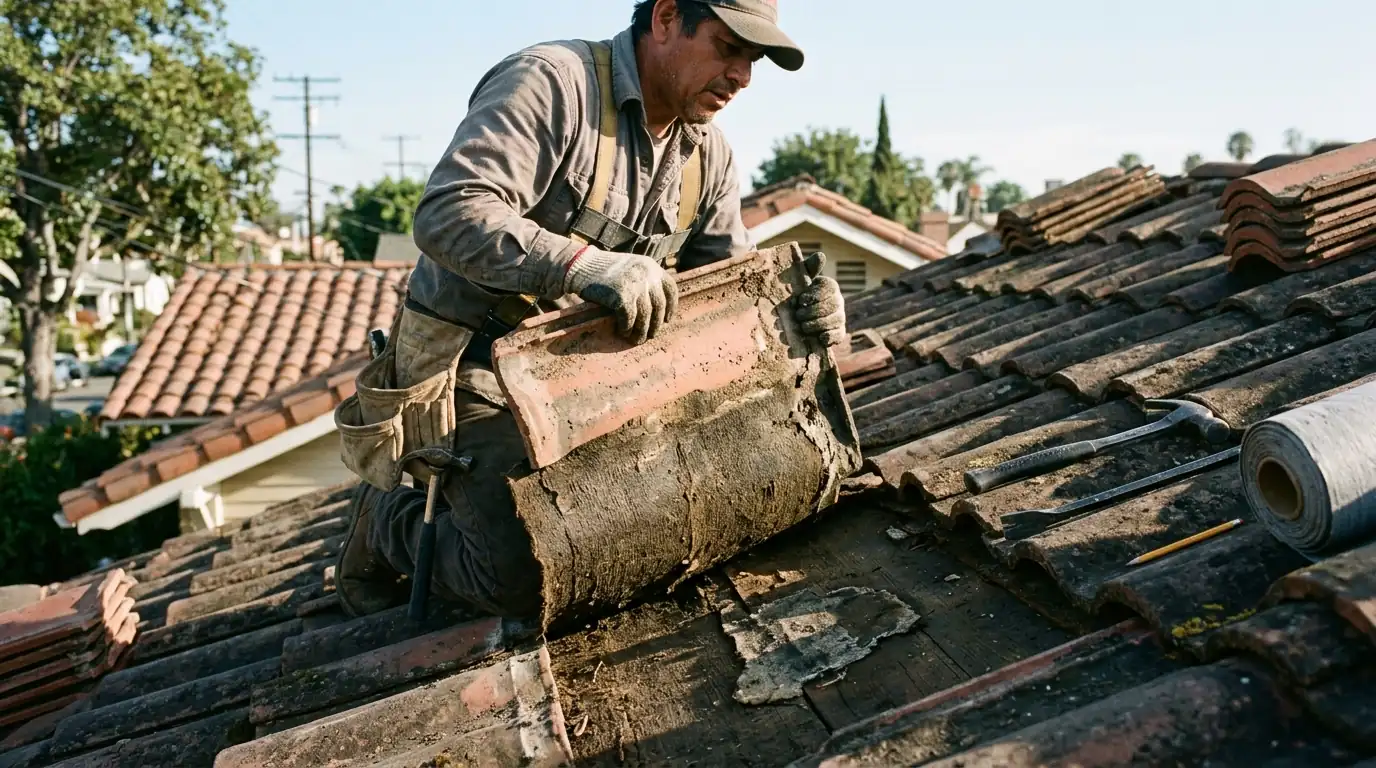
Flat roof repair in Los Angeles usually targets one of four spots: ponding low areas, split seams, blisters, or parapet and scupper edges. We probe the roof to map wet insulation, repair with material that matches the existing system, and correct the drainage so the same spot doesn't fail again.
Updated September 2026
The leak is rarely where the ceiling stain is
Water that gets through a flat roof spreads through insulation and along the deck before it drips, so a stain can sit several feet from the opening. We start by walking and probing the roof, checking seams, drains and edges, and cutting a small core where we need to see how wet the layers are.
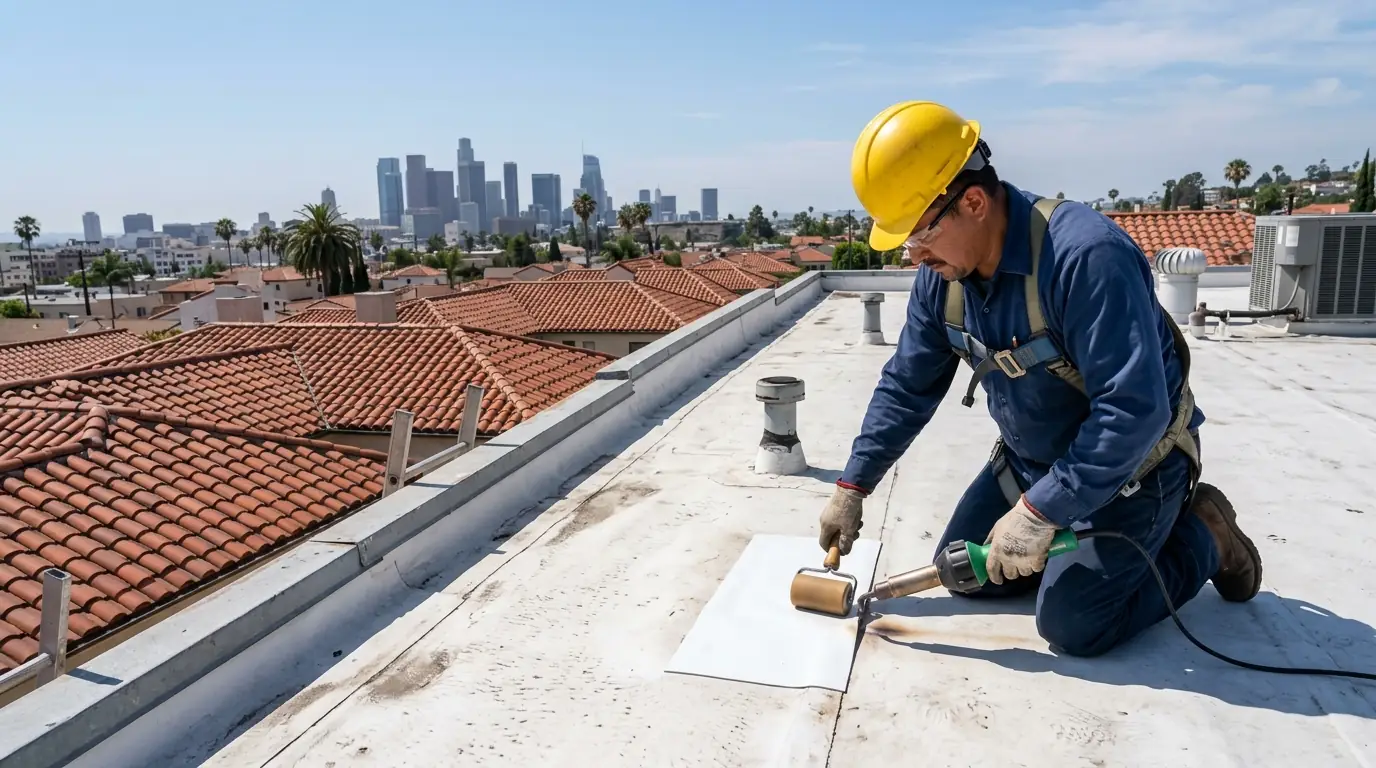
Repairs have to match the roof: torch down gets modified bitumen, TPO gets heat-welded TPO, coatings get compatible coating. When wet insulation spreads across large areas, a patch won't hold, and we will say so; a new two-ply system may be the better spend.
Signs your flat roof needs repair
Water standing after rain
Ponds lasting more than two days wear out the roof beneath.
Soft spots underfoot
Spongy areas mean wet insulation or a damaged deck.
Blisters and bubbles
Raised areas split and let water in.
Open seams
Gaps at laps and welds are direct paths for water.
Cracks at the parapet
Water gets behind the membrane at wall edges.
Stains far from the edge
Water travels under a flat roof before it drips.
Clogged scuppers or drains
Blocked outlets turn the roof into a basin.
What a flat roof repair costs depends on
There is no flat price for flat roof repair. For scale, full replacement runs $8-$14 per sq ft in published LA ranges. Repairs are priced on:
- Area of wet insulation
It decides whether a patch or a section rebuild is needed.
- Roof system
Torch down, TPO, PVC and coatings each need matching material.
- Drainage changes
Crickets, tapered insulation and drain resets add material.
- Parapet and edge work
Wall flashing and caps are slow, detailed work.
- Access
Roofs over tenants or up hillside lots take more setup.
The three flat roof repairs we make most
Ponding water fixes
Water that sits more than two days after rain breaks down any flat roof. We find the low areas, check drains and scuppers for blockage, and build the low spots up with tapered insulation or crickets so water moves off. Where a drain sits higher than the roof around it, we reset it. Drain strainers get cleaned or replaced at the same visit, since a missing strainer lets leaves into the drain line and brings the ponding right back within a season.
Blister and seam repair
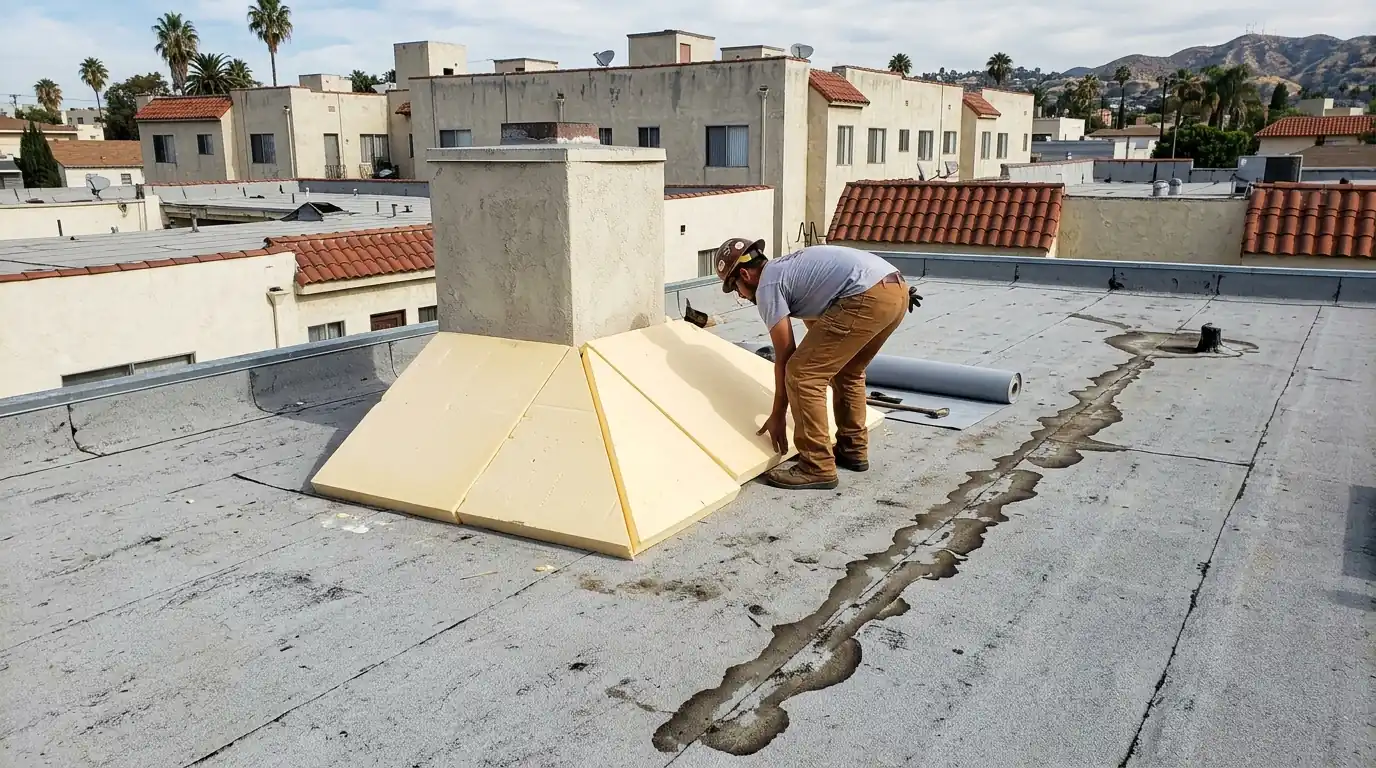
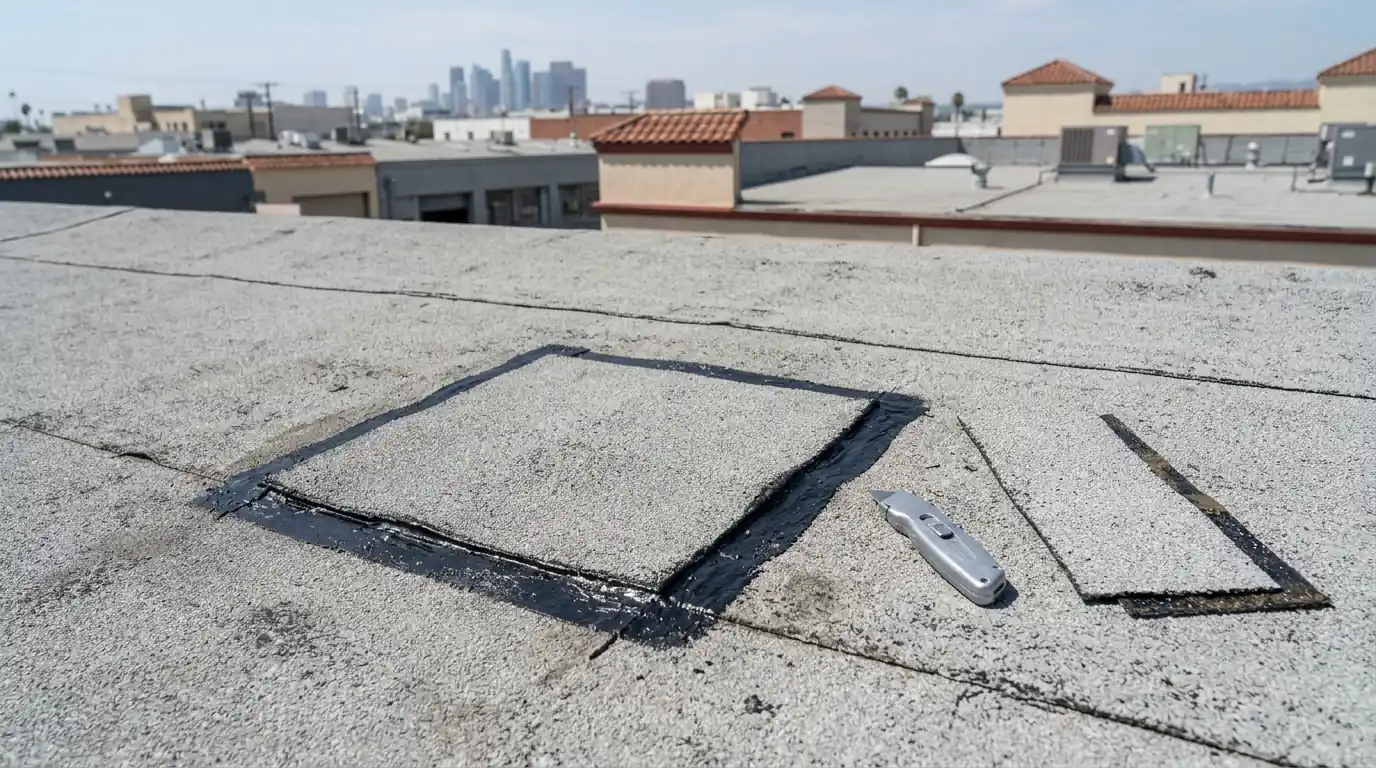
Blisters form when trapped moisture or air lifts the top layer; seams split when they were poorly welded or the roof has moved. We cut out blisters, dry and patch them, and reweld or strip in split seams with matching membrane. Widespread blistering means wet layers below and a bigger repair. We also look for what caused the movement, such as a heavy unit set directly on the membrane, and add a pad or support so the same seam doesn't split again.
Parapet and scupper repair
Many flat-roof leaks start at the walls. Membrane that stops short of the parapet, failed counterflashing or a cracked parapet cap lets water in behind the roof. We run membrane up the wall, replace counterflashing and caps, and rebuild scuppers so water leaves the roof cleanly. Parapet caps get sloped toward the roof or fitted with drip edges so rain runs back onto the membrane instead of soaking into the wall, which protects the stucco below as well.
Brands we install and service
Code in Los Angeles generally allows no more than one re-cover before a full tear-off, which changes what a repair is worth: on a flat roof that already carries two layers, patch money buys little time. On the Westside, the Pacific Palisades rebuild has pushed quoted roofing labor 15-25% above pre-fire levels, which makes a tightly scoped repair worth more there than it used to be.
Why a roof cement patch usually makes it worse
A bucket of roof cement over a flat-roof leak is a repair we remove often. It rarely bonds to modern membranes, traps water under the patch and hides the real opening.
If water is coming in, put a bucket under the drip, clear a blocked drain only if you can reach it safely from a ladder, and call.
How a flat roof repair runs
Map the water
We probe, walk and core the roof to find where it's wet.
Find the cause
Ponding, seams, edges or drains, before any patch goes down.
Cut out damage
Wet insulation and failed membrane come out.
Repair to match
New material matched to the existing system is welded or sealed in.
Fix the drainage
Crickets, drains and scuppers are corrected so water leaves.
Flat roof repair questions
Straight answers to what people ask us most about this job.
Other ways to reach usIf the wet area is limited and the rest of the roof is bonded and dry, yes. We core the roof to find out.
Low spots from a sagging deck, drains set too high or blocked scuppers. Crickets and drain changes fix it, not patches.
Yes. We clean and prepare the old surface, then heat-weld new TPO over the damage.
Only if the roof is dry underneath. Coating over wet layers traps water; see when a roof coating makes sense.
A matched repair over dry layers can last for years. Repairs over wet insulation fail quickly.
Walkable decks use a different system; see roof deck waterproofing.
Yes, from duplexes to larger apartment roofs, with work scheduled around tenants.
Other repairs & leaks jobs we handle
Metal Roof Repair in Los Angeles
Metal Roof Repair.
Blown-off shingles and tiles
Storm and Wind Damage Roof Repair.
Step and wall flashing
Roof Flashing Repair.
Fire and Smoke Damaged Roof Repair in Los Angeles
Fire and Smoke Damaged Roof Repair.
Ceiling stain leak tracing
Roof Leak Repair.