Roof deck and balcony waterproofing for Los Angeles homes
A deck you walk on is also a roof over the room below, and it takes sun, foot traffic and furniture on top of rain. We install walkable waterproofing systems, fix the drains and edges where deck leaks start, and finish the surface to hold up to use.
- Answered 24/7
- Walkable systems
- Drains and edges rebuilt

Roof deck waterproofing in Los Angeles seals walkable decks, balconies and rooftop patios over living space with a coating system built for foot traffic. We repair the substrate, rebuild drains, scuppers and edge flashing where deck leaks usually begin, and apply a textured, UV-resistant surface that stays watertight under daily use.
Updated September 2026
A deck is a roof people walk on
Walkable decks fail where the surface meets something else: the door threshold, the wall, the railing posts and the drain. Surface cracks let water into the plywood, and because the room below has a finished ceiling, the leak often shows up far from the crack. Tile set over a failed membrane hides the problem until it's serious.
We open suspect areas, check the plywood for rot, and replace what is soft before any new system goes down. Where the deck is really a flat roof without foot traffic, a single-ply membrane may suit it better, and we will tell you which fits.
Signs a roof deck needs waterproofing
Stains on the ceiling below
Water getting through the surface or edges.
Cracks in the surface
Hairline cracks let water reach the plywood.
Soft spots underfoot
Rotting plywood under the coating.
Puddles that linger
Low spots or a drain set too high.
Peeling or bubbling coating
The top layer has lost its bond.
Rust at railing posts
Water has been getting in around the posts.
Loose or hollow tiles
Water under tile set on a failed membrane.
What deck waterproofing costs depends on
Deck systems are priced by area and detail. Five things set the cost:
- Deck size
Material and labor scale with square footage.
- Substrate repairs
Rotted plywood is replaced before coating.
- Edges and posts
Thresholds, walls and railing posts take detailed work.
- Drains
Replacing or resetting drains and scuppers adds parts.
- Tile or coating
A membrane under tile costs more than a coated finish.
Surfaces, edges and drains
Walkable deck coatings
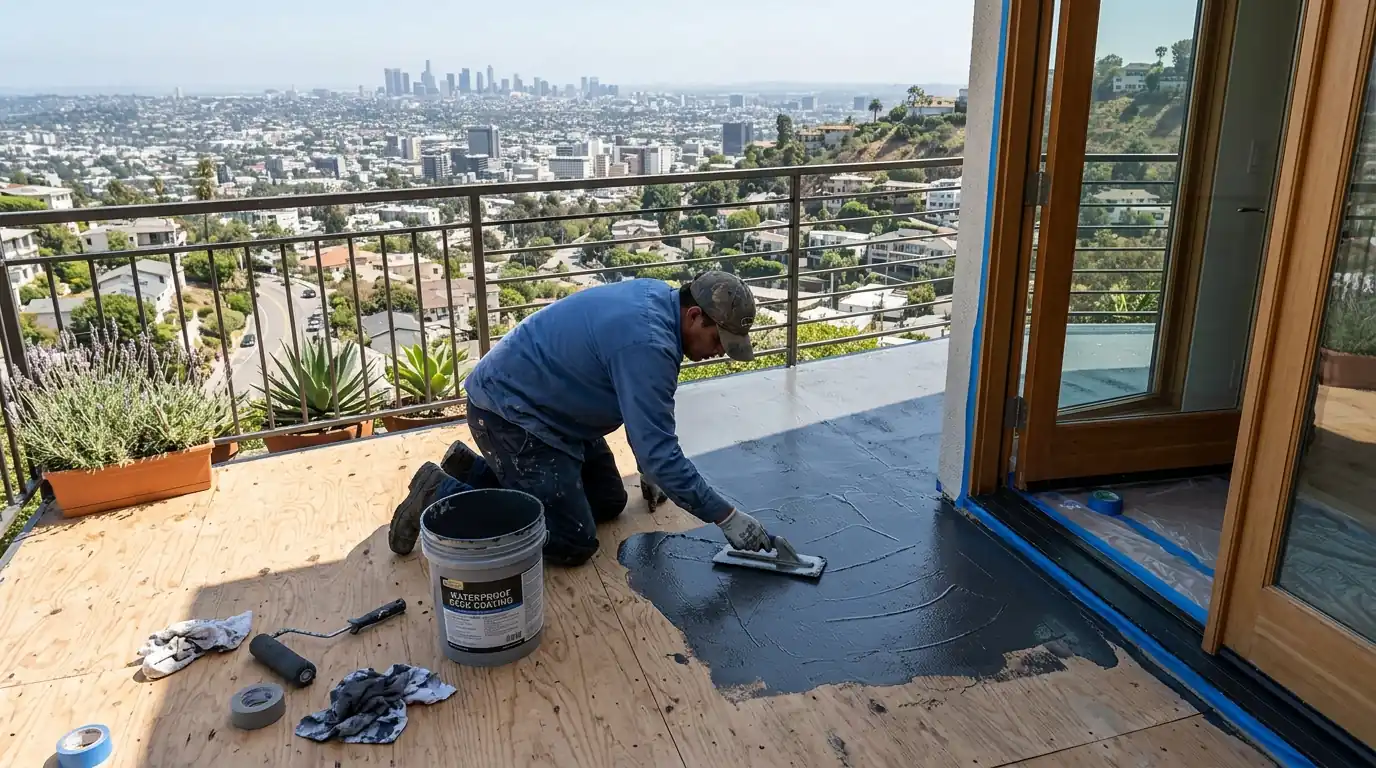
Walkable systems build up in layers: a base membrane, reinforcement at seams and corners, and a textured top coat that resists UV and slipping. They bond to plywood and stay flexible as the deck moves. We match the system to how the deck is used, from a small balcony to a rooftop entertaining area. Color and texture can be chosen to suit the space, and the finish is gentler on bare feet and outdoor furniture than a rough granulated cap sheet would be.
Balcony and rooftop patio waterproofing
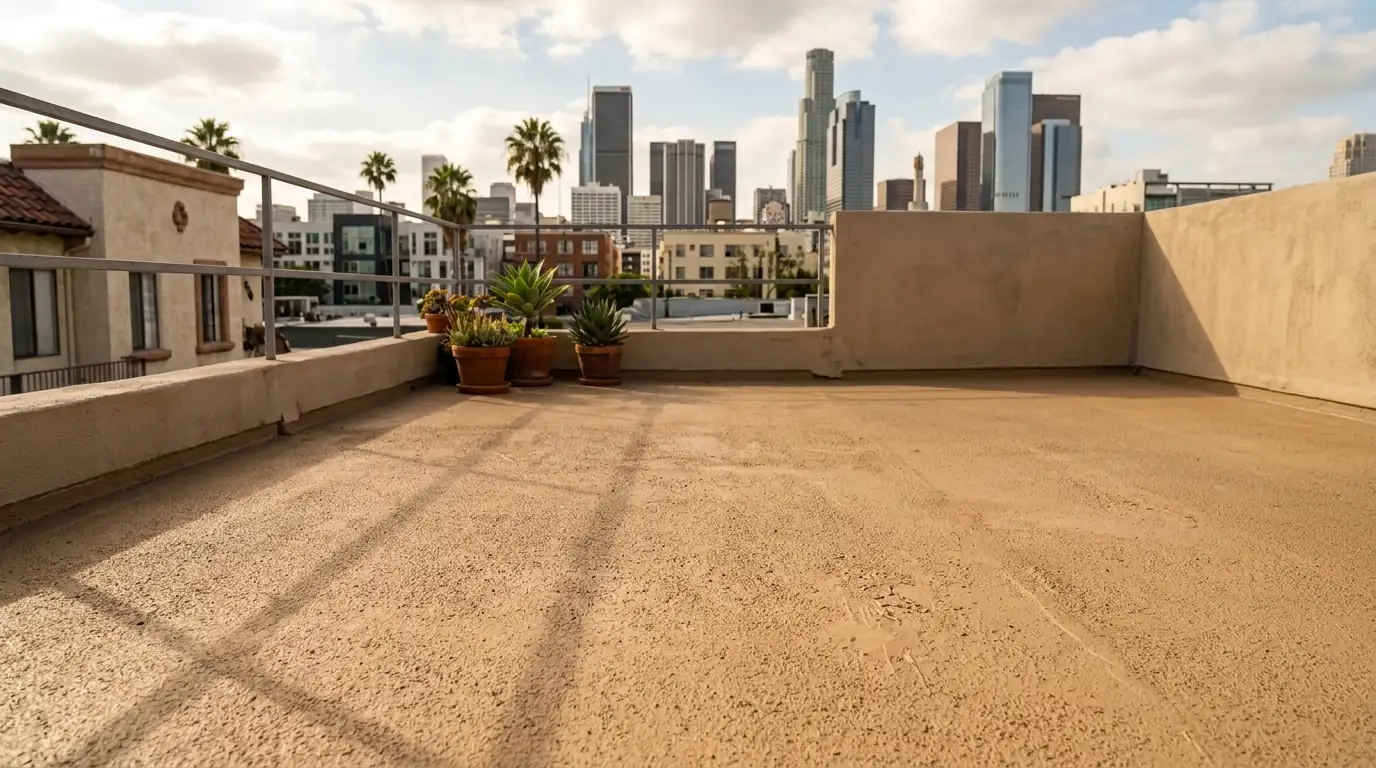
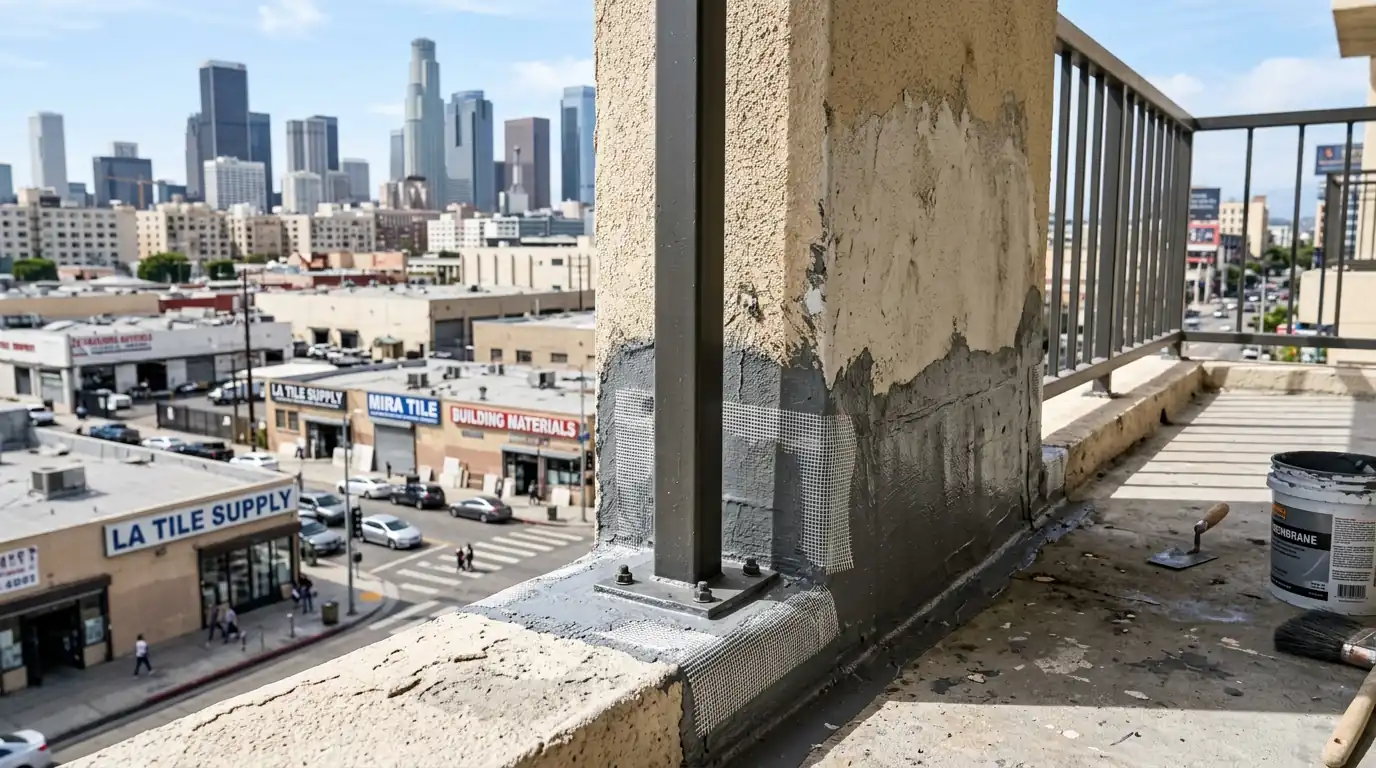
Balconies and rooftop patios leak at thresholds, posts and the wall line. We protect or lift door thresholds, turn the membrane up the wall behind stucco or siding, and seal around every railing post. Tiled decks get a proper membrane under the tile rather than a sealer on top. Where a deck sits over a garage or an interior room, we also look at the ceiling below for old stains, since they show where the previous system failed first.
Drain and scupper detailing
Water has to leave the deck fast. We clear or replace deck drains, set them flush with the new surface, rebuild scuppers through the edge, and add slope where water sits. A drain set even slightly high leaves a puddle that eventually finds the plywood. Overflow scuppers are worth adding on decks with a single drain, because if leaves block that drain in a storm, water has somewhere to go other than under the door and into the room.
Brands we install and service
Only about 15% of City of Los Angeles homes were under 30 years old as of 2019, so many decks over living space here are sealed with systems long past their design life. On hillside streets in Silver Lake and the Hollywood Hills, decks often sit high on steep lots where getting materials up raises the cost, so we plan staging and scheduling before the first coat.
Why a hardware-store deck sealer doesn't fix it
Deck paints and clear sealers sit on the surface; they don't bridge cracks, reinforce seams or seal thresholds and posts, which is where water gets in. Over a failed membrane they can trap moisture and speed up rot.
Between visits, keep the drain clear, move planters so the surface can dry, and watch the ceiling below after rain.
How a deck waterproofing job runs
Find the leak path
Ceiling stains, surface cracks and edges are traced.
Open and repair
Soft plywood replaced, drains and slope corrected.
Detail the edges
Thresholds, walls and posts sealed with reinforced membrane.
Apply the system
Base, reinforcement and textured top coat in layers.
Cure and test
Cure time respected, then drains flow-tested.
Roof deck waterproofing questions
Straight answers to what people ask us most about this job.
Other ways to reach usYears, with recoats of the top layer as it wears. Heavy use and full sun shorten the interval.
Properly, only by removing the tile, installing a membrane underneath and resetting tile.
Once the system cures, usually within a few days depending on weather and product.
If there is living space below, yes: it has to keep water out like any roof.
Sometimes, if the leak is at a single drain or post and the rest is sound.
Yes, soft plywood is replaced first; see decking and dry rot repair.
Yes, with pads under legs and saucers under planters so the surface can dry.
Other flat & low-slope roofing jobs we handle
Mobile Home Roofing in Los Angeles
Mobile Home Roofing.
Acrylic elastomeric coating
Roof Coating.
Retail and office buildings
Commercial Roofing.
Hot Mop Built-Up Roofing in Los Angeles
Hot Mop Built-Up Roofing.
SPF roof installation
Spray Foam Roofing.