Fire and smoke damaged roof repair across Los Angeles
A house can survive a fire next door and still come out with a damaged roof. Radiant heat blisters shingles and cracks tile, embers scorch vents and gutters, and ash settles into valleys. We find that damage and repair it before the rain does.
- Answered 24/7
- Heat damage inspections
- Photos for insurers
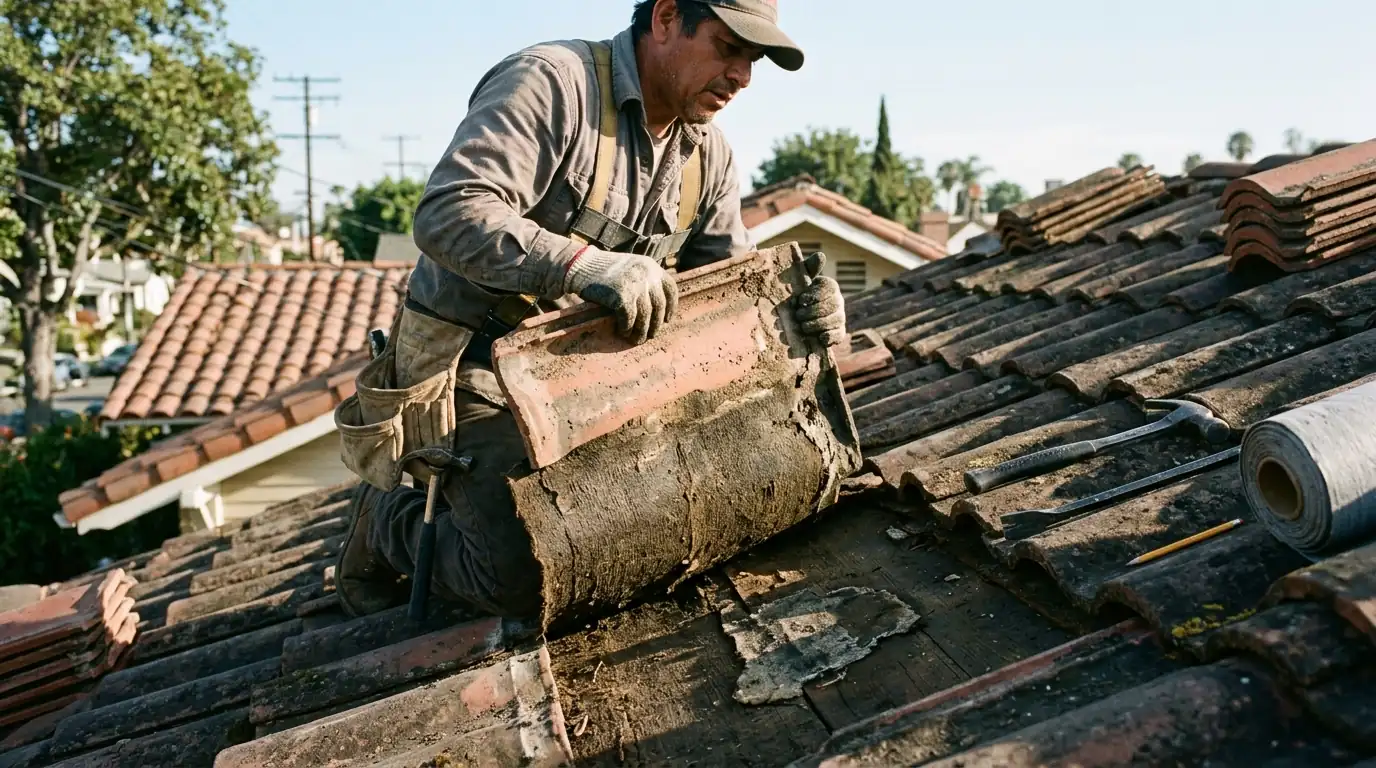
Fire and smoke damaged roof repair in Los Angeles covers homes that survived a nearby fire with heat or ember damage: blistered or curled shingles, cracked tile, melted vents, gutters and skylights, and scorched flashing. We inspect the whole roof and attic, document the damage with photos for your insurer, and repair or replace what's affected.
Updated September 2026
Damage that's easy to miss from the ground
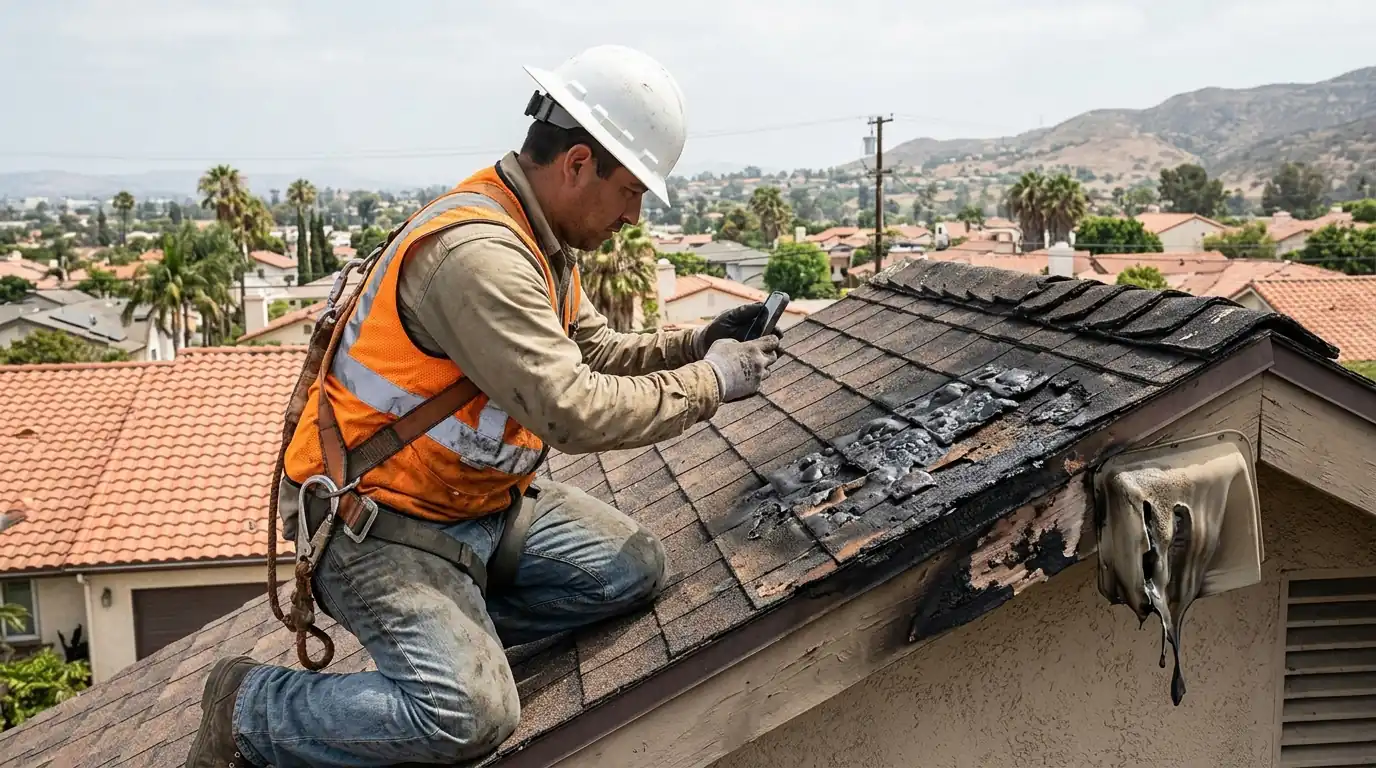
Radiant heat from a burning building nearby can soften asphalt shingles until they blister or lose granules, crack clay and concrete tile, and warp metal flashing, even when nothing on the roof caught fire. Embers scorch vent screens and plastic parts, and ash and debris collect in valleys and gutters, where they hold moisture and corrode metal.
Most of that damage is on the side of the roof that faced the fire, and some of it only shows up close or from the attic. We check both, photograph everything, and separate what needs repair now from what needs watching. If the damage is widespread, a full re-roof may make more sense than patching.
Signs your roof took heat damage
Blistered or bubbled shingles
Raised spots on the side that faced the fire.
Granules in the gutters
More grit than usual washing out of downspouts.
Cracked tile
Fresh cracks on exposed slopes.
Warped or melted vents
Plastic caps or screens deformed by heat.
Sagging gutters
Vinyl gutters that softened and pulled away.
Ash in valleys
Debris collecting where slopes meet.
Smoke smell in the attic
Smoke and ash that came in through vents.
What fire damage roof repair costs depends on
Repairs are priced on what the inspection finds. Five things set the cost:
- How much was exposed
Usually one or two slopes, sometimes more.
- Roof material
Matching shingle or tile changes the price.
- Underlayment damage
Cooked paper under tile means a relay.
- Metal parts
Vents, gutters and flashing replaced in metal.
- Cleanup
Ash and debris cleared from valleys and gutters.
Shingles, tile, metal and debris
Heat-damaged shingles and tile
Blistered, curled or granule-stripped shingles have lost much of their protection and usually need replacing on the affected slopes, matched to the rest of the roof where possible. Heat-cracked tile is replaced piece by piece, and if the underlayment below was cooked, the slope is lifted and relaid over new paper so hidden damage doesn't turn into a leak. Shingles that look fine but shed granules when touched are photographed and included, since they won't last as long as the rest.
Melted vents, gutters and flashing
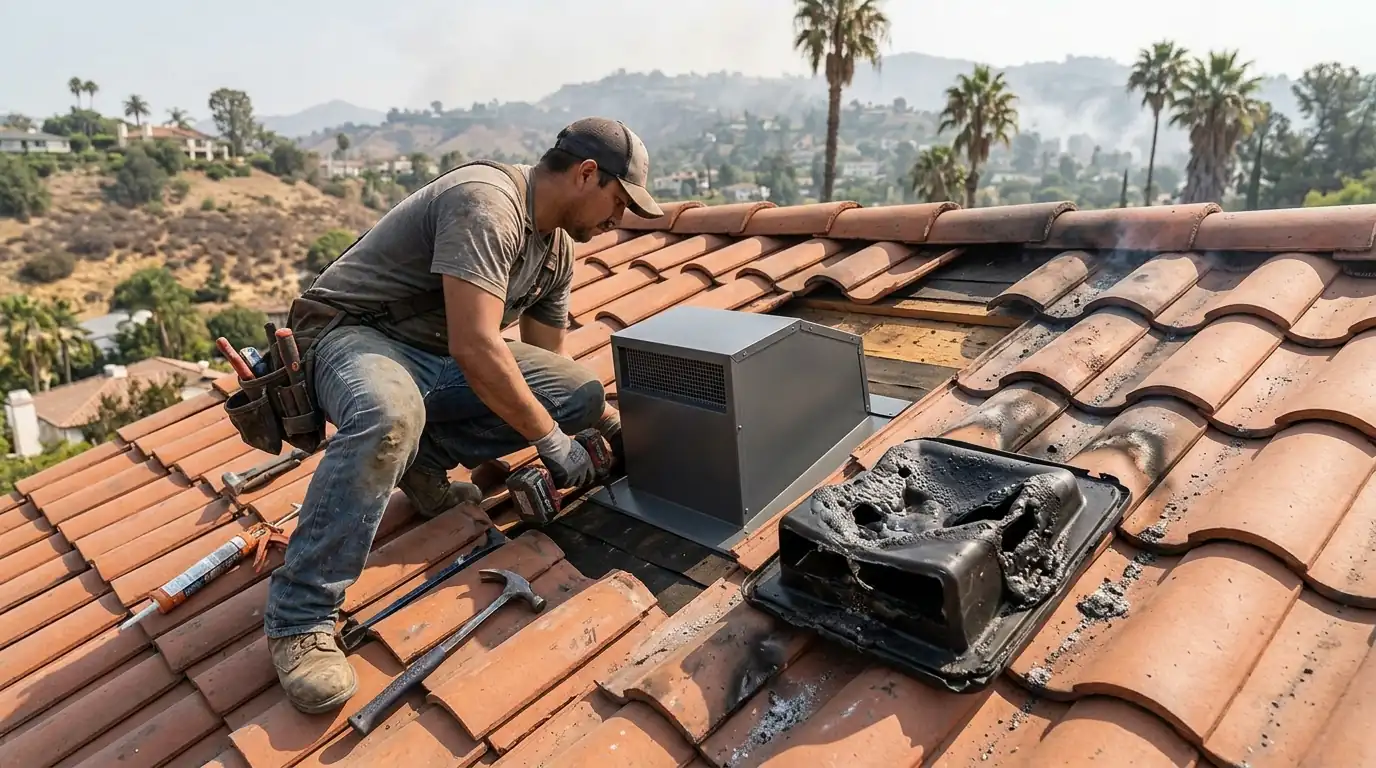
Plastic vent caps, skylight domes and vinyl gutters soften or melt in heat, and metal flashing can warp until it no longer sheds water. We replace them with metal and ember-resistant parts where we can, so the repaired roof is better prepared than it was before, and we reseal every penetration the heat reached. If a skylight dome warped, we replace the whole unit rather than patching around it, because a distorted dome rarely seals again.
Ash and debris cleanup on roofs
Ash and burned debris left on a roof hold moisture against the surface, clog gutters and downspouts, and can corrode metal over time. We clear valleys, gutters and flat areas carefully, without pressure washing that can force water under the roofing, and check the drains so the first rain runs off the roof instead of backing up. We also look in the attic for ash that came through the vents, since it can carry smoke odor into the house.
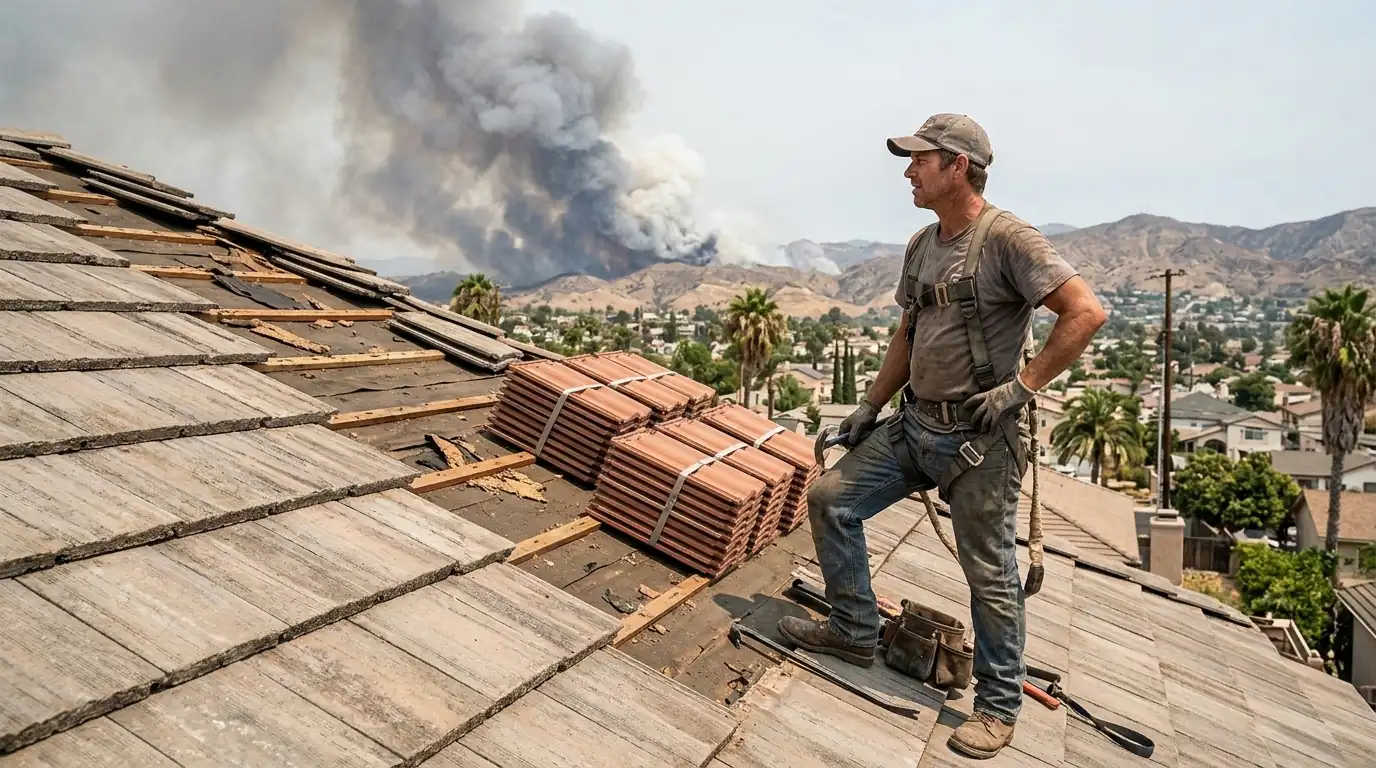
The Palisades Fire destroyed more than 6,000 structures, most of them in Pacific Palisades, and the Eaton Fire destroyed more than 9,000, most of them in Altadena. Around the edges of both burn areas are homes that are still standing but took heat and embers on their roofs. Those roofs are worth a careful inspection even if nothing looks wrong from the street.
How long fire damage repairs take
The inspection and photos usually take one visit, and the report follows soon after so you can share it with your insurer. Repairs to one or two slopes typically take a few days once materials arrive.
Matching older tile or shingle colors can add lead time, and insurance approval often sets the start date more than the work itself.
How a fire damage repair runs
Inspect roof and attic
Every slope, vent, gutter and the attic checked.
Document
Photos and notes for you and your insurer.
Cover if needed
Temporary protection where damage lets water in.
Repair
Damaged covering, metal parts and underlayment replaced.
Clean and test
Ash cleared, drains checked, repairs water tested.
Fire and smoke damaged roof questions
Straight answers to what people ask us most about this job.
Other ways to reach usYes. Radiant heat and embers can damage shingles, tile, vents and gutters without any fire on your roof.
Yes. We photograph every finding and write a report you can share with your insurer.
Usually the affected slopes are replaced, matched to the rest of the roof where possible.
No. Pressure washing can force water under the roofing. Gentle clearing is safer.
Yes, with metal and ember-resistant parts where possible.
Before the next rain if you can, so hidden damage doesn't become a leak.
Yes, including Altadena and Pacific Palisades. Our guide to rebuild roofing covers new roofs there.
Other repairs & leaks jobs we handle
Blister and seam repair
Flat Roof Repair.
Structural Roof Repair in Los Angeles
Structural Roof Repair.
Blown-off shingles and tiles
Storm and Wind Damage Roof Repair.
Granule loss and bald spots
Shingle Roof Repair.
Valley leak repair
Roof Leak Repair.