Tile roof underlayment replacement in Los Angeles: lift, re‑paper, relay
On a tile roof, the tile outlasts the paper beneath it by decades. A relay lifts every tile, replaces the underlayment, battens and flashing, and puts your original tile back, at a fraction of the cost of a new tile roof.
- Answered 24/7
- Original tile reused
- Battens and bird stops
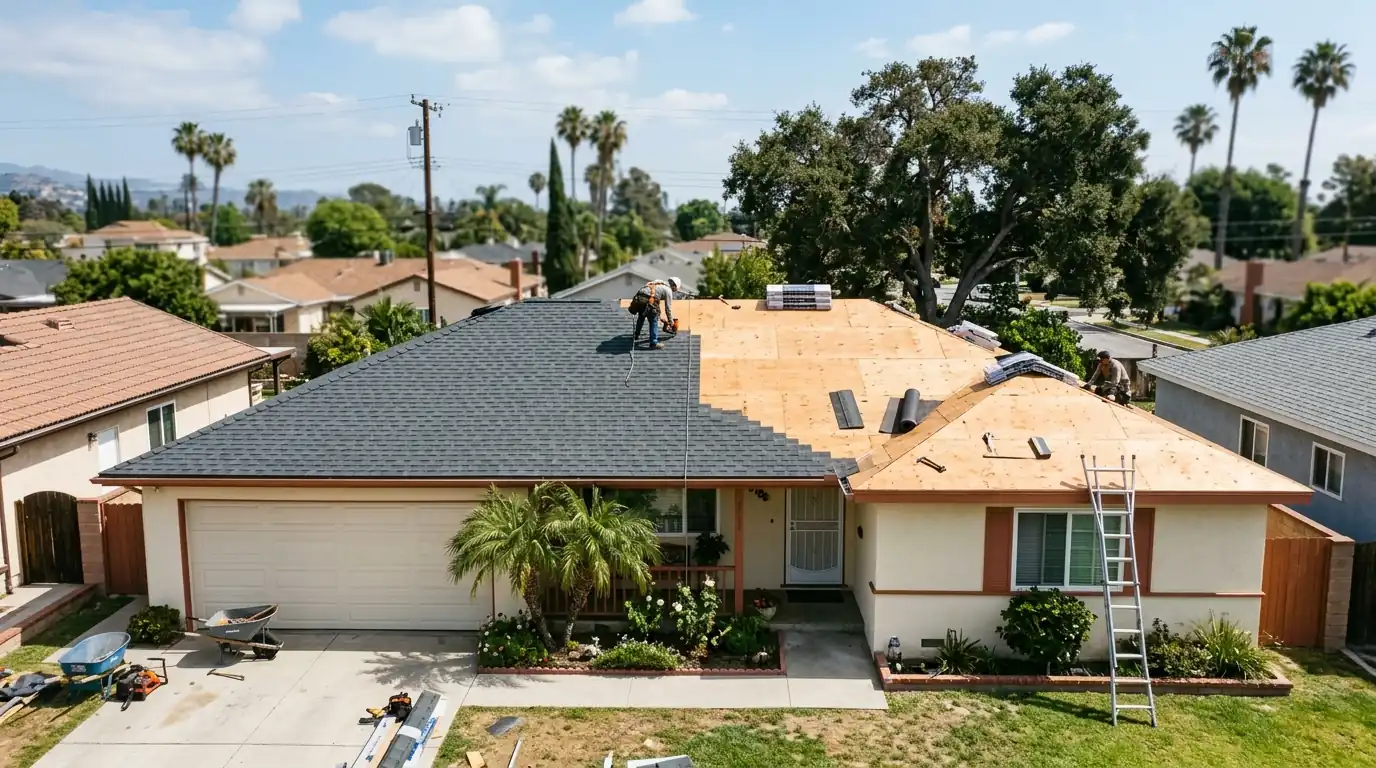
Tile roof underlayment replacement in Los Angeles, often called a relay, lifts the existing clay or concrete tile, replaces the underlayment, battens, flashing and bird stops, and relays the same tile. It costs well below a new tile roof, which runs $15-$25 per sq ft in published LA ranges.
Updated September 2026
The tile is fine; the paper under it isn't
Older tile roofs were laid over felt paper that dries, cracks and tears after decades of heat. Water that slips past the tiles, which always happens a little, then reaches the deck. The tiles look fine from the street, but leaks keep appearing in new places and spot repairs stop helping.
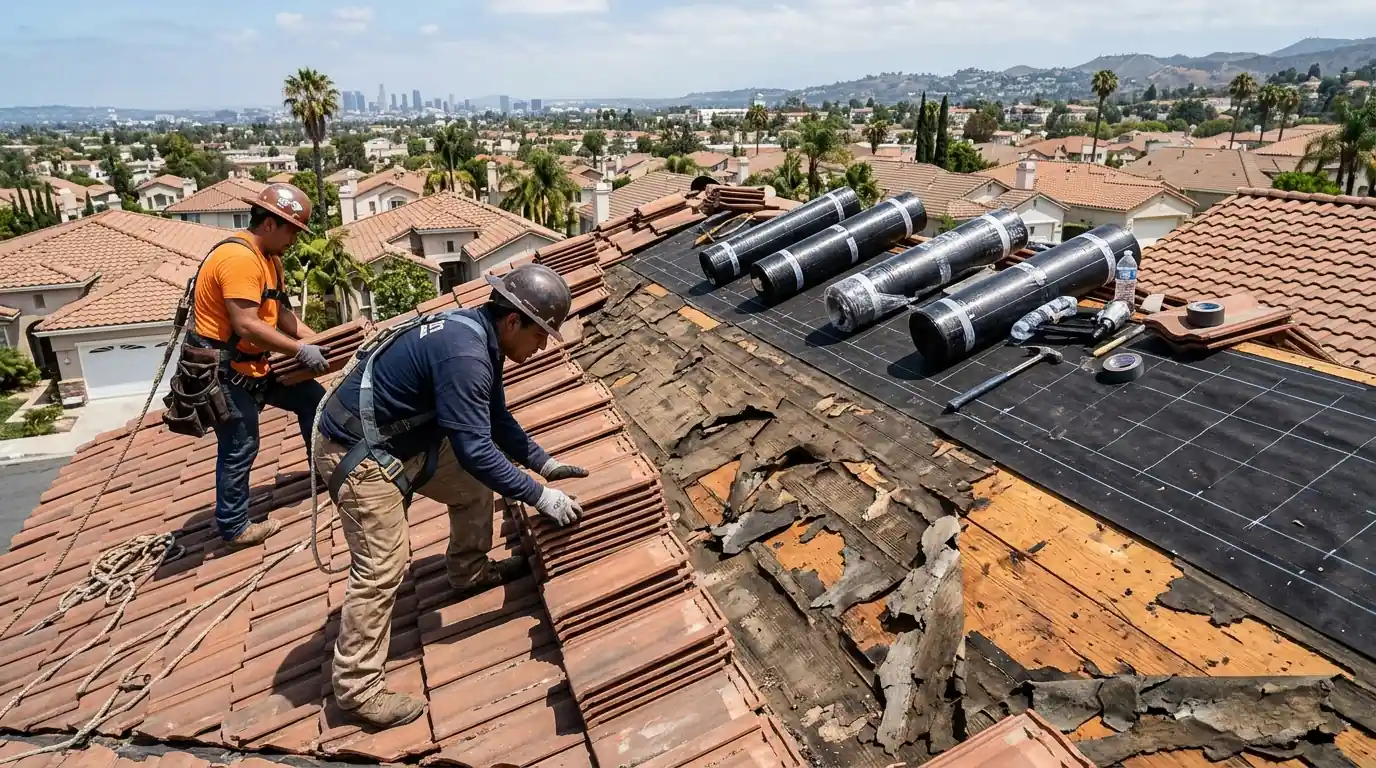
In a relay we lift and stack the tile, remove the old paper and battens, repair the deck, and install modern underlayment, new battens and flashing before setting the tile back. Broken pieces get matched or salvaged replacements. If only one area has failed, a targeted tile repair may be enough.
What a tile relay costs depends on
A relay reuses the most expensive part of the roof, the tile, so it costs far less than new tile at $15-$25 per sq ft. The price moves with:
- Roof size and pitch
Every tile is handled twice, so area drives labor.
- Tile type
Two-piece barrel takes longer than S-tile or flat.
- Broken tile
Matched or salvaged replacements add material.
- Deck repairs
Rot under the old paper is priced per sheet.
- Flashing
Walls, chimneys and valleys get new metal.
Full relays, battens and partial sections
Lift and relay re-papering
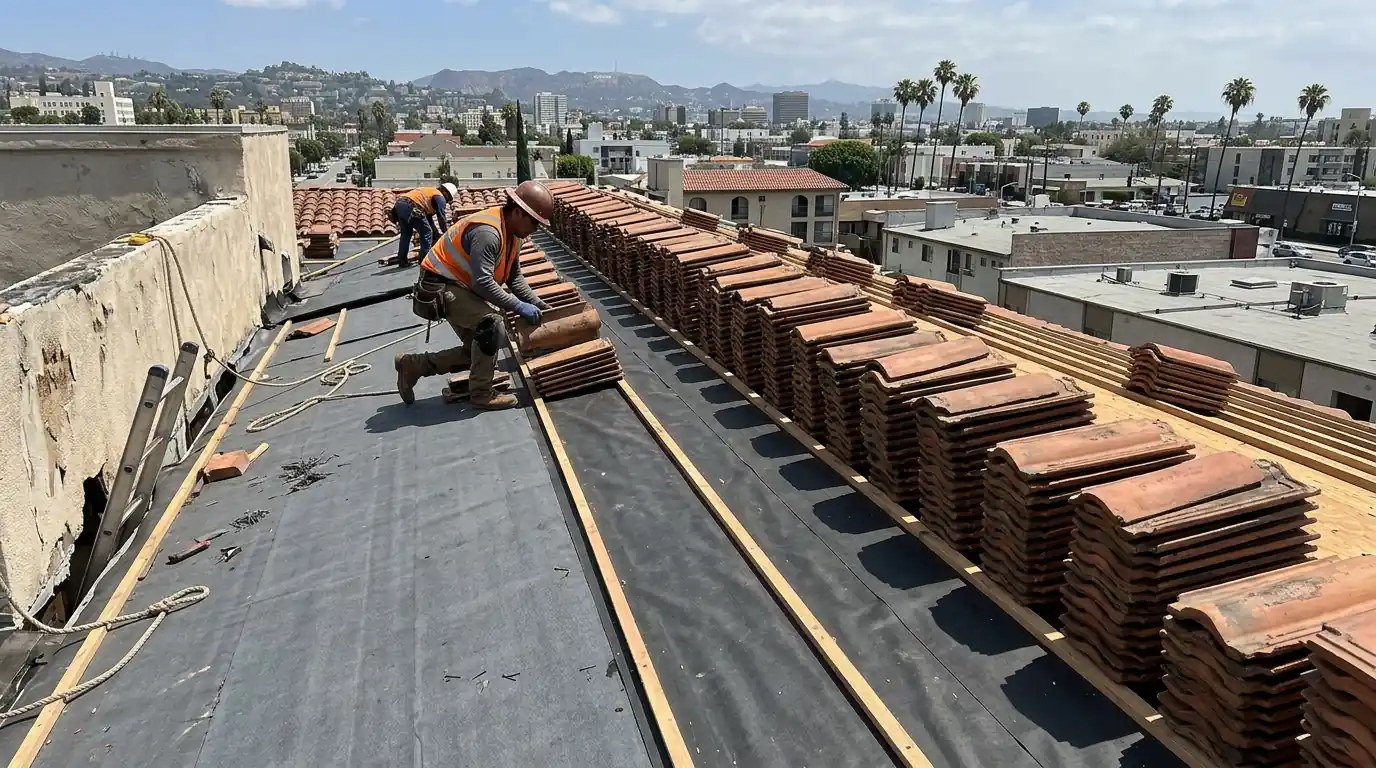
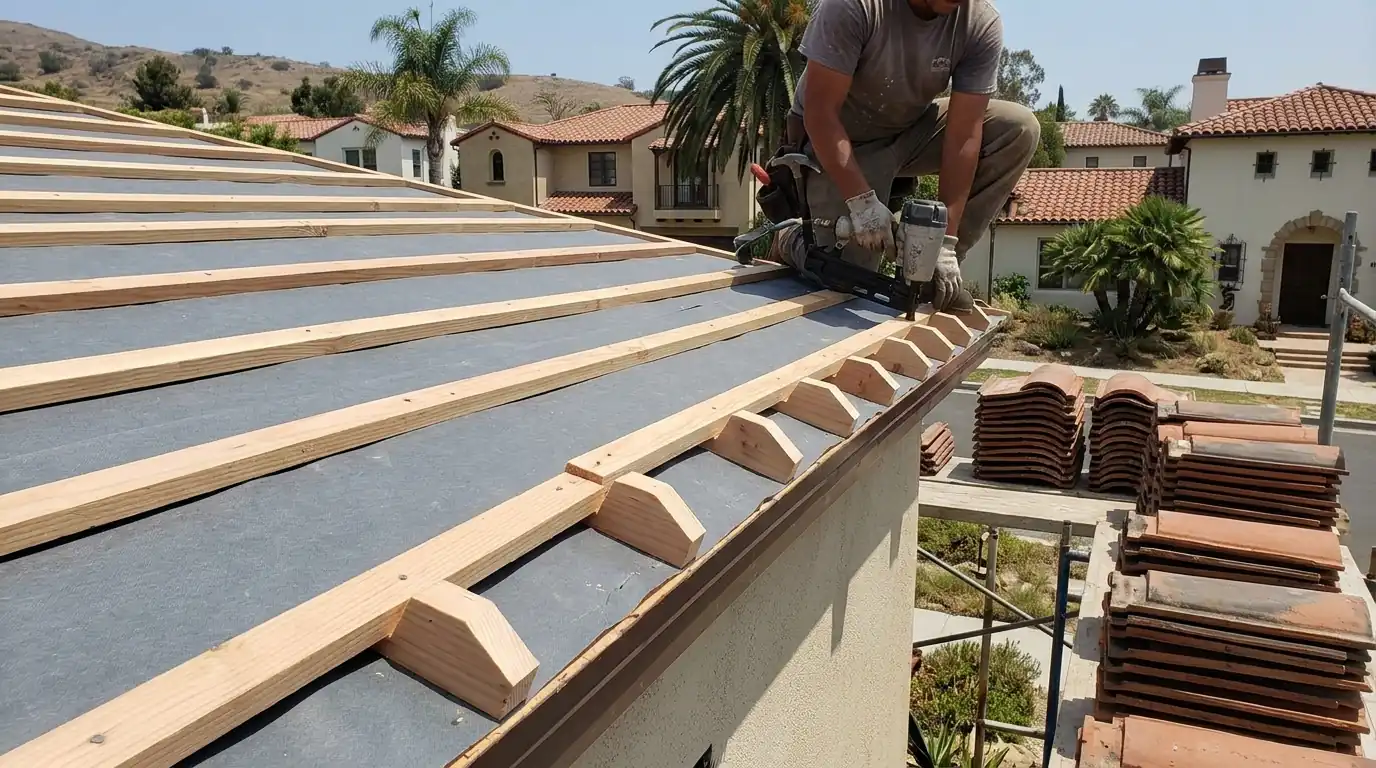
Every tile is lifted, sorted and stacked on the roof. We strip the old underlayment to the deck, repair any rot, and install a modern underlayment suited to tile and the fire zone. The tile goes back in its original pattern, with broken pieces swapped for matched ones. Tiles are stacked in a set pattern on the roof so the weight stays spread across the rafters, and the original layout is photographed so the color blend goes back the way it was.
Batten and bird stop replacement
Old wood battens rot where water sits, and missing bird stops at the eaves let birds and rodents nest under the tile. We install new battens with drainage gaps, fit bird stops along every eave, and replace corroded flashing at walls and valleys while the roof is open. Raised battens also let water that gets under the tile drain freely to the eave instead of pooling behind each batten, which is a big reason older paper failed where it did.
Partial section relay
When one slope or area has failed, often the sunniest one or the area under a valley, a partial relay handles just that section. We tie the new underlayment into the old at the boundary so water can't track across, and suggest a full relay only when the rest of the paper is close behind. It's a good choice when you plan a full relay in a few years and need the worst slope handled now, since the same underlayment is used and the two jobs tie together cleanly.
Brands we install and service
What a tile relay includes
Relay scopes vary widely, so every item is listed.
- Every tile lifted, sorted and stacked on the roof
- Old underlayment and battens removed to the deck
- Deck repairs priced per sheet
- New underlayment rated for tile and fire zones
- New battens and bird stops at every eave
- Flashing at walls, valleys and penetrations replaced
- Original tile relaid with matched replacements
Los Angeles saw a dramatic housing increase in the 1940s and 1950s, and the San Fernando Valley filled in during the 1960s and 1970s, so many tile roofs here sit on paper that has been baking for half a century. When more than half a roof is redone within a year, the whole roof must meet the approved covering class, so a full relay is permitted and inspected like a re-roof.
How long a tile relay takes
On a typical 2,000 square foot home, tile work runs about five to ten working days, since every tile is lifted and reset by hand. Partial relays take a fraction of that.
We open only what we can re-paper and cover the same day, so the house stays dry throughout.
How a tile relay runs
Check the paper
We lift sample tiles to confirm the underlayment has failed.
Scope and permit
Full or partial relay, deck allowance and permit.
Lift and strip
Tile stacked, old paper and battens removed.
Re-paper and flash
Underlayment, battens, bird stops and flashing installed.
Relay and inspect
Tile reset, broken pieces replaced, final inspection.
Tile relay questions
Straight answers to what people ask us most about this job.
Other ways to reach usLeaks in new places each season, with tiles that look fine, usually mean the paper underneath has failed.
Much cheaper, since the tile is reused; you pay for labor and new underlayment.
Some will. We replace them with matched or salvaged tile.
Yes, when one slope has failed and the rest is sound.
A full relay is treated like a re-roof and goes through LADBS; we pull the permit.
Modern underlayments last much longer than the old felt they replace.
Only if the tile is broken or discontinued; see clay tile roofing for new installs.
Other roof replacement & installation jobs we handle
HPOZ roof replacement
Historic Home Roofing.
Clay tile roof replacement
Clay Tile Roofing.
Standing seam metal roofs
Metal Roofing.
Custom home roofing
New Construction Roofing.
Concrete Tile Roofing in Los Angeles
Concrete Tile Roofing.