Wildfire roof hardening for Los Angeles homes
Most homes lost to wildfire are ignited by embers, not the flame front. Hardening the roof, its vents, its eaves and its gutters closes the openings embers use, and it's work we can often do without replacing the whole roof.
- Answered 24/7
- Ember-resistant details
- Class A assemblies
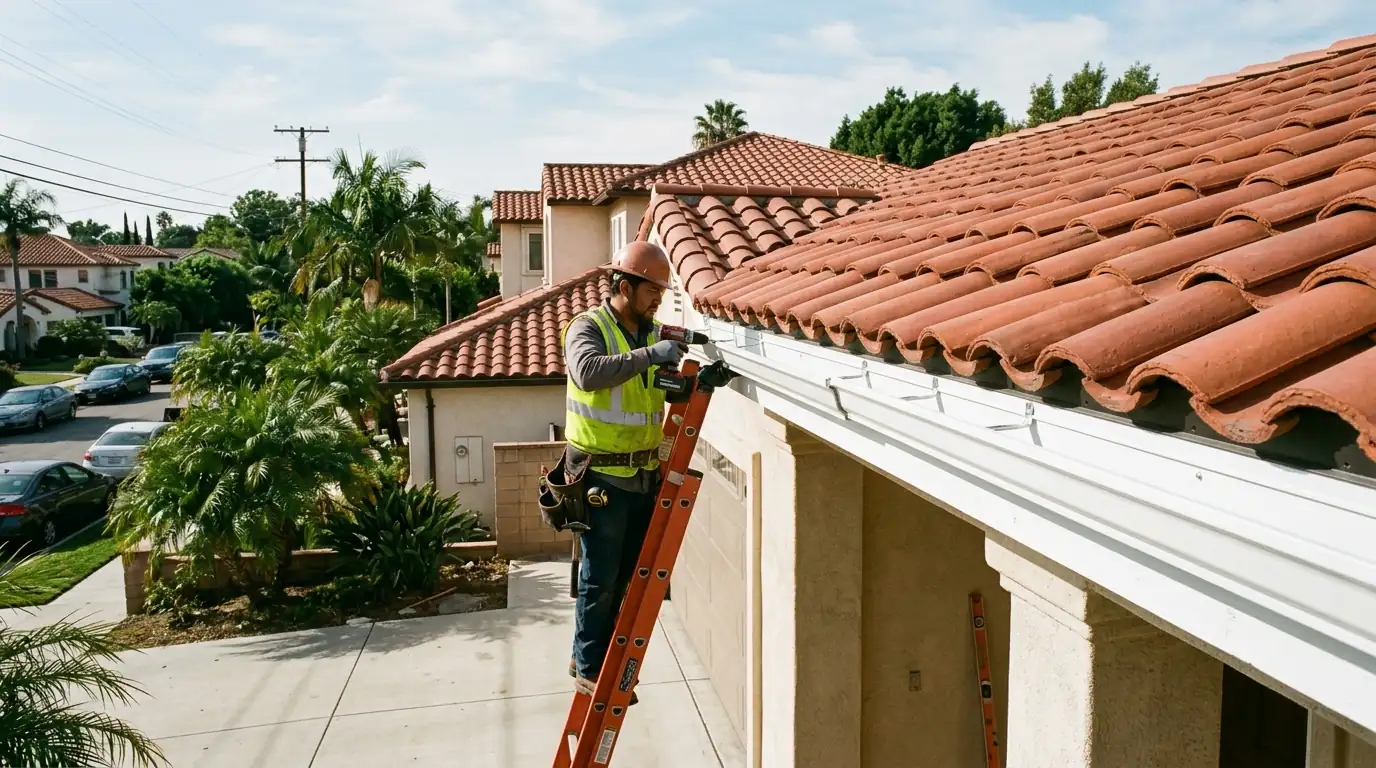
Wildfire roof hardening in Los Angeles means closing the ways embers get into or onto a house: a Class A roof assembly, ember-resistant vents at eaves and ridges, enclosed eaves, metal flashing at edges, and gutters that don't hold dry leaves. Much of it can be done on an existing roof, and it's the kind of mitigation insurers are asked to recognize.
Updated September 2026
Close the gaps embers use
During a wind-driven fire, burning embers can travel a long way ahead of the flames and land on roofs, in gutters and against vents. A roof that's Class A on top can still let a house burn if embers get through open vents, gaps under tile edges or dry leaves packed into the gutters.
Hardening works through those weak points one at a time: vents, eaves, edges, gutters and the roof covering itself. If your roof is near the end of its life, a re-roof is the time to do it all at once; if it has years left, most of the work can be done now. Rebuilding instead? See roof planning for a fire rebuild.
What a hardening visit covers
We go around the whole roof edge, not just the top.
- Roof covering and its fire rating checked
- Every eave, gable and ridge vent inspected
- Open eaves and gaps under tile edges found
- Gutters, guards and drip edge checked
- Skylights and roof penetrations reviewed
- Written list of fixes in priority order
- Photos of each finding
Roof, vents and gutters
Class A roof assemblies
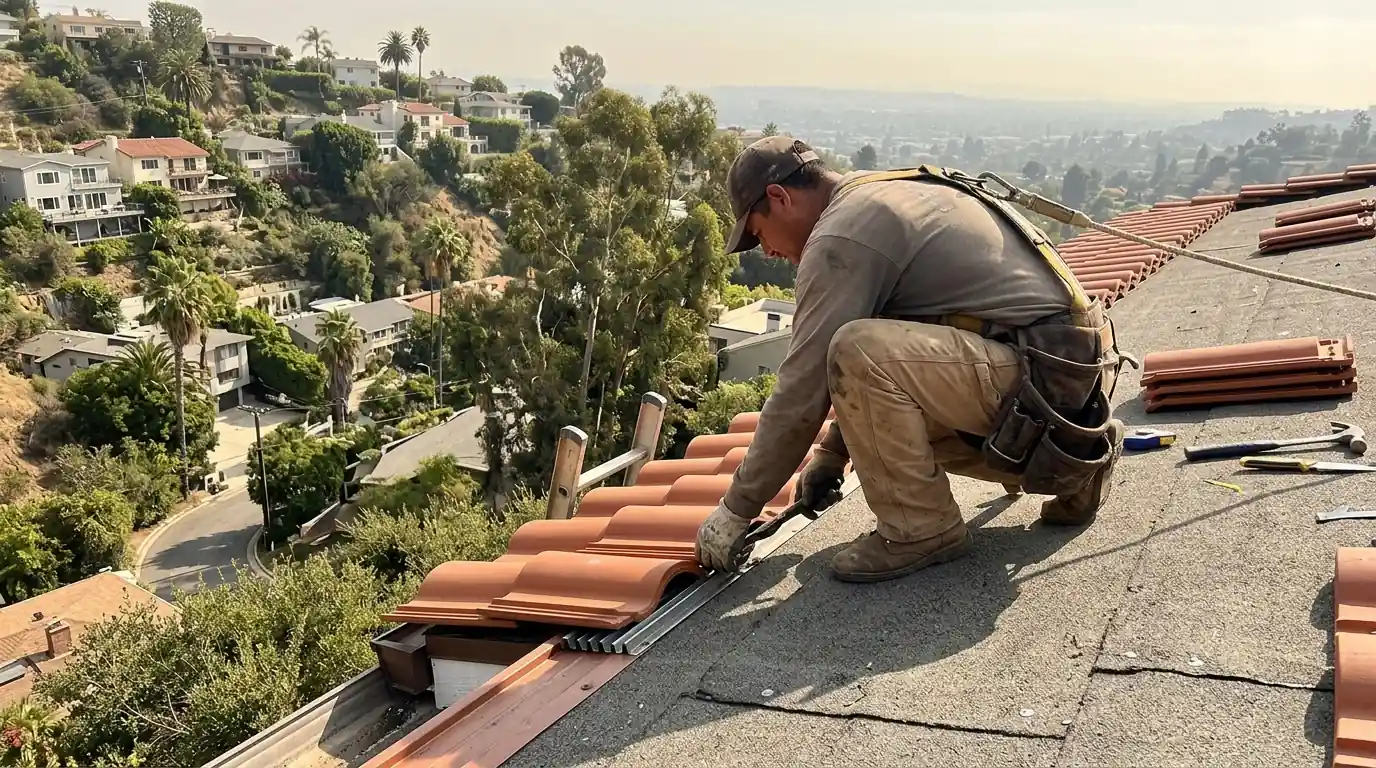
A Class A rating comes from the whole assembly, not just the shingles or tiles on top, so we confirm the listed underlayment, deck and details before ordering. On tile roofs that also means bird stops or eave closures so embers can't blow under the first course, and on shake-style looks it means a rated composite or steel product rather than wood. We keep the product listings with your job records so an inspector or insurer can see exactly what was installed.
Ember-resistant vents and eaves
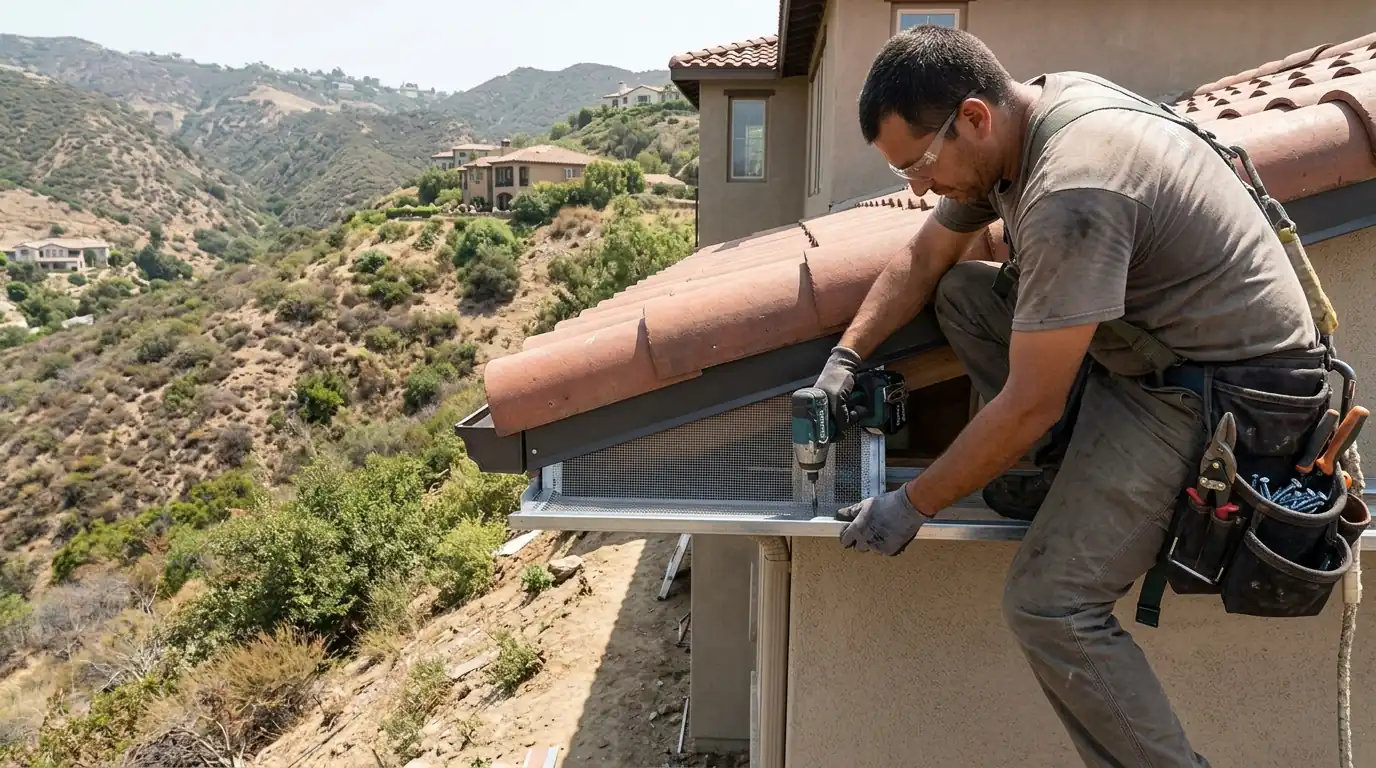
Standard attic vents with coarse screens let embers into the attic. We replace them with listed ember- and flame-resistant vents at eaves, gables and ridges, and enclose open eaves where the design allows, so there are no open rafter bays for embers to collect in. Airflow is kept so the attic still breathes. Where an eave can't be enclosed, we close the gaps between rafters with solid blocking and fine metal mesh instead, so no open bays remain.
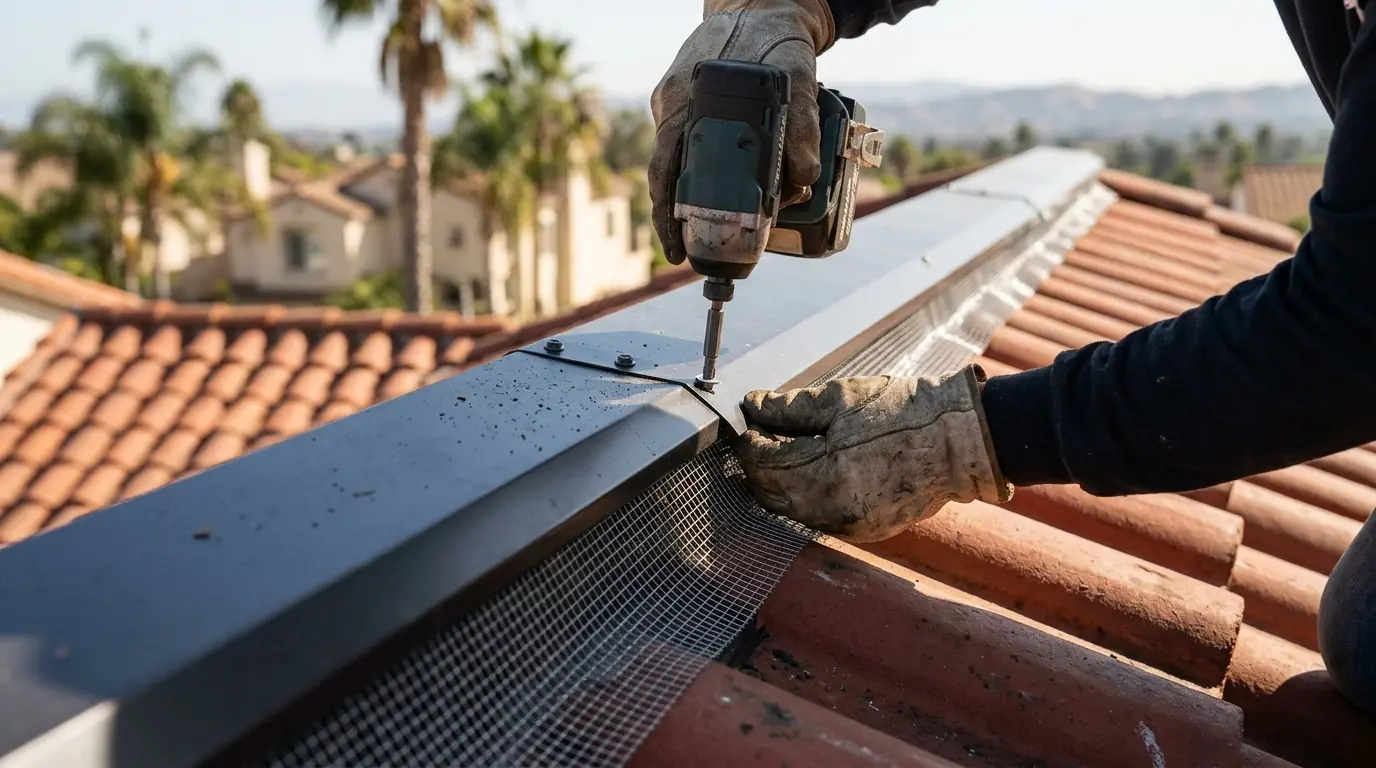
Gutter guards and noncombustible gutters
Dry leaves and needles in a gutter are kindling sitting right at the roof edge. Metal gutter guards keep them out, metal gutters replace vinyl ones that soften and fall, and metal drip edge closes the gap between the roof edge and the fascia. Together they keep embers from finding fuel at the most exposed edge of the house. We also check the roof-to-wall flashing above the gutters, since embers that land there sit right against the house.
The Eaton Fire began near Eaton Canyon on January 7, 2025 and destroyed more than 9,000 structures, most of them in Altadena, and hillside neighborhoods from Beverly Hills north of Sunset to the San Gabriel foothills are mapped as Very High Fire Hazard Severity Zones. Hardening the roof edge, vents and gutters is some of the most practical work an owner in those areas can do.
What wildfire hardening costs depends on
Hardening is priced item by item. Where a fire-rated assembly is added, published premiums run $1-$5 per sq ft. The rest depends on:
- Number of vents
Each eave, gable and ridge vent is replaced individually.
- Eave enclosure
Open rafter bays take more framing and material.
- Gutter work
Guards, metal gutters or both.
- Roof covering
A full Class A re-roof versus details only.
- Access
Steep and hillside roofs need more setup.
What you can do yourself
Some hardening is homeowner work: clearing gutters and roof valleys before fire season, keeping the area right around the house free of dry plants and wood piles, and trimming branches back from the roof. Do it from the ground or a stable ladder, not by walking the roof.
Vents, eave closures and roof work are best left to a crew, because a vent installed wrong can block attic airflow or leave a gap embers can still reach.
How a hardening job runs
Walk the roof edge
Vents, eaves, gutters and edges inspected.
Prioritize
A written list from most to least urgent.
Harden
Vents, closures, edges and gutters replaced.
Roof covering
A Class A re-roof if the roof is due.
Document
Photos of the work for your records and insurer.
Wildfire roof hardening questions
Straight answers to what people ask us most about this job.
Other ways to reach usOften, yes. Vents, eave closures, drip edge and gutters can be upgraded on a sound roof.
The tested assembly: the covering plus the listed underlayment and details beneath it.
Listed vents are designed to keep airflow while blocking embers, and we size them so the attic still breathes.
California rules require insurers to recognize certain mitigation, such as Class A roofs and ember-resistant vents. Ask your insurer what it counts, and keep our photos.
In fire-prone areas, yes. Metal gutters with guards hold up far better.
We check the state and local maps for your address before recommending work.
Clearing dry fuel near the walls matters too. Our Class A and fire zone guide covers more.
Other exterior & roofline jobs we handle
Fascia board replacement
Fascia and Soffit Repair.
Gutter Installation and Repair in Los Angeles
Gutter Installation and Repair.
Carport roof replacement
Patio Cover and Carport Roofing.
Skylight replacement
Skylight Installation and Repair.
Plywood sheathing replacement
Roof Decking and Dry Rot Repair.