Roof leaking in Los Angeles? What to do in the first hour
Water coming through the ceiling is stressful, and the first hour matters more than people think. Here is what to do, in order, and what to leave for the roofer.

By Sadie Yancey, Roofing Guides Editor · Updated September 2026
When a roof starts leaking, protect the room first: catch the water, move valuables, drain any bulging ceiling at its lowest point and switch off lights near wet fixtures. Then photograph the damage, stay off the roof, and call a roofer who can cover the opening and trace the leak to its real source.
The first ten minutes: protect the room
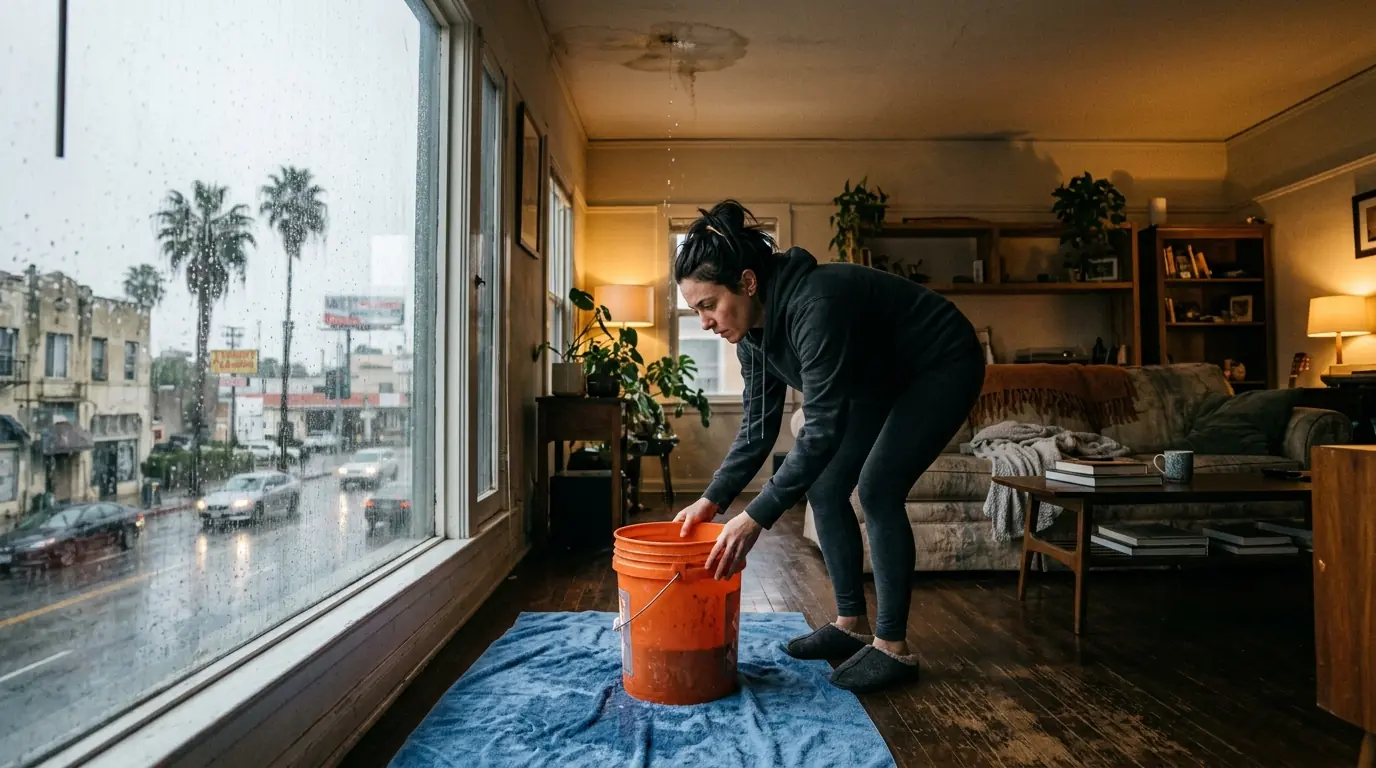
Put a bucket or bin under the drip, with a towel inside to stop splashing. Move furniture, rugs and electronics out of the way, and cover what you can't move with plastic sheeting or a shower curtain.
If the ceiling is bulging with water, it will come down on its own. Put the bucket under the lowest point and poke a small hole there with a screwdriver so it drains in one place. If water is near a light fixture or outlet, switch that circuit off at the panel and leave it off until an electrician or the roofer has looked.
Work out where the water is really coming from
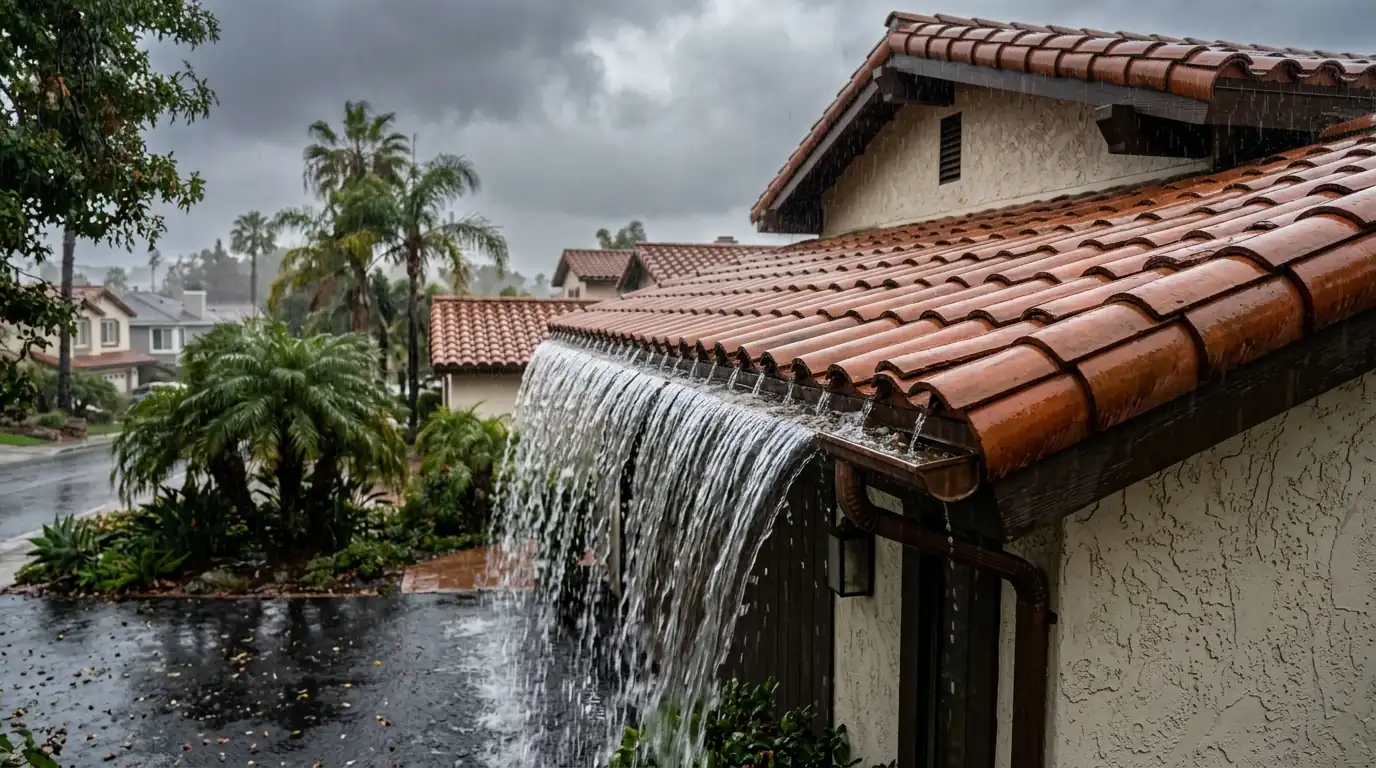
The drip is the end of the water's path, not the start. Water enters at a transition, such as a pipe boot, valley, chimney, skylight or wall, then runs along the deck or a rafter until it finds a way down. A stain can sit several feet from the opening.
If you can safely get into the attic with a flashlight, look uphill from the stain for wet wood, damp insulation or daylight. Don't step between joists. If water appears in dry weather, it may be plumbing or an air conditioner drain line rather than the roof.
Stay off the roof
A wet roof is slippery at any pitch, tile cracks underfoot, and wind makes it worse. Most roof injuries happen to people trying to find or cover a leak themselves.
From the ground, look for missing shingles, displaced tiles, a branch on the roof or a clogged gutter, and take photos. That is enough information for a roofer to plan the cover.
What a proper emergency cover looks like
A good tarp runs over the ridge where possible so water can't get under its top edge, and it's fastened to wood battens rather than weighed down with bricks that slide off. On tile roofs, the tiles are supported so the tarp doesn't crack more of them. On flat roofs, a temporary membrane or sealed patch usually works better than a tarp.
Ask for photos of the cover and the damage. A well-set tarp holds through the next rain while the permanent repair is scheduled, which is how a traced leak repair should work.

Water coming in right now?
Call now, any hour. We will cover the roof first and trace the leak once it's dry.
Document everything for insurance
Photograph the ceiling, the wet items, the attic and anything visible outside, with the date. Keep receipts for tarps, buckets or cleanup. Many homeowner policies cover sudden damage, like a storm or a falling limb, while gradual wear usually isn't covered, so the cause matters.
A roofer's dated photos and written description of the opening help the adjuster see what happened. Call your insurer early; some policies expect prompt notice.
After the rain: the permanent repair
Once the roof is dry, the leak should be traced properly: attic first, then the roof above it, with water testing if needed. The repair fixes the failed part, whether that's a boot, flashing, valley or seam, and checks the deck and insulation for hidden water. After a windstorm, wind damage repair follows the same path.
If leaks keep appearing in new places, or the roof is soft or brittle across large areas, it may be time to think about replacement rather than another repair. The signs a roof needs replacing guide covers how to tell.
When a leak is an emergency, and when it can wait
Call right away if water is pouring rather than dripping, if the ceiling is bulging, if water is near wiring, or if a tree or large branch has hit the roof. Those situations get worse by the hour, and a cover the same day limits the damage.
A slow drip that stops when the rain stops, or a stain that hasn't grown, can usually wait for a scheduled visit once the weather clears. Keep the bucket in place, keep photographing the stain each rain, and book the repair before the next storm rather than after it.
Roof leak questions
Quick answers to the questions this topic raises most.
Other ways to reach usProtect the room, then call a roofer to stop the water, then your insurer. Covering the opening quickly limits damage either way.
Yes, carefully: a small hole at the lowest point lets water drain into a bucket instead of the whole ceiling coming down.
It is risky on a wet roof and easy to do wrong. A roofer fastens it to battens over the ridge.
Heavy or wind-driven rain reaches gaps light rain misses, often at valleys, walls and skylights.
Leaks without rain point to plumbing or an AC drain line. Leaks that follow rain usually start at the roof.
Wet insulation loses much of its value and can hold moisture against the deck, so it should be checked and replaced if soaked.
More guides for Los Angeles roofs
Preparing Your Roof for Santa Ana Wind Season
What to fix before the wind season and what to check after it.