How to tell when a Los Angeles roof needs replacing, not repair
Most roofs get repaired many times before they need replacing. The trick is knowing when repairs have stopped buying real time. Here are the signs, by roof type.

By Sadie Yancey, Roofing Guides Editor · Updated September 2026
A roof needs replacing when problems are everywhere at once: shingles bald, curled or brittle on every slope, tile underlayment failing across the roof, a flat roof soft in several places, or leaks that keep appearing in new spots. Local damage on an otherwise sound roof is usually a repair.
Repair or replace: the core question
The deciding factor is how much of the roof is affected, not how bad one spot looks. A torn section of shingles, a cracked tile or a split flat-roof seam on a sound roof is a repair. The same symptoms spread across every slope mean the roof has reached the end.
Age and layers matter too. Only about 15% of City of Los Angeles homes were under 30 years old as of 2019, so many roofs here have seen decades of sun. And code generally allows only one re-cover, so a roof already carrying two layers has to come off entirely when it fails.

Signs on a shingle roof
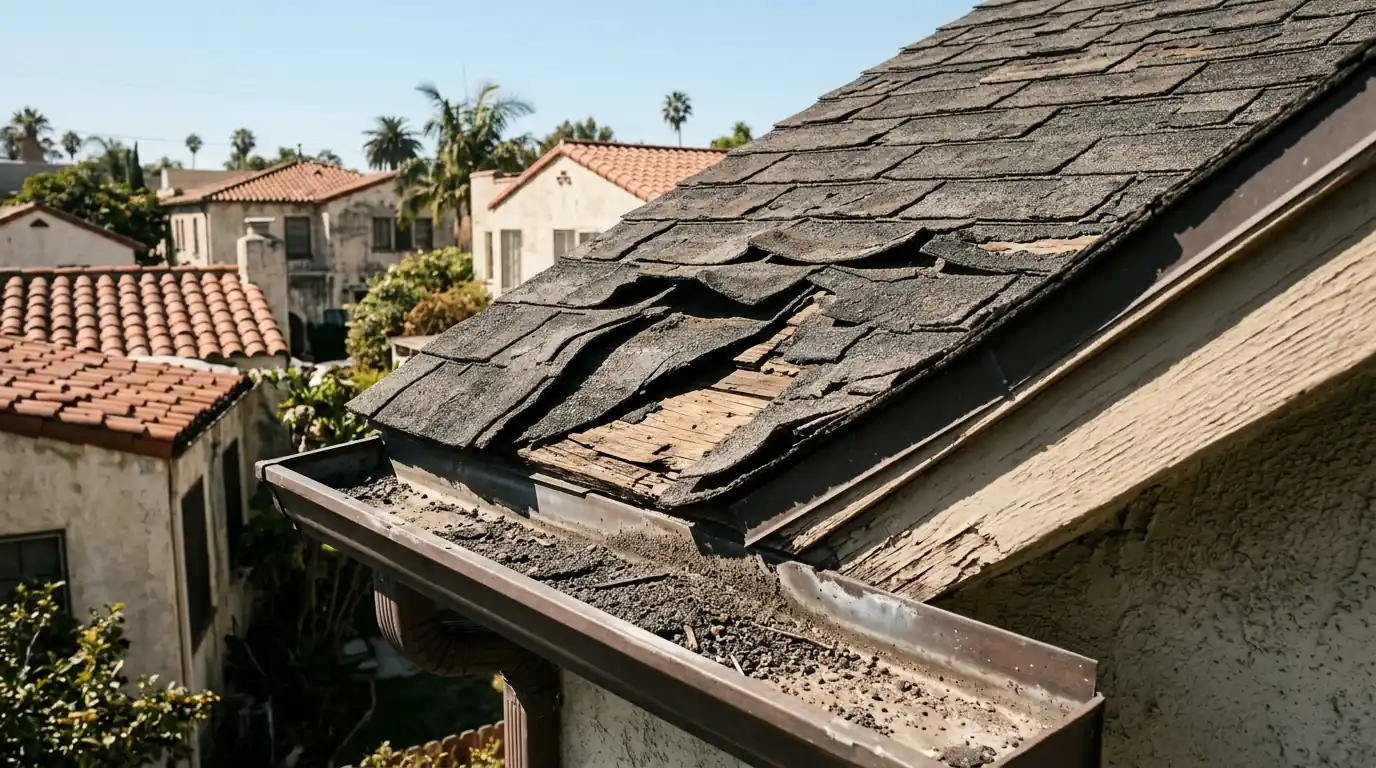
Look for curling or cupped edges on several slopes, widespread bald patches where granules have washed away, shingles that crack when lifted, and heavy grit in the gutters. A few missing tabs after wind is a shingle repair; brittle shingles everywhere isn't.
The south and west slopes age first under the LA sun, so they are the place to judge. If those faces are worn through, the rest is usually not far behind.
Signs on a tile roof
Tile roofs are different, because the tile usually outlasts what is under it. Leaks that keep appearing in new places with no broken tiles above them mean the underlayment has failed. Crumbling ridge mortar and slipped courses are signs too.
The good news is that failed underlayment rarely means buying new tile. A tile relay lifts the existing tile, replaces the paper and battens, and puts the tile back. New tile is needed when many tiles are broken or the profile is discontinued.
Signs on a flat roof
Soft or spongy areas in several places, widespread blistering, seams opening across the roof, and water that ponds in more and more spots all point to wet insulation or a failing membrane. One wet area can be a flat roof repair; several usually can't.
A core cut from the roof tells the truth: if the insulation is wet across large areas, patches won't hold, and a new system is the better spend.

Repair or replace?
Call and we will check the roof and attic, then give you both answers in writing.
Signs inside the house
The attic often tells you more than the roof. Daylight through the roof boards, dark stained sheathing, damp insulation after rain, and rusted nails all show where water or moisture has been getting in.
A roofline that dips, or ceilings that crack along the walls, can mean the framing is under strain. That needs checking before any new roof goes on; see repairing strained framing.
What to do next
Get the roof and the attic looked at by someone who will give you both options in writing: what a repair would cost and buy, and what a replacement would cost. If you are buying or selling, a roof inspection documents condition for everyone in escrow.
If replacement is the answer, our roof cost guide explains the published ranges, and choosing a contractor covers what to ask before you sign.
How much time you have once the signs appear
Signs of an aging roof rarely mean it will fail next week. They mean it's time to plan: get it inspected, get written options, and schedule the work for the dry season rather than waiting for the first winter storm to decide for you.
Planned replacements cost less than emergency ones, crews are easier to book, and you can make choices about material and color without water coming through the ceiling. Waiting until a roof is actively failing usually adds interior repairs to the bill.
Roof replacement sign questions
Quick answers to the questions this topic raises most.
Other ways to reach usIt depends on the material and upkeep. Condition across the whole roof matters more than the date.
Rarely. One leak is usually a repair; leaks in new places every season suggest replacement.
Usually not. Cracked tiles are replaced; failed underlayment calls for a relay.
It means the next replacement must be a full tear-off, since code allows one re-cover.
The framing may be under strain, and it should be checked before any new roof goes on.
Not always. An inspection shows buyers the condition, and a repair or certification may be enough.
More guides for Los Angeles roofs

Roof replacement costs in LA
Published 2026 ranges by roof type, and the line items that move a quote.
Choosing an LA roofer, explained
What to ask, what to verify and the warning signs to walk away from.