Metal roof repair in Los Angeles: fasteners, seams, rust and flashing
Metal roofs last a long time, but their weak points are predictable: fasteners that loosen, seams and flashing that open, and coatings that wear until rust starts. We repair each of them with matching parts so the roof keeps its life.
- Answered 24/7
- Standing seam and panel
- Matched parts
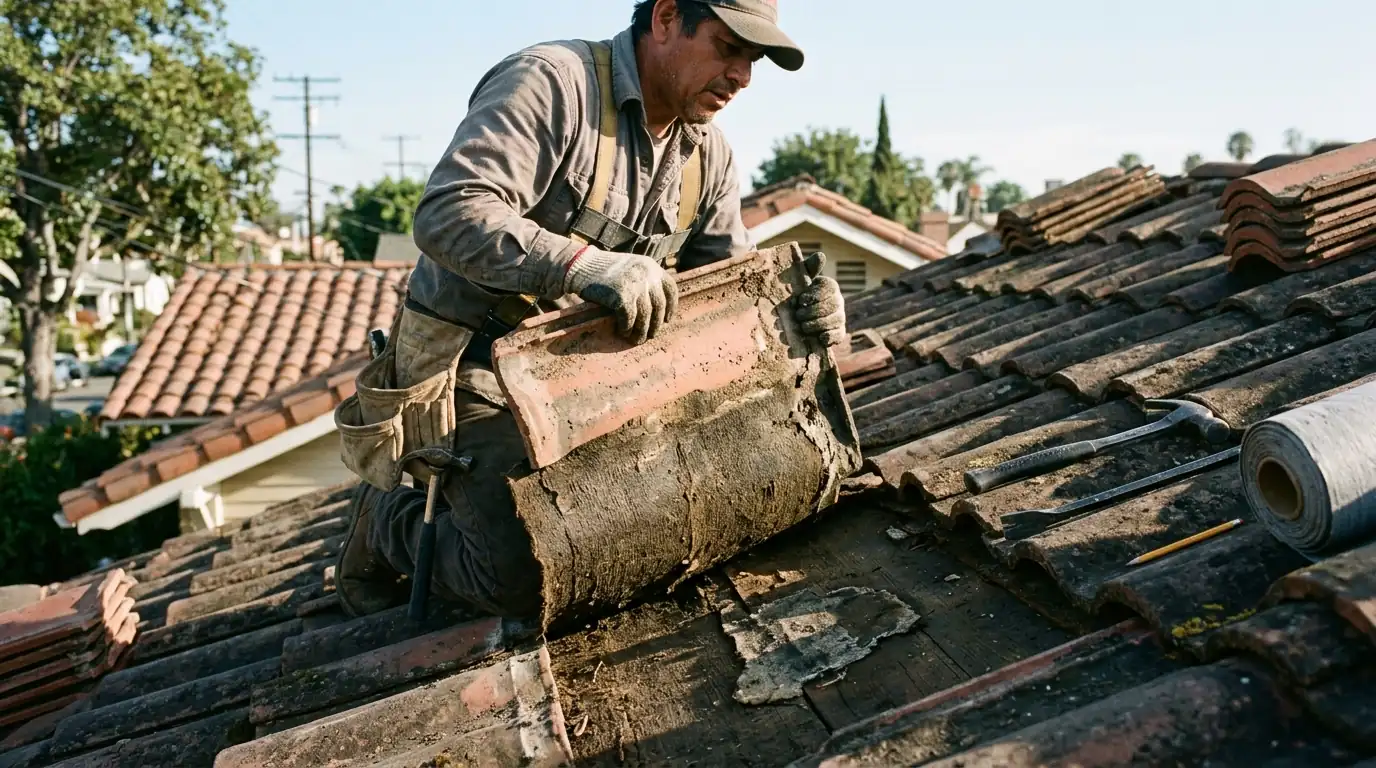
Metal roof repair in Los Angeles fixes the three things that make metal roofs leak: loose or failed fasteners, open seams and flashing, and rust where the coating has worn. We replace fasteners and sealing washers, reseal or reseam panels, replace rusted sections with matching metal, and reflash walls, vents and skylights.
Updated September 2026
The panels last; the details wear
Exposed-fastener roofs, like corrugated and R-panel, rely on thousands of screws with rubber washers that dry out and loosen as the metal expands in the sun. Standing seam hides its clips but can open at seams, end laps and flashing. Scratches and cut edges rust where the coating is gone.
Most of that's repairable without replacing the roof. When rust has eaten through large areas or panels are too thin to hold fasteners, replacement makes more sense; see new metal roof systems for new systems, and mobile home roofing for metal roofs on manufactured homes.
Signs your metal roof needs repair
Drips in straight lines
Leaks along a fastener row point to failed washers.
Backed-out screws
Screw heads standing proud of the panel.
Rust spots or streaks
Coating worn through at scratches or cut edges.
Popping in the heat
Loose fasteners let panels move.
Open or lifted seams
Seams or laps no longer tight.
Bent trim at edges
Wind has lifted rake or ridge trim.
Stains around vents
Pipe boots and flashing failing.
What a metal roof repair costs depends on
Metal repairs are priced on what has failed. Five things set the cost:
- Number of fasteners
Refastening a whole roof costs more than a few leaking rows.
- Panel profile
Matching an older or unusual profile can take sourcing.
- Rust extent
Surface rust is coated; perforated panels are replaced.
- Flashing and trim
Walls, chimneys and edges need matching metal.
- Access
Steep or high roofs need more safety setup.
Fasteners, rust and seams
Loose and leaking fasteners
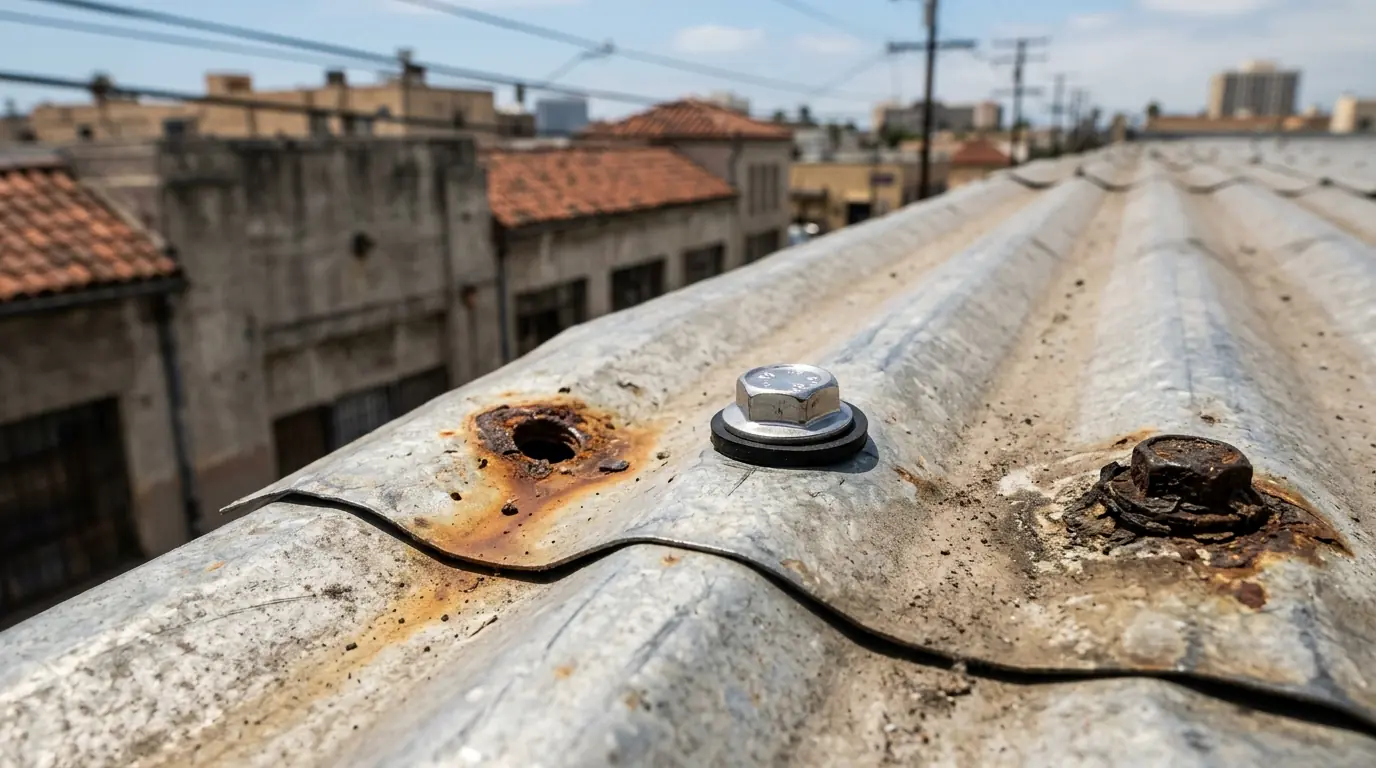
On exposed-fastener roofs, each screw is a potential leak once its washer hardens or the screw backs out. We replace failed fasteners with new gasketed screws, stepping up a size where holes have worn wide, and set them so the washers seal without being crushed. On an older roof we usually replace every fastener on a slope rather than chasing single leaks, since washers age together and the next one to fail is usually right beside the last.
Rusted panel replacement
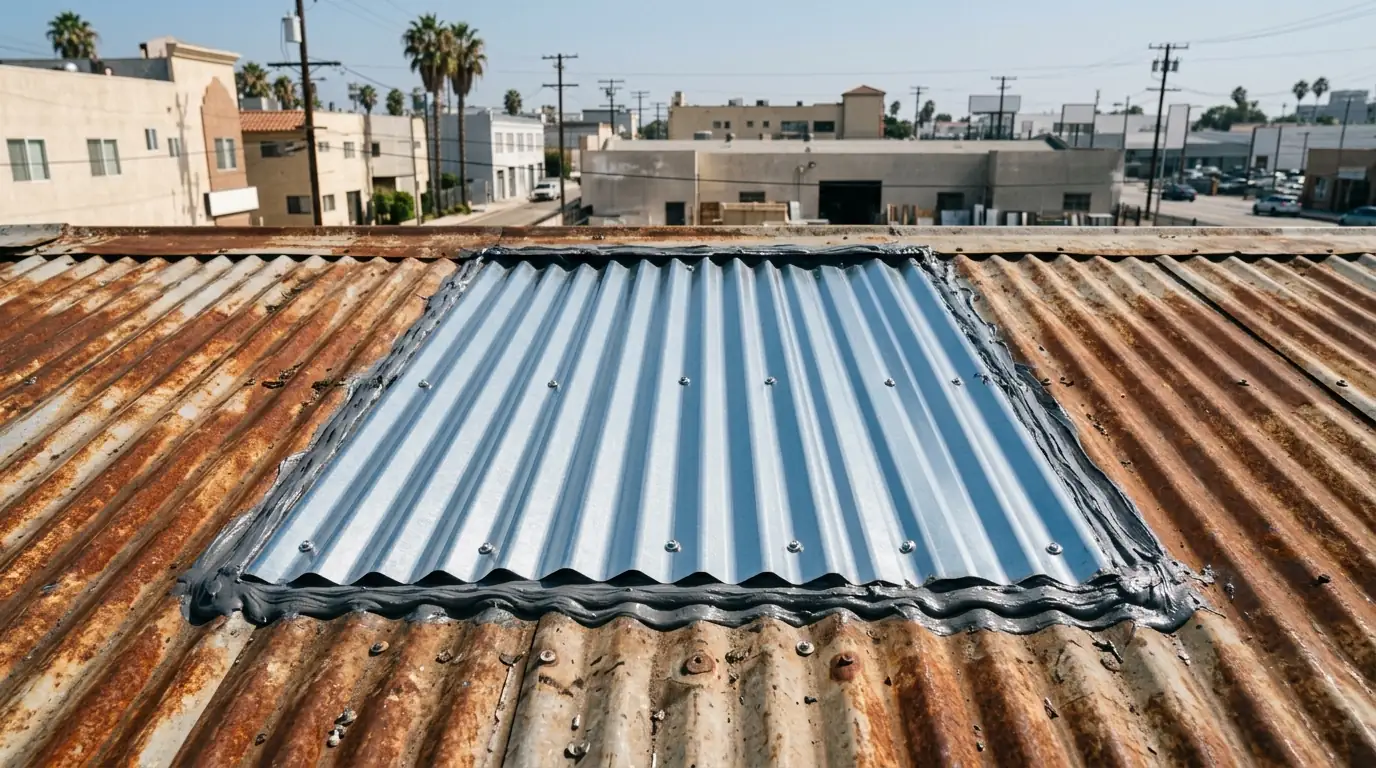
Surface rust can be cleaned, primed and coated. Rust that has perforated a panel means that section is replaced with matching gauge and profile, lapped and sealed into the panels around it. We also look for the cause, such as standing water or two different metals touching. Surface rust caught early is the cheap fix, so we'll mark areas to watch at the same visit and suggest a coating schedule that keeps the rest of the roof from reaching the same point.
Metal seam and flashing repair
Standing seam roofs leak at seams that were never fully closed, at end laps, and at flashing around walls, chimneys and penetrations. We reseam or seal opened seams, replace damaged trim, and reflash transitions with matching metal rather than covering them in sealant. Trim pieces at rakes and ridges also get new fasteners, because wind lifts loose trim first, and once trim is bent the panel edges under it are open to wind-driven rain for the rest of the season.
Metal has become a common choice in the rebuild after the 2025 fires, with many homeowners in Pacific Palisades and Altadena choosing steel roofs, so more roofs across the region now need the upkeep metal asks for. Metal is also common on the mobile homes that make up some of the Los Angeles region's most affordable housing, where loose fasteners and worn coatings are the usual calls.
Why sealant over screws isn't a fix
Smearing sealant over leaking screw heads is a common patch, and it rarely lasts: it cracks as the metal moves, traps water around the fastener and hides whether the screw still holds. Walking a metal roof also dents panels and is slippery even when dry.
From the ground, watch for backed-out screws, rust streaks and bent trim, and call before the next rain.
How a metal roof repair runs
Trace the leak
We follow drips to the fastener row, seam or flashing.
Assess the metal
Rust depth, panel gauge and coating are checked.
Repair
Fasteners, seams, panels or flashing replaced to match.
Treat and coat
Rusted areas cleaned, primed and coated.
Water test
Repaired areas tested before we leave.
Metal roof repair questions
Straight answers to what people ask us most about this job.
Other ways to reach usUsually. Most leaks are at fasteners, seams or flashing, which can be repaired.
If it's sound with worn coating or surface rust, a coating can extend its life.
The rubber washers dry out and screws loosen as the metal expands and contracts.
Common profiles can be matched; older ones may need sourcing.
Yes, including chipped granules and lifted panels; see stone-coated steel repairs.
Surface rust is repairable; widespread perforation usually means replacement.
Most repairs are finished in a day.
Other repairs & leaks jobs we handle
Storm and Wind Damage Roof Repair in Los Angeles
Storm and Wind Damage Roof Repair.
Blister and seam repair
Flat Roof Repair.
Ridge and hip mortar repair
Tile Roof Repair.
Ceiling stain leak tracing
Roof Leak Repair.
Melted vents, gutters and flashing
Fire and Smoke Damaged Roof Repair.