Synthetic shake and slate roofs for Los Angeles homes
Composite shake and slate are molded from engineered polymers to look like cedar or natural slate, at a fraction of slate's weight and without wood's fire risk. We install them as rated systems with the underlayment fire zones require.
- Answered 24/7
- Shake and slate looks
- Fire-rated systems
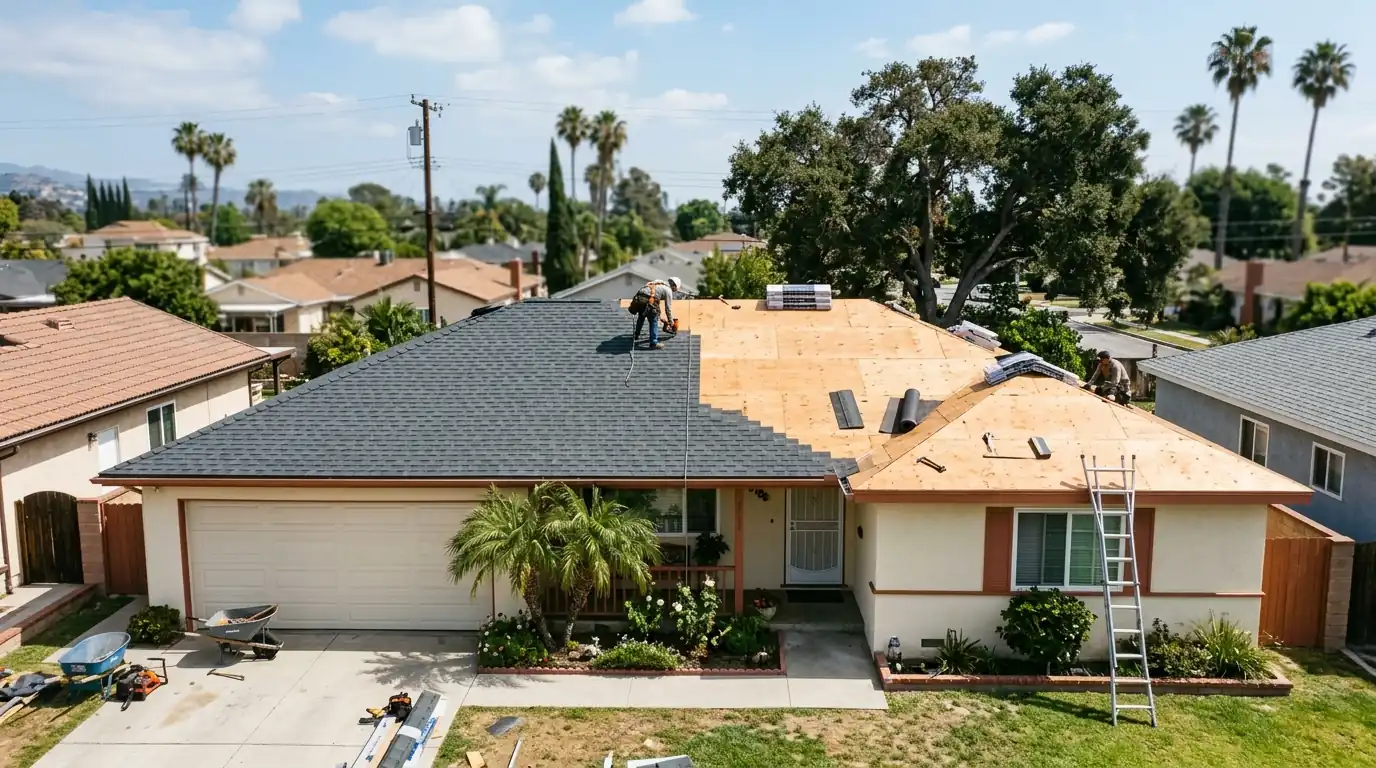
Synthetic shake and slate roofing in Los Angeles uses composite tiles molded to look like cedar shake or natural slate. They are light, impact resistant and, installed with the manufacturer's specified underlayment, can reach a Class A fire rating, which makes them a common choice for homes leaving wood shakes behind.
Updated September 2026
The look of shake or slate, without the weight or the wood
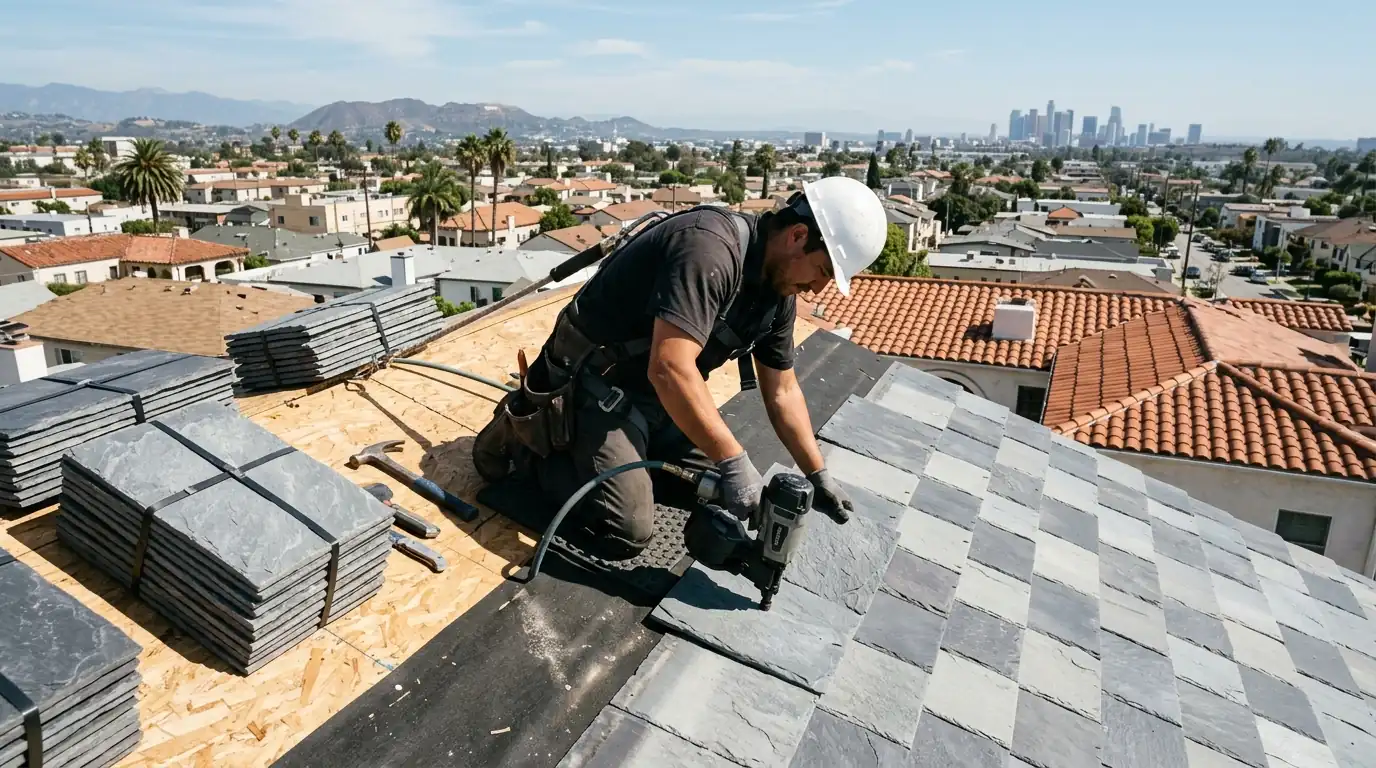
Composite tiles are individual pieces molded with the texture and varied thickness of real shake or slate, in color blends so the roof doesn't look uniform. They nail to a solid deck like shingles, weigh far less than slate, and resist cracking better than many natural materials.
Fire rating depends on the product and the assembly beneath it, so we confirm the rating before ordering. For homes still under wood, a shake conversion with composite shake keeps the look; for a lighter traditional option, stone-coated steel is the main alternative.
What a synthetic shake or slate roof costs depends on
Composite roofs are priced per square as an assembly. Five things set the price:
- Product line
Composite brands and profiles vary widely in price.
- Color blend
Blended colors take more sorting and layout.
- Underlayment
Class A assemblies need specified underlayment.
- Deck work
Skip decking under old shakes needs new sheathing.
- Roof shape
Hips, valleys and dormers add cutting and trim.
Synthetic, stone-coated steel or tile?
Each gives a traditional look with fire resistance; they differ in weight and feel.
| Roof | Material | Weight | Tradeoff |
|---|---|---|---|
| Synthetic shake or slate | Molded composite | Light | Rating depends on the assembly |
| Stone-coated steel | Granule-coated steel | Light | Profiles are more uniform |
| Concrete tile | Cast concrete | Heavy | Framing check required |
Shake, slate and the layer that makes them Class A
Composite shake roofing
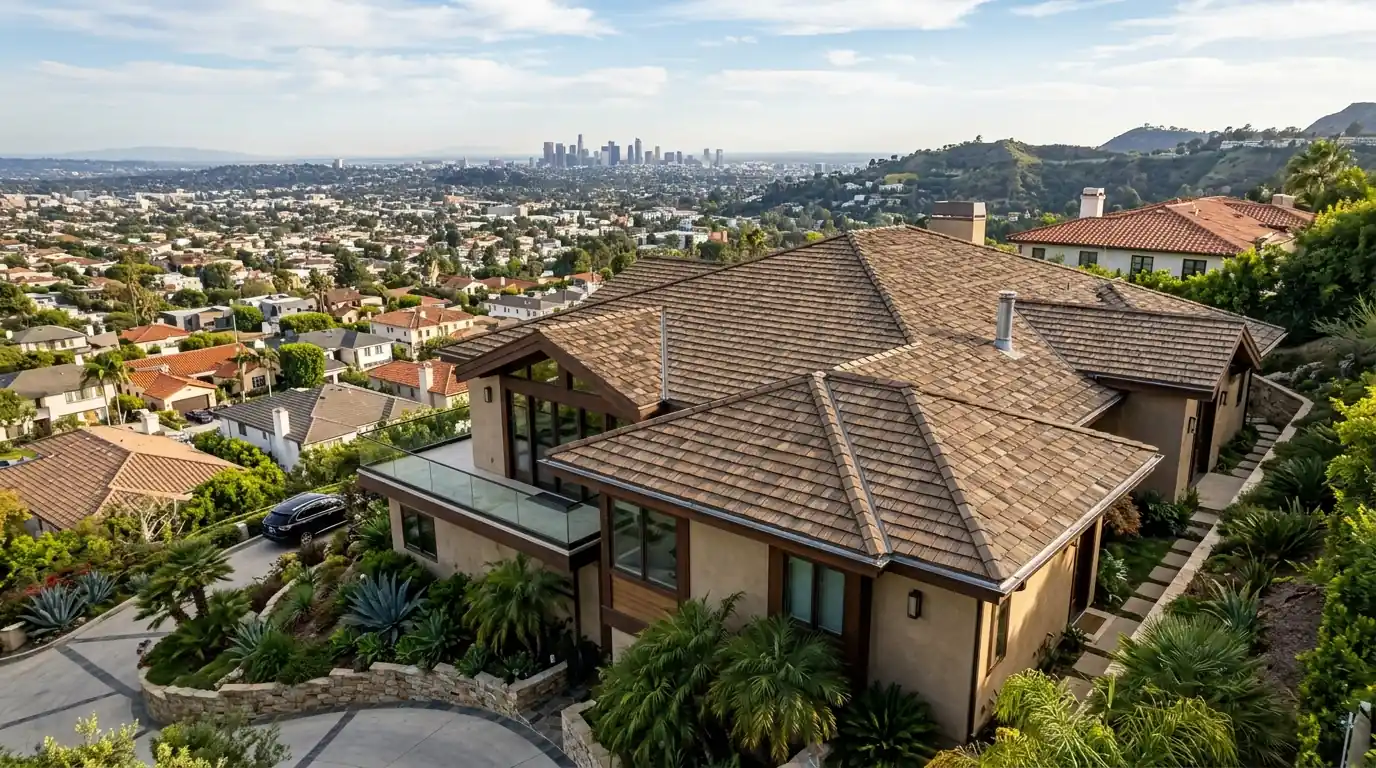
Composite shake mimics split cedar, with varied widths and a weathered color blend, and it's the closest match for homes built for shakes. We install it over solid sheathing and fire-rated underlayment, staggering widths and colors so the roof looks natural. Because each piece is molded, there's no splitting, cupping or rot to deal with later, and the color runs through the material, so scratches from branches or foot traffic don't show a different color underneath it.
Composite slate roofing
Composite slate gives the look of natural slate where real slate's weight and cost don't work. Tiles come in single colors or blends and several widths. Hips and ridges use matching pieces, and copper or painted metal flashing completes the look. It's also a practical choice for homes that originally had real slate, since the lighter weight means the old framing isn't carrying a load it wasn't built for once the aging stone comes off, and it's quicker to install.
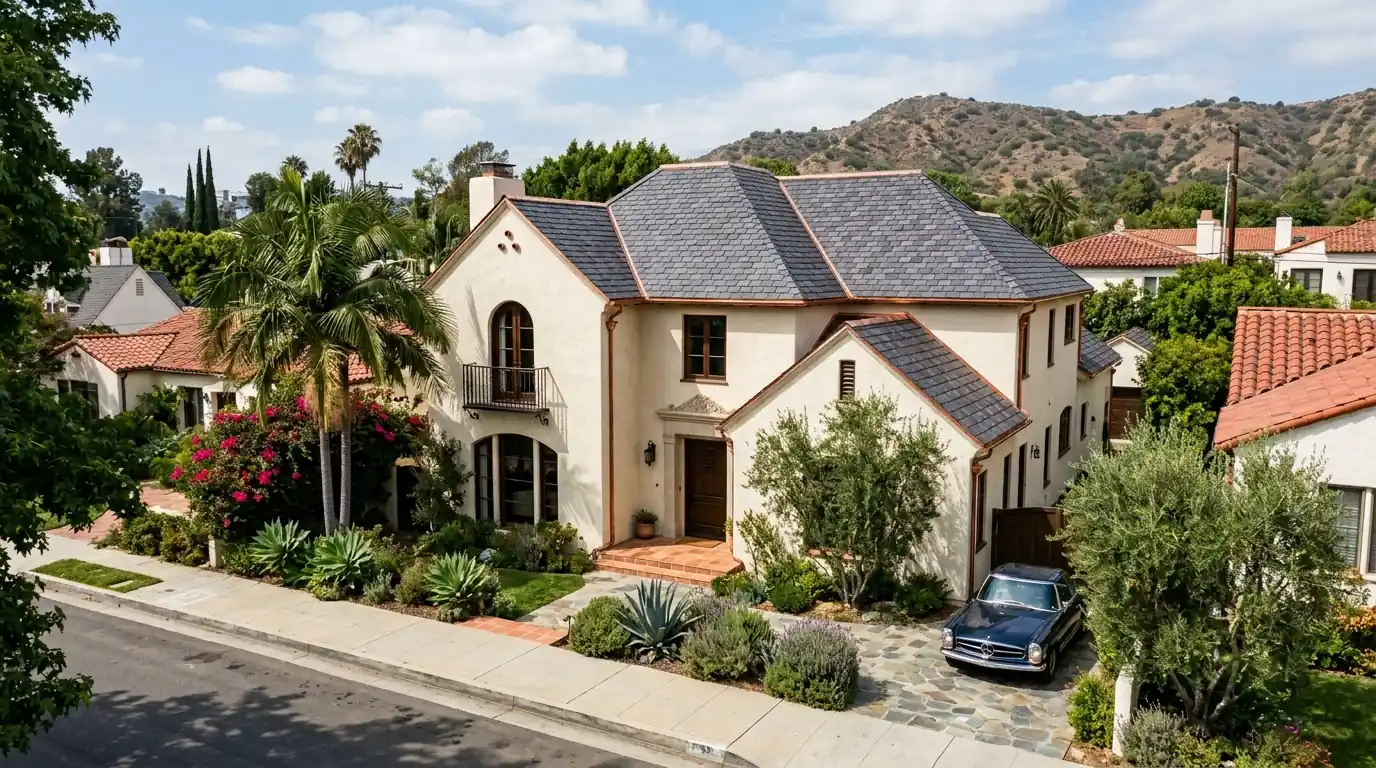
Fire-rated underlayment for synthetics
Many composite products reach Class A only with a specific underlayment or cap sheet beneath them. In a very high fire hazard zone, that assembly decides whether the roof passes, so we install exactly what the product's listing requires. We keep the product's listing and the underlayment details with the permit paperwork, so the inspector can see exactly which assembly was built, and you have the same record if an insurer asks about the roof's fire rating.
The rebuild after the 2025 fires has pushed quoted roofing labor on the Westside 15-25% above pre-fire levels, and many homeowners rebuilding in Pacific Palisades and Altadena are choosing fire-resistant roofs that still look traditional. Composite shake and slate sit in that space alongside stone-coated steel, and on hillside lots the fire-rated assembly beneath them is what the inspector checks.
How long a synthetic roof takes
Composite tiles go on piece by piece like a premium shingle, so a typical home takes longer than a standard shingle roof but less than tile. Sheathing over skip decking adds time on shake conversions.
Some products and colors are ordered in, and that lead time can set the start date more than the install does.
How a synthetic roof goes on
Roof and deck check
Deck, layers and framing are checked.
Choose the product
Shake or slate, color blend and rated assembly.
Tear-off and sheathing
Old roof off, solid sheathing where needed.
Underlayment and tiles
Rated underlayment, then tiles in a staggered blend.
Trim and inspect
Hips, ridges and flashing finished, then inspection.
Synthetic shake and slate questions
Straight answers to what people ask us most about this job.
Other ways to reach usYes, it isn't wood; in fire zones it must be installed as a Class A assembly.
From the ground a good blend reads as slate; up close the material is lighter and more even.
No, composite slate weighs far less than natural slate.
Many products reach Class A with the specified underlayment, and we confirm the listing before ordering.
Very little: keep gutters and valleys clear and check flashing.
No. It needs a solid deck, so the old roof comes off and the deck is repaired.
Both are light and fire resistant; synthetics show more natural variation, while steel panels cover more area per piece.
Other roof replacement & installation jobs we handle
Custom home roofing
New Construction Roofing.
HPOZ roof replacement
Historic Home Roofing.
Metal roof over existing shingles
Metal Roofing.
Clay tile roof replacement
Clay Tile Roofing.
Roof Replacement in Los Angeles
Roof Replacement.