Historic home roofing in Los Angeles, from Craftsman bungalows to HPOZ homes
Older Los Angeles homes need roofers who match what was there: the tile profile, the shingle look, the rafter tails and the eaves. Inside a Historic Preservation Overlay Zone, that matching is also what keeps the review simple.
- Answered 24/7
- HPOZ-aware scopes
- Matched materials
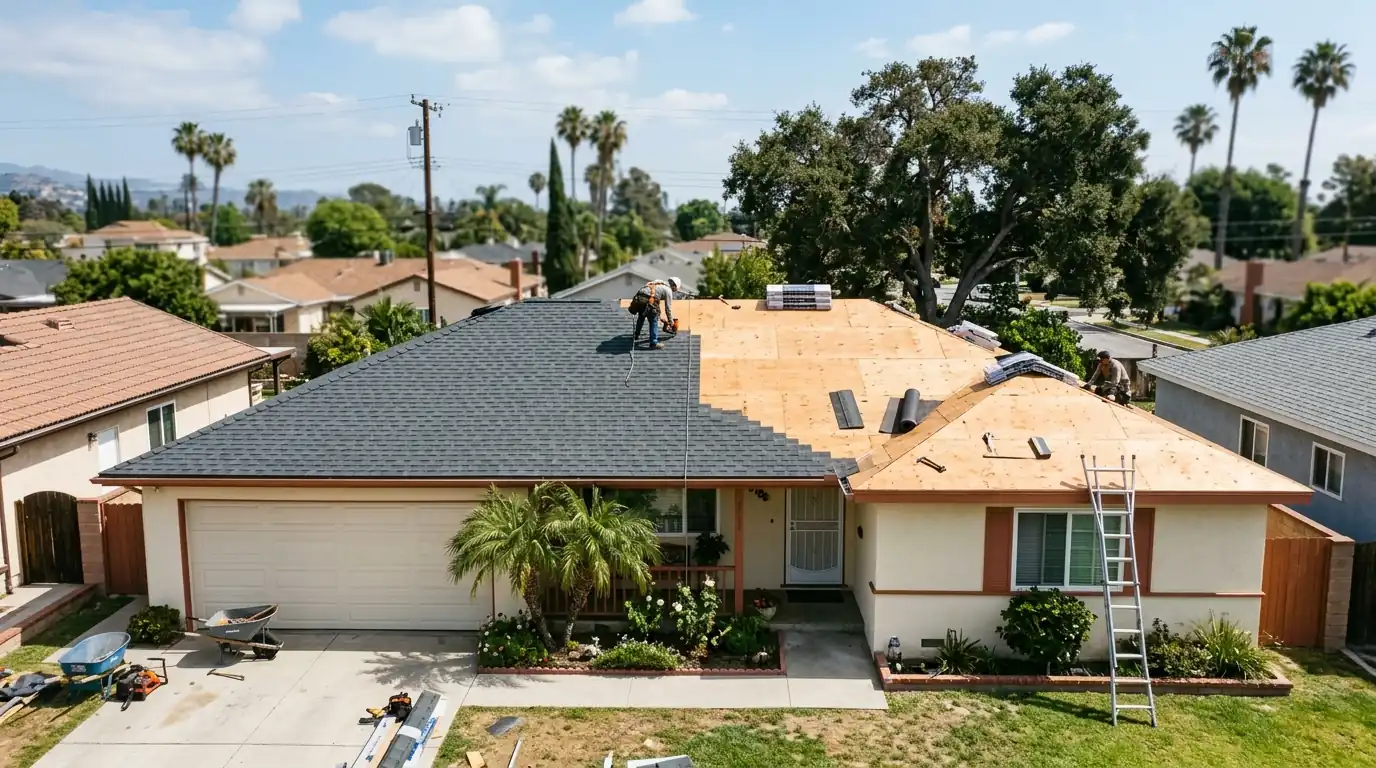
Historic home roofing in Los Angeles means repairing or replacing roofs on older homes with materials and visible details that match the original, from clay tile profiles to exposed rafter tails. Inside one of the city's Historic Preservation Overlay Zones, in-kind work is the simplest path, and any visible change is planned around the zone's review.
Updated September 2026
Repairs that keep a house looking like itself
A roof on a 1910s bungalow or a 1920s Spanish revival home is part of what makes the house what it is. The tile profile and color, the shingle exposure, the depth of the eaves and the shape of the rafter tails all show from the street, and replacing them with something different changes the house.
We start by recording what's there: photos, profiles, measurements and the condition of the wood beneath. Repairs are made to match, and when a full re-roof is needed we plan materials that fit the house. For the review side, our guide to re-roofing in an HPOZ walks through how it works.
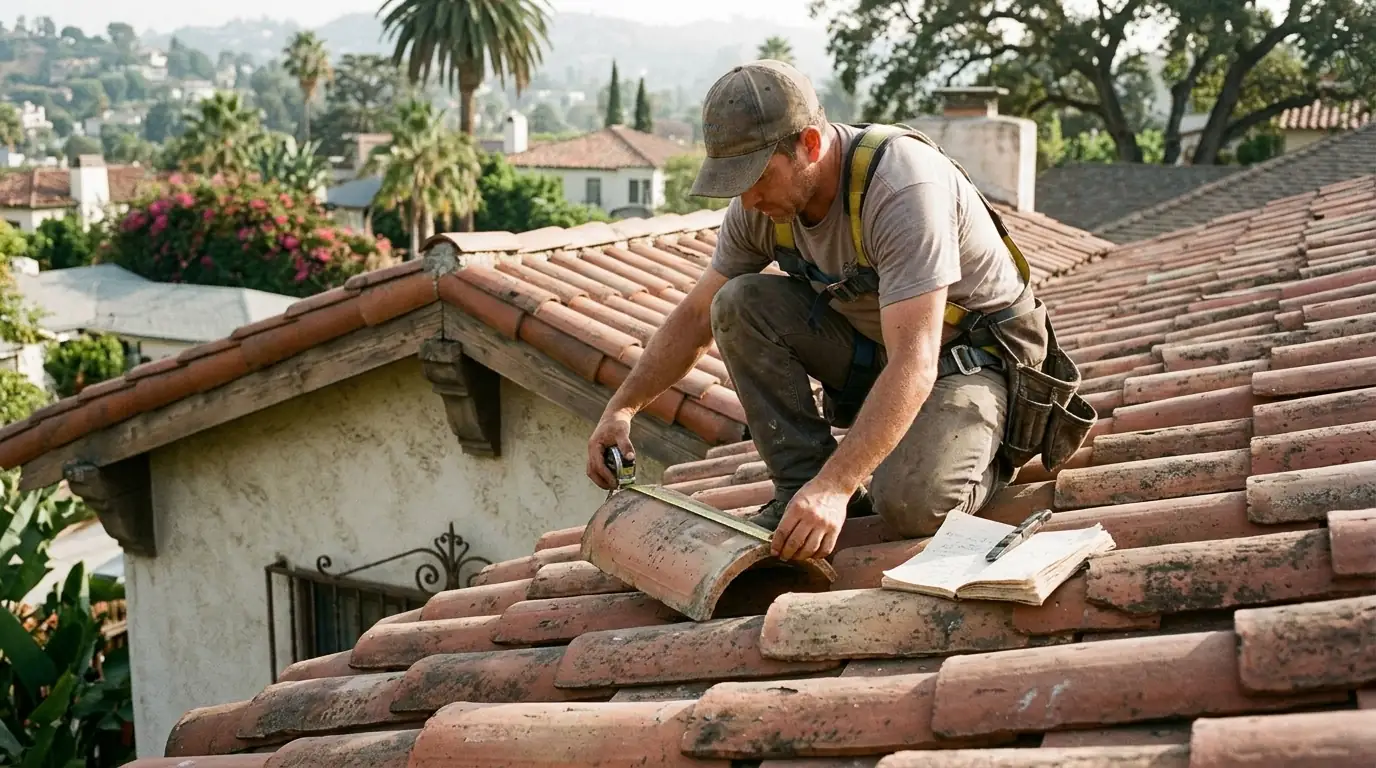
What a historic roof job costs depends on
Historic jobs take more planning than ordinary re-roofs. Five things set the price:
- Material match
Matching tile or shingle can mean salvage or special orders.
- Wood repairs
Rafter tails, brackets and eaves are cut to profile.
- Documentation
Photos, profiles and specs for any review.
- Underlayment and deck
Old board decks often need repair or sheathing.
- Access and protection
Older homes need careful staging around plaster and gardens.
Repair, relay or replace?
On historic roofs, the least invasive option that solves the problem is usually the right one.
| Approach | When it fits | What stays | Tradeoff |
|---|---|---|---|
| Spot repair | Local damage, sound underlayment | Everything original | Doesn't fix aging paper |
| Lift and relay | Sound tile, failed underlayment | The original tile | More labor than a repair |
| In-kind replacement | Roof at the end of its life | The look and profile | New material, same appearance |
Matching, restoring and replacing with care
HPOZ roof replacement
Inside a Historic Preservation Overlay Zone, replacing a roof with the same material and look is usually the simplest path, while switching materials or changing visible details typically needs review under the zone's preservation plan. We document the existing roof, propose matching materials and prepare the information the review needs, so the permit isn't held up by a missing photo or spec sheet. Before any of that, we confirm with you whether the home is a contributing structure, since that decides how much review the work needs.
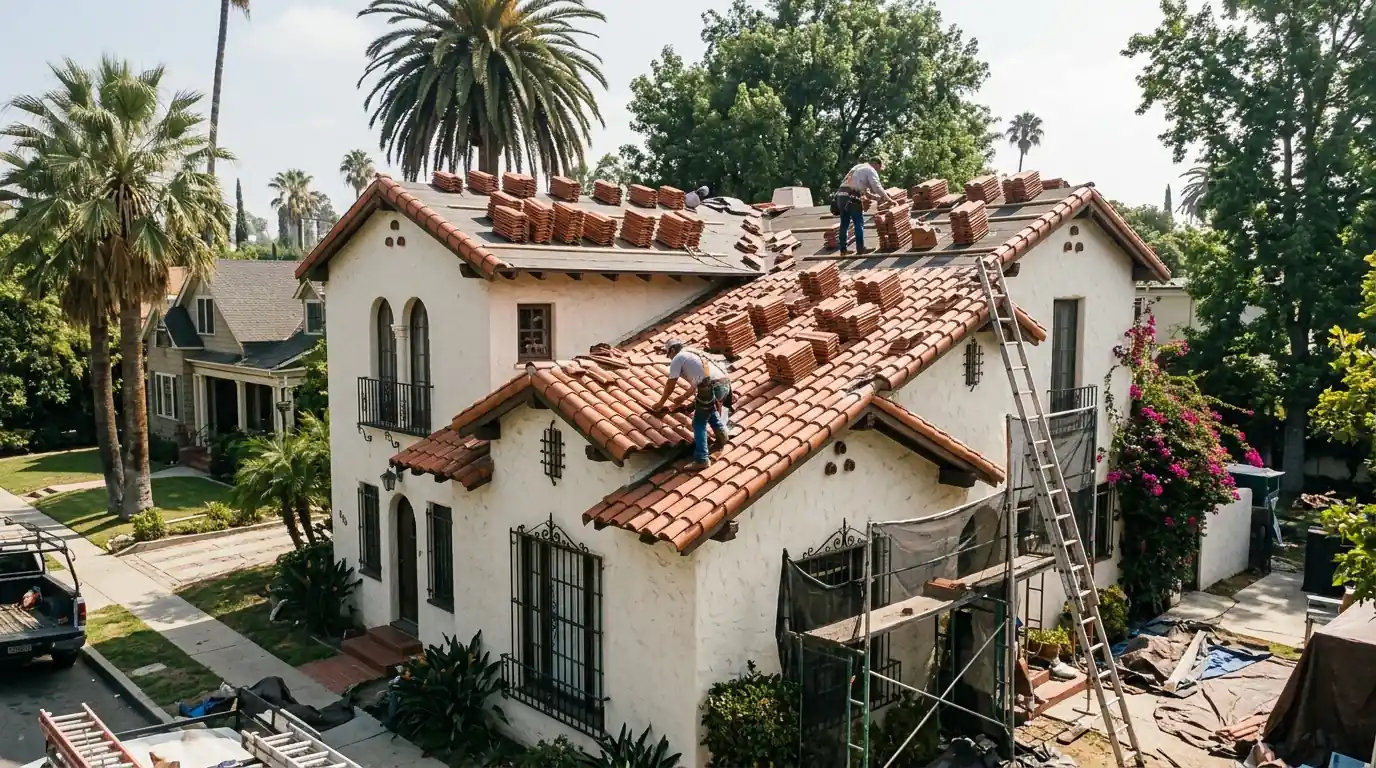
Matching original tile and shingle
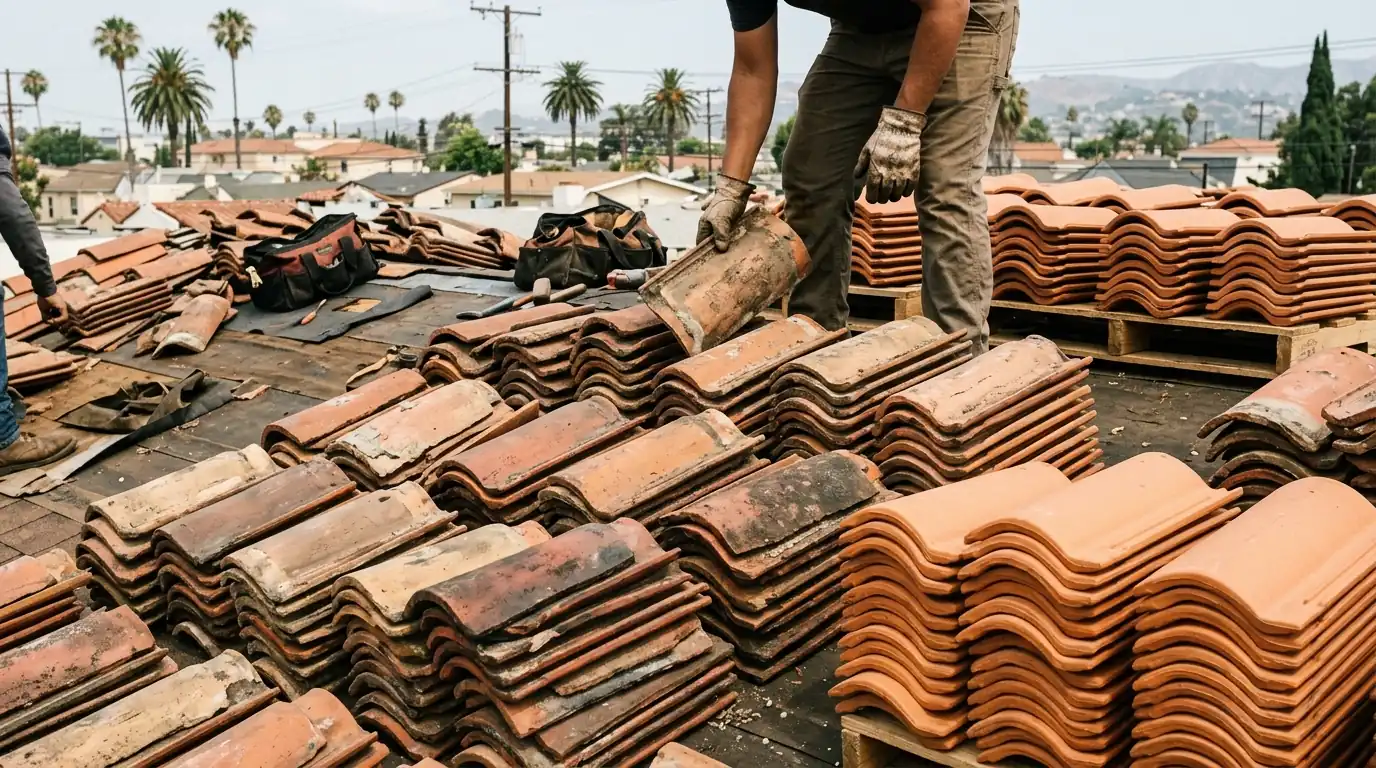
Matching starts with the profile and the color. Many clay tile profiles are still made in blended colors, salvage sources carry discontinued ones, and sound tile from a hidden slope can be moved to where it shows. For shingle-roofed Craftsman homes we choose shingles with an exposure and color that suit the period rather than the shiniest option on the shelf. When no exact match exists, we'll show you the closest options side by side on the roof before anything is ordered.
Historic eave and cornice repair
Exposed rafter tails, carved brackets and boxed cornices rot where water has sat for decades. We cut new pieces to the original profile, splice them into sound wood and prime every cut end before paint. The goal is a repair you can't pick out from the street, which matters on any older home and especially on one inside a preservation zone. Paint-ready repairs mean your painter can finish the eaves without waiting on us at all.
What our historic roof scope includes
Every historic job starts with a record of what's there.
- Photos and measurements of the existing roof
- Profile, color and exposure recorded
- Wood repairs cut to the original profiles
- Matching materials sourced or salvaged
- Information prepared for any review
- Underlayment and flashing brought up to current standards
- Before and after photos for your records
Highland Park and neighboring Garvanza share one of the largest Historic Preservation Overlay Zones in the City of Los Angeles, and South Pasadena reviews changes to designated properties through its Cultural Heritage Commission. Across the area the rule of thumb is the same: matching what's there keeps things moving, and visible changes need a plan for review before the permit is filed.
How a historic roof job runs
Record the roof
Photos, profiles and measurements before anything changes.
Plan the match
Materials and details chosen to fit the house.
Review and permit
Any review handled first, then the permit.
Careful work
Repairs and replacement with the house protected.
Final record
Photos and notes on what was done.
Historic home roofing questions
Straight answers to what people ask us most about this job.
Other ways to reach usIt depends on the work. In-kind replacement is usually simplest; changing materials or visible details typically needs review.
Usually, through current profiles, salvage or moving tile from hidden slopes.
Sometimes, but it changes the look, so expect review if the home is in a preservation zone.
Yes. We cut new tails to the original profile and splice them into sound wood.
Usually somewhat, because of matching materials, wood repairs and documentation.
Yes, including South Pasadena and other cities with historic homes. See our South Pasadena page.
Yes. Underlayment, flashing and fire ratings meet today's rules while the visible roof matches the original.
Other roof replacement & installation jobs we handle
Asphalt Shingle Roof Installation in Los Angeles
Asphalt Shingle Roof Installation.
ADU and garage conversion roofs
New Construction Roofing.
Metal roof over existing shingles
Metal Roofing.
Shake to Class A shingle conversion
Wood Shake Roof Conversion.
Clay tile roof replacement
Clay Tile Roofing.