Re‑roofing a home inside a Los Angeles historic preservation zone
Los Angeles has dozens of Historic Preservation Overlay Zones, from Highland Park-Garvanza to Angelino Heights. If your home is in one, the roof is part of what the zone protects. Here's how to plan a re-roof without delays.
By Sadie Yancey, Roofing Guides Editor · Updated September 2026
Inside a Los Angeles Historic Preservation Overlay Zone, replacing a roof with the same material and look is usually the simplest path, while changing materials or visible details typically needs review under the zone's preservation plan. Find out whether your home is a contributing structure first, since that shapes what review applies.
What an HPOZ is
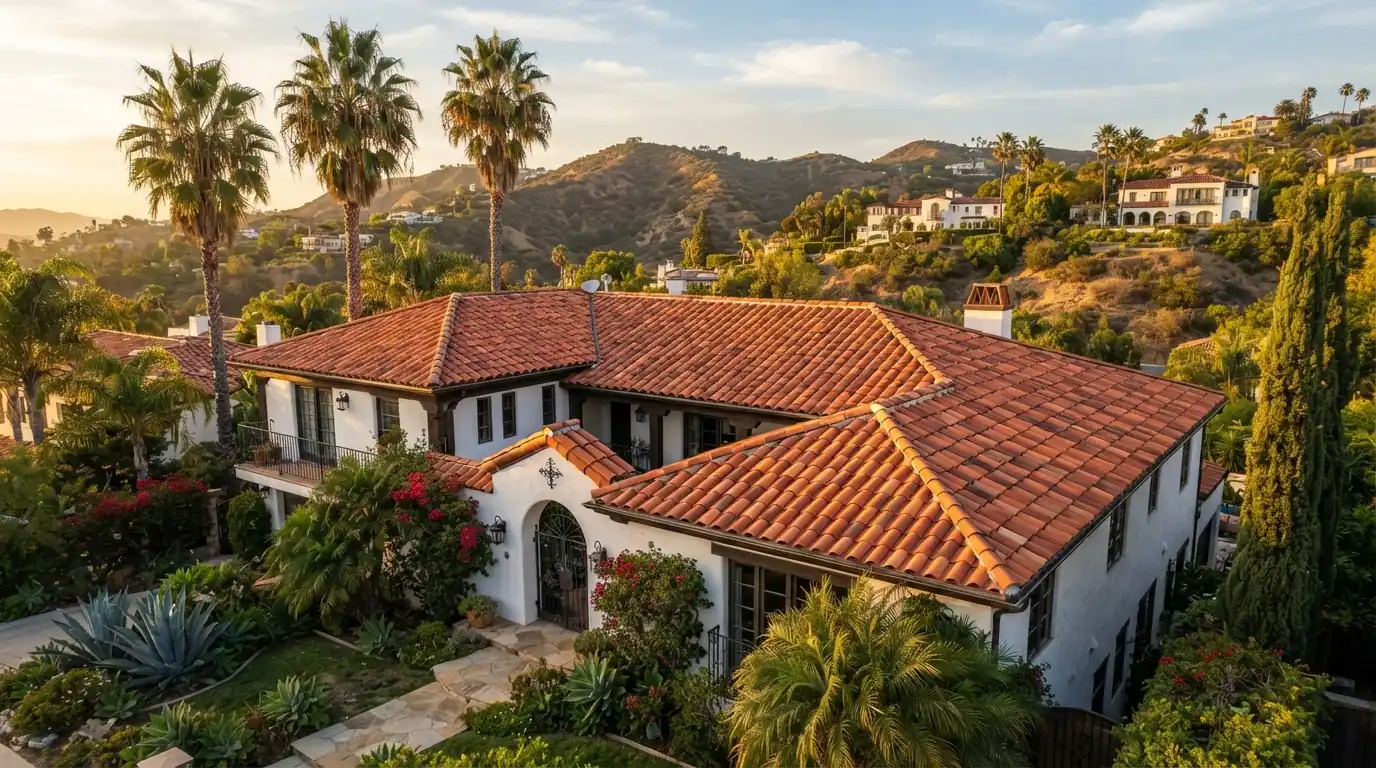
A Historic Preservation Overlay Zone is a neighborhood the city has designated to protect its historic character. Each zone has a preservation plan with guidelines for exterior changes, and homes are classed as contributing or non-contributing depending on how much historic character they keep.
The roof is one of the most visible parts of a house, so it's covered.
Is your home in a zone?
The city's zoning information for your address shows whether it's inside an HPOZ, and the zone's preservation plan explains the rules. If the house is contributing, the guidelines matter most.
Highland Park-Garvanza is one of the largest zones, and our Highland Park page covers roofing there.
In-kind replacement
Replacing a roof with the same material, profile, color and visible details is usually treated as the simplest kind of work: clay tile for clay tile, matching shingle for shingle, the same eave depth and the same rafter tails.
Documenting the existing roof with photos and measurements before work starts makes that easy to show.
When review is needed
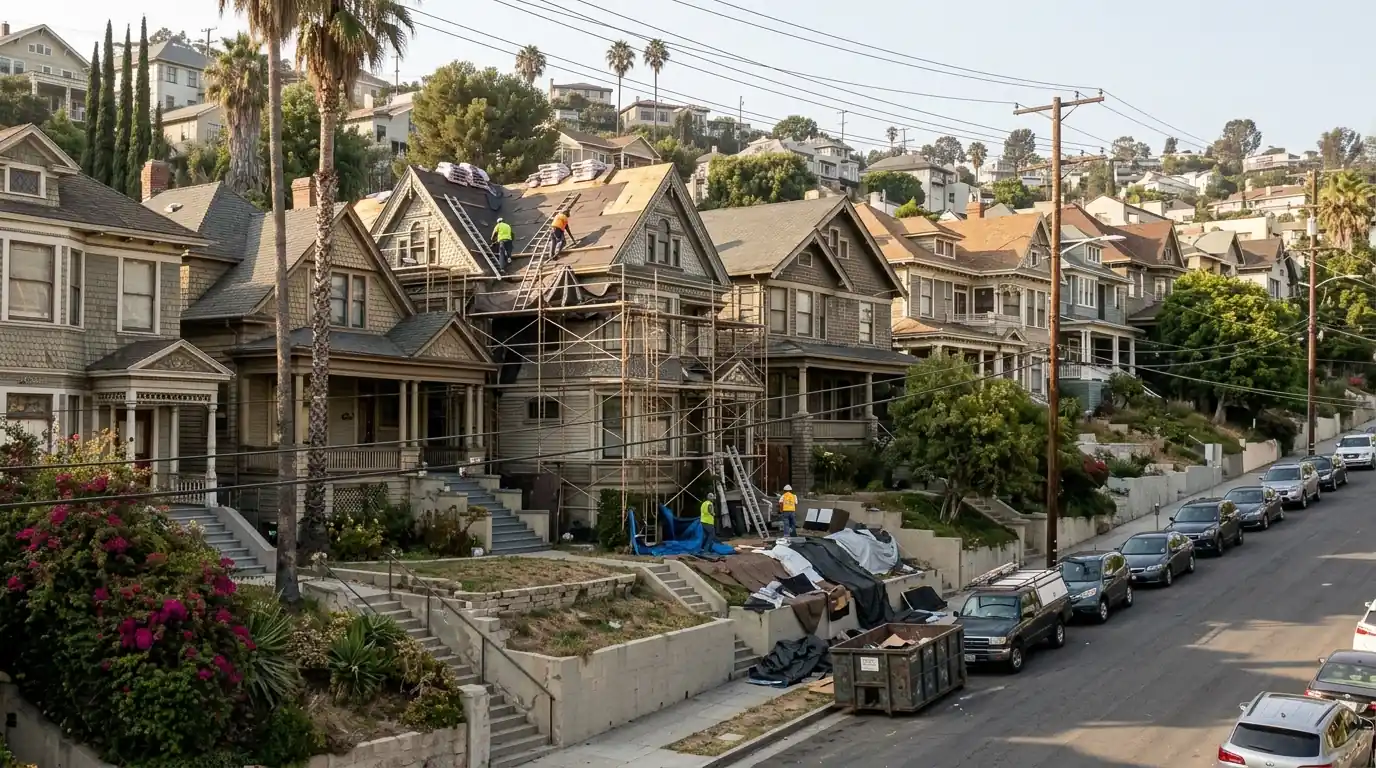
Switching materials, such as shingle to tile or tile to metal, changing the roof shape, adding visible skylights or solar, or removing details like exposed rafter tails typically needs review before the permit is issued.
Review takes time, so plan for it rather than discovering it after the materials arrive.
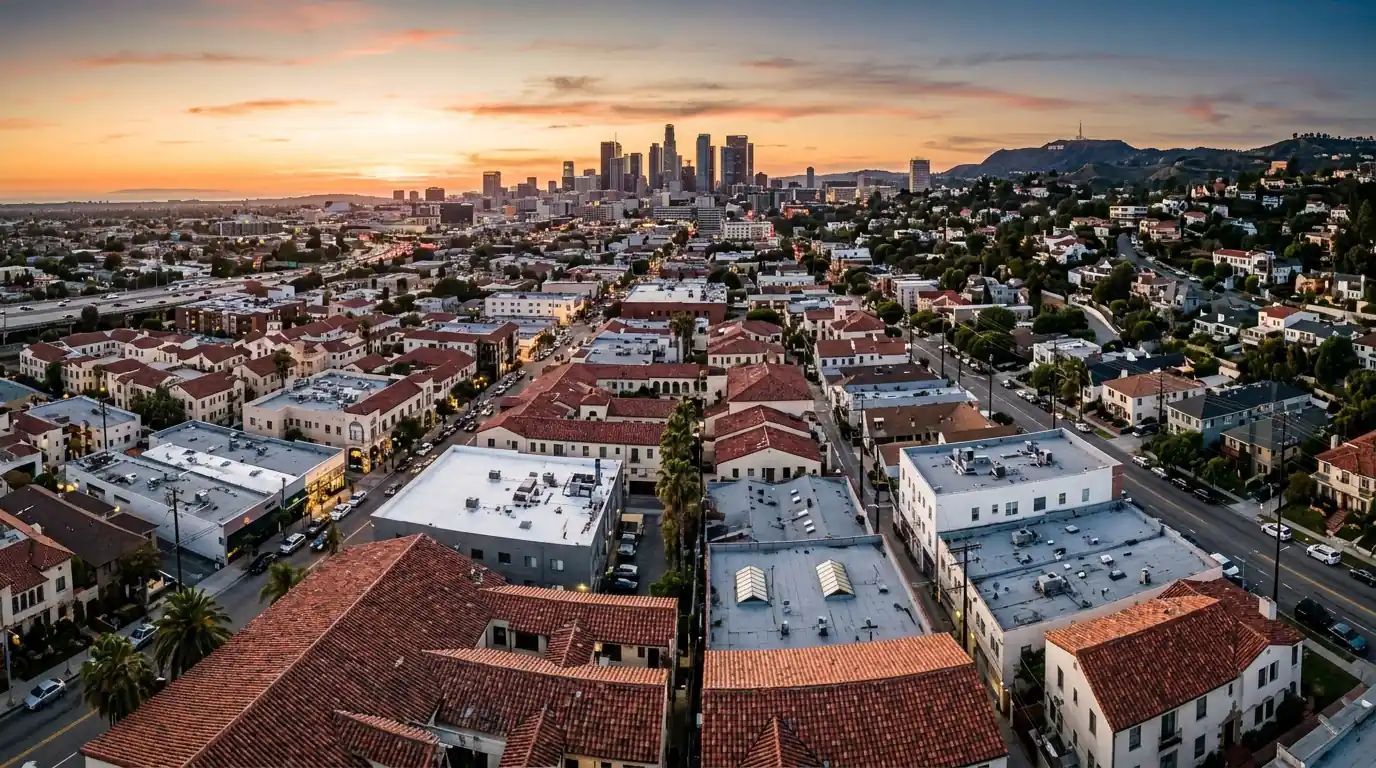
Historic home that needs a roof?
Call and we'll record what's there and plan a matching roof.
Matching original materials
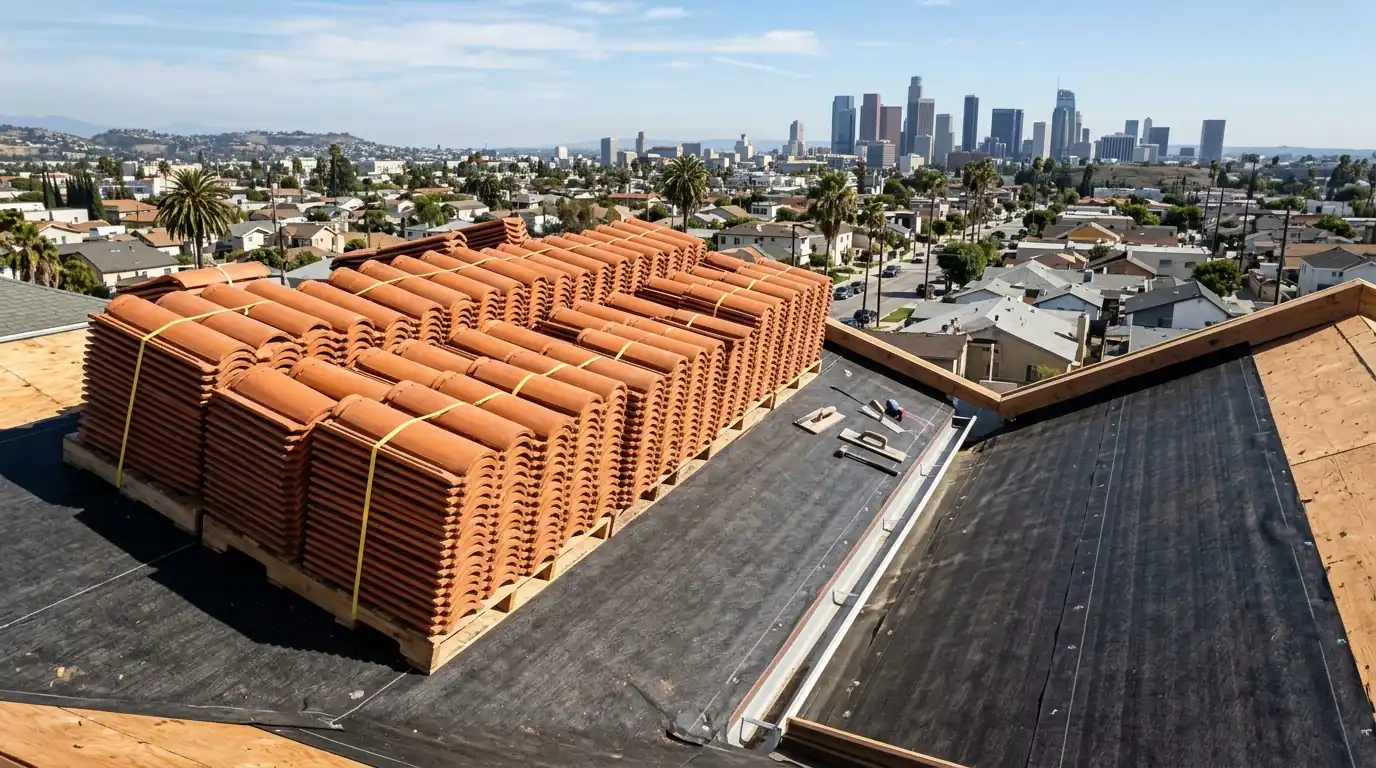
Many clay tile profiles are still made in blended colors, and salvage sources carry discontinued ones. Tiles from a hidden slope can be moved to a visible one and replaced with new tile where it doesn't show.
Our historic home roofing work starts with exactly that kind of matching.
What can still be modern
Underlayment, flashing, ventilation and fire ratings can and should meet current standards. They don't show from the street, so they rarely affect review, and they're what keep an old roof dry.
Where fire zones and historic zones overlap, the Class A assembly sits under a roof that still looks original.
Planning the job
Start with a roofer who documents the existing roof, proposes matching materials and prepares what any review needs. Then comes the permit, then the work, with photos at each step for your records.
Done in that order, most HPOZ re-roofs move without surprises.
HPOZ re-roofing questions
Quick answers to the questions this topic raises most.
Other ways to reach usIn-kind replacement is usually simplest; material or visible changes typically need review.
Check the city's zoning information for your address or ask the Office of Historic Resources.
Often, but visible placement may need review. Plan it early.
Yes. Hidden layers should meet current standards.
Possibly, but expect review, because it changes the look.
Yes, so it belongs in the schedule from the start.
More guides for Los Angeles roofs
Re-roof permits in LA, explained
Which office issues your permit, what it costs and what gets checked.
Should You Re-Roof Before Going Solar?
How to decide, what panel removal costs and how to time both jobs.