Spray foam roofing for Los Angeles flat and low‑slope roofs
Spray polyurethane foam goes on as a liquid and expands into a continuous, insulating layer that can be shaped to drain. Topped with a reflective coating, it keeps a flat roof dry and the building below cooler.
- Answered 24/7
- Insulates as it roofs
- Recoats and repairs
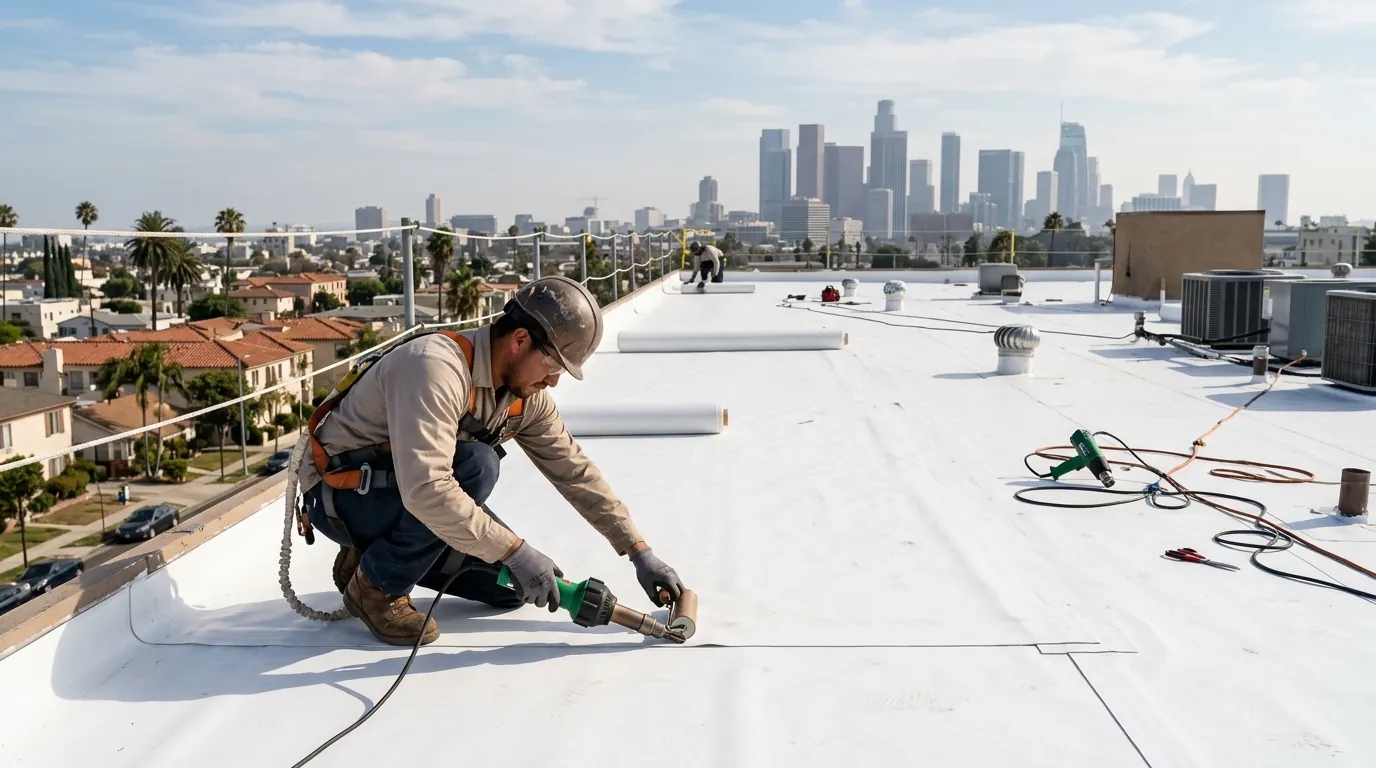
Spray foam roofing in Los Angeles is a layer of spray polyurethane foam applied over a prepared roof and sealed with a UV-protective coating. It adds insulation, forms a continuous surface with no seams, and can be built thicker at low spots to improve drainage; the coating needs renewing over time.
Updated September 2026
Insulation and roofing in one continuous layer
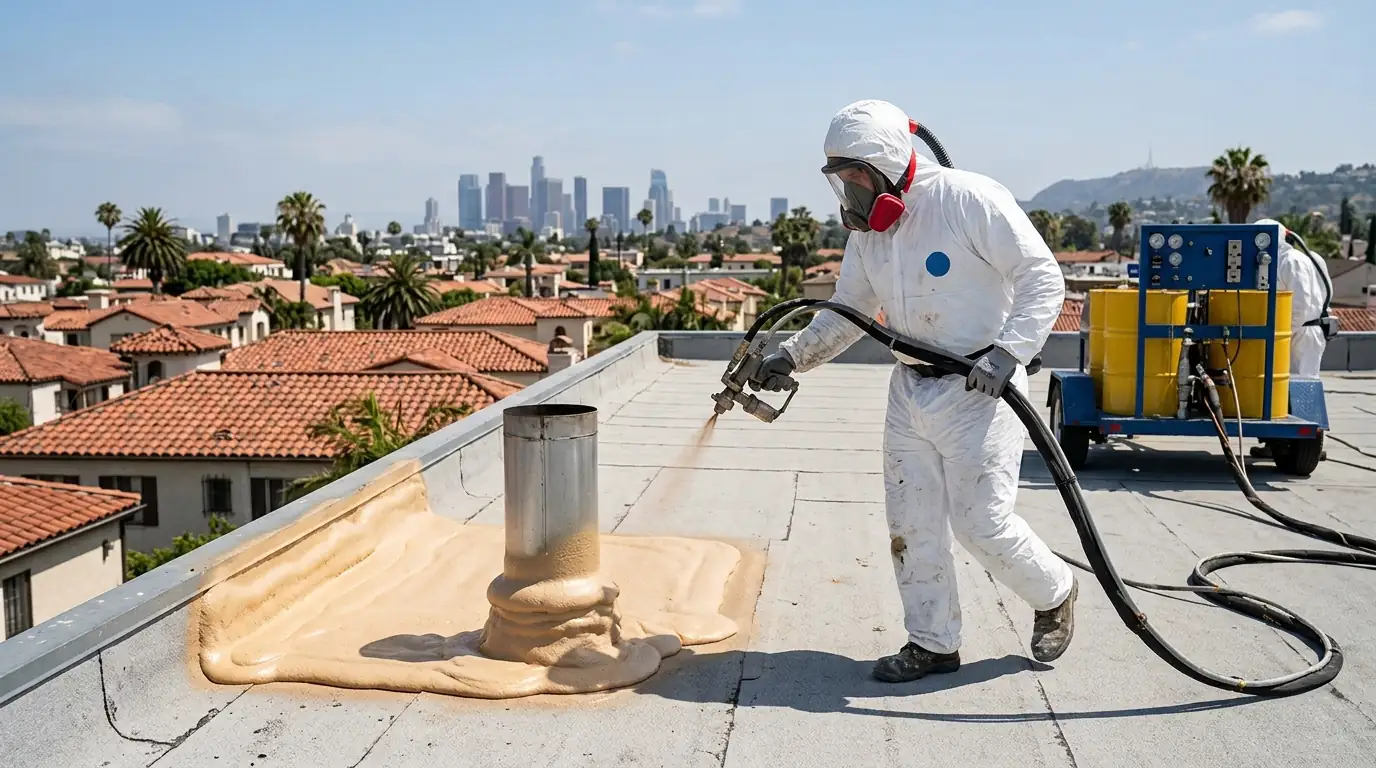
Foam is sprayed in passes over a clean, dry substrate, rising into a rigid layer that bonds to the deck, wraps around penetrations and fills irregular surfaces. Because it's applied in place, it can be built up where water ponds and feathered at the edges. It is light, so it rarely stresses the structure.
The foam itself must never be left bare: sun breaks it down, so a silicone or acrylic top coat goes on the same day or soon after. Foam roof problems usually start where that coating wore through, and the fix is a timely recoat, not a new roof.
Signs a foam roof needs attention
Bare tan or yellow foam
The coating has worn through and sun is attacking the foam.
A chalky surface
The top coat is thinning and due for renewal.
Bird pecking holes
Small craters let water into the foam.
Blisters in the coating
Trapped moisture or poor bonding under the top coat.
Soft or spongy areas
Wet foam underneath that needs cutting out.
Ponding after rain
Low spots where foam should have been built up.
Cracks at edges and curbs
Movement at flashing points needs sealing.
What a spray foam roof costs depends on
Foam is priced per square foot like other flat systems, which run $8-$14 per sq ft for replacement in published LA ranges. It moves with:
- Foam thickness
Thicker foam adds insulation and material cost.
- Substrate prep
Loose or wet material is removed before spraying.
- Coating type
Silicone costs more than acrylic, and thickness adds more.
- Masking and wind
Protecting cars and walls from overspray takes setup.
- Roof size
Setup is fixed, so small roofs cost more per foot.
Spray foam or single-ply for your roof?
Both suit flat roofs; they solve different problems.
| System | Insulation | Best fit | Tradeoff |
|---|---|---|---|
| Spray foam | Adds insulation | Irregular roofs, metal buildings | Coating must be renewed |
| TPO single-ply | Separate boards | Most flat roofs | Seams must be welded well |
| Coating only | None added | Sound roofs with a worn surface | Only as good as the roof below |
Install, recoat or repair
SPF roof installation
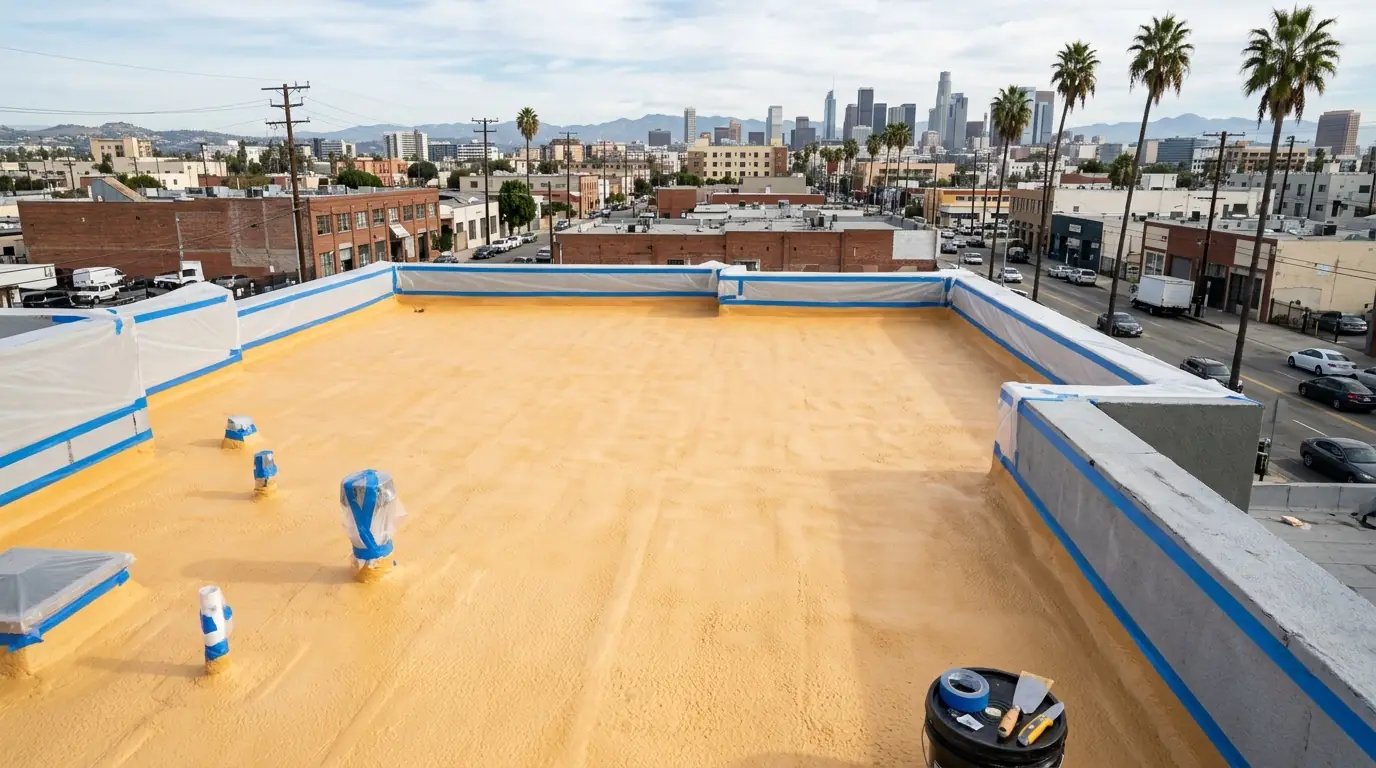
We clean and dry the existing roof or deck, remove loose material, and spray the foam to the specified thickness, adding more where water has ponded. The coating goes on in two coats, often with granules on walkways. Overspray is controlled with wind limits and masking of nearby cars and walls. Edges, curbs and drains are sprayed and coated with extra care, because that's where foam meets metal and wood and where water collects first on a flat roof.
Foam roof recoating
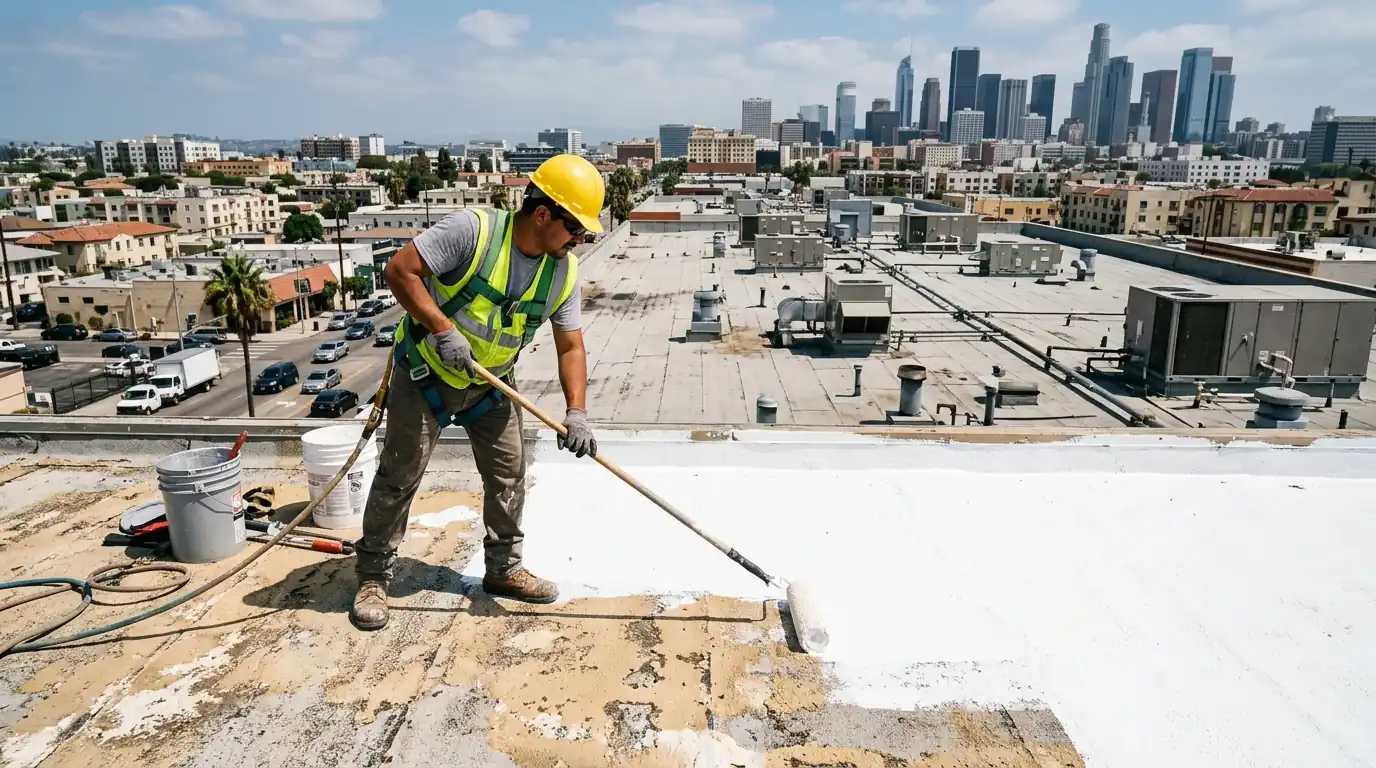
A foam roof lasts as long as its coating. When the top coat has thinned, chalked or worn to bare foam in spots, we clean the roof, repair damaged foam, and apply a new coating to the specified thickness. A timely recoat costs far less than replacing foam the sun has already eaten. We measure the remaining coating and foam thickness before quoting, since a recoat only makes sense while the foam underneath is still sound and dry across the roof.
Foam roof repair
Bird pecking, dropped tools and failed coatings leave holes and soft spots in foam. We cut out damaged or wet foam, respray or fill it, and recoat the area so the repair blends in. Larger areas of saturated foam are removed and replaced before the whole roof is recoated. Small repairs are best done soon after the damage appears, because exposed foam absorbs water and degrades in sun, and a small patch today avoids a larger section later.
Brands we install and service
California Title 24 calls for cool roofing materials across the Los Angeles climate zones 8 through 10, and a foam roof topped with a rated white coating meets that reflectivity while adding insulation the old roof never had. On a flat roof over living space or an upstairs office, that combination changes how the rooms feel in August. The rating comes from the coating, so we confirm it before ordering.
How a foam roof goes on
Survey and cores
We check the substrate and find any wet areas.
Prep the roof
Loose material removed, surface cleaned and dried.
Spray the foam
Foam applied in passes and built up at low spots.
Coat it
Two coats of silicone or acrylic, granules on walkways.
Inspect
Thickness and adhesion checked and recorded.
Spray foam roofing questions
Straight answers to what people ask us most about this job.
Other ways to reach usA long time with regular recoating. The foam lasts as long as the coating protects it.
Often, if the existing roof is dry and firmly attached. Wet areas come out first.
Overspray is a real risk, so we mask nearby cars and walls and stop spraying when wind picks up.
Yes. Every inch adds insulation, which helps on flat roofs over living space.
It depends on coating type and thickness; we inspect and recoat when the top coat wears thin.
We fill the holes, recoat, and add granules to the surface to discourage pecking.
Yes, it's a common way to restore metal roofs. See warehouse roof restoration for warehouse options.
Other flat & low-slope roofing jobs we handle
Roof Coating in Los Angeles
Roof Coating.
Balcony and rooftop patio waterproofing
Roof Deck Waterproofing.
Torch Down Modified Bitumen Roofing in Los Angeles
Torch Down Modified Bitumen Roofing.
Apartment and multifamily roofs
Commercial Roofing.
Mobile home roof leak repair
Mobile Home Roofing.