Standing seam and panel metal roofs for Los Angeles homes
Metal is light, fire resistant and long lasting, and cool-roof finishes keep it from turning into a heat lamp. We install standing seam on homes and panel systems on outbuildings, with the underlayment and details that make the assembly Class A.
- Answered 24/7
- Class A assemblies
- Cool-roof finishes
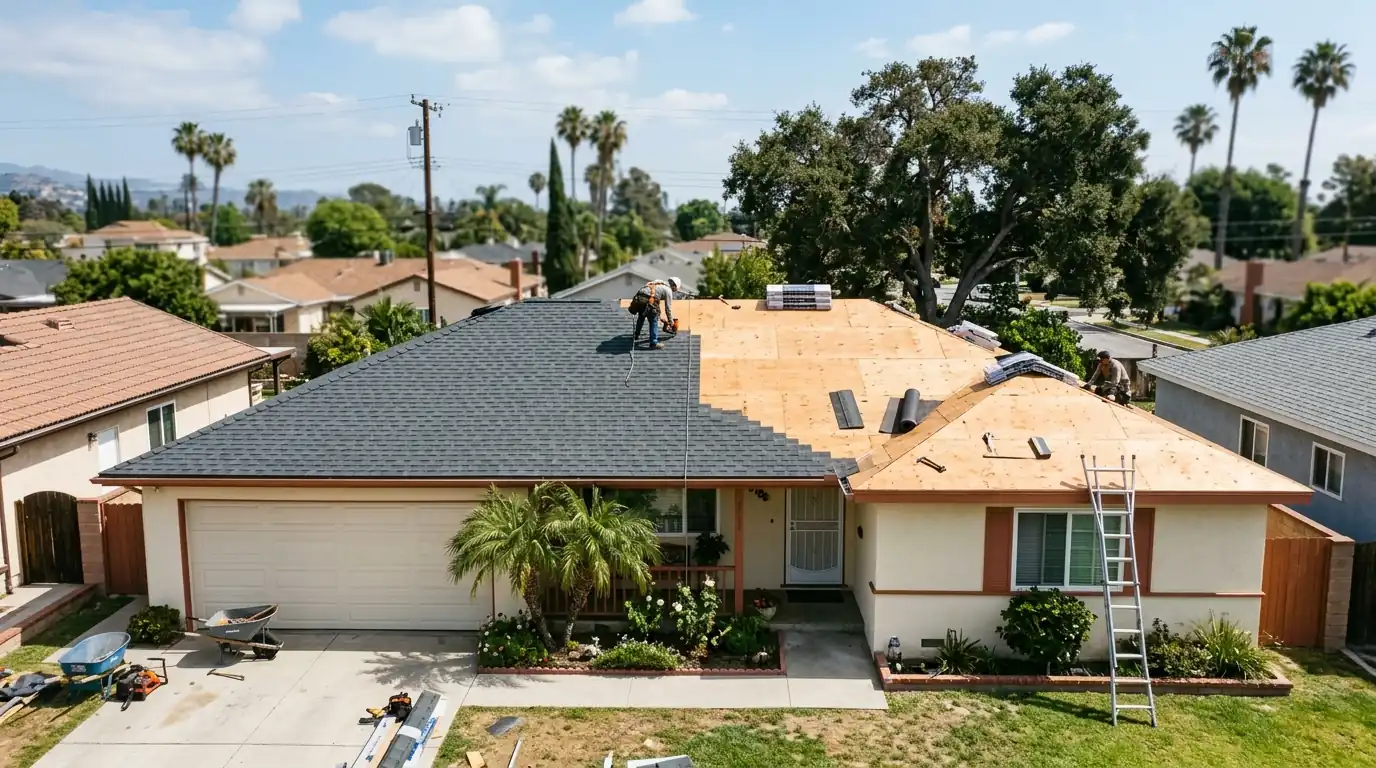
Metal roofing in Los Angeles runs about $10-$15 per sq ft installed in published local ranges. Standing seam uses concealed clips and raised seams for homes; corrugated and R-panel suit garages and outbuildings. We install both over proper underlayment, as Class A assemblies where the fire code requires.
Updated September 2026
Light, fire resistant and built to shed Santa Ana winds
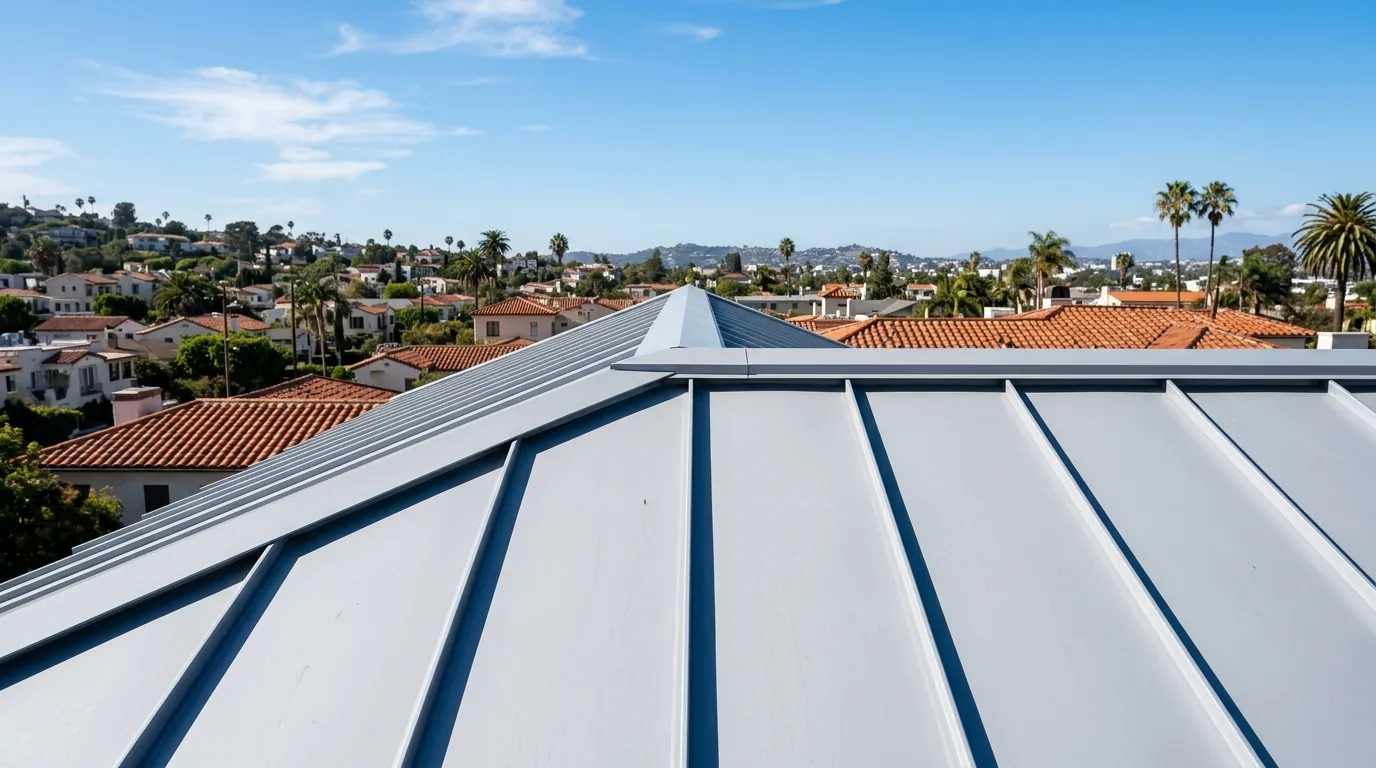
A metal roof weighs a fraction of tile, so it rarely needs framing upgrades, and it sheds water fast even at low pitches. Standing seam panels lock together at raised seams with hidden clips, leaving no exposed fasteners to loosen in wind or heat. With a reflective factory finish it can also meet cool-roof rules.
Metal takes skill at transitions: valleys, walls, skylights and penetrations each need their own flashing and room for the panels to move. Comparing options? Concrete tile is heavier but quieter, and architectural shingle costs less up front.
What a metal roof costs in Los Angeles
Published ranges put metal at $10-$15 per sq ft installed. Five things set your price:
- Panel type
Standing seam costs more than corrugated or R-panel.
- Gauge and finish
Heavier gauges and cool-roof finishes cost more.
- Roof shape
Hips, valleys and dormers add trim and cutting.
- Tear-off or overlay
A tear-off adds $1,000-$3,000 but exposes the deck.
- Fire-zone assembly
Class A assemblies add about $1-$5 per sq ft.
Standing seam, panel or stone-coated steel?
Metal comes in several forms that differ in look, cost and fasteners.
| Metal type | Fasteners | Best fit | Tradeoff |
|---|---|---|---|
| Standing seam | Concealed clips | Homes, modern and low-slope roofs | Highest cost |
| Corrugated or R-panel | Exposed screws | Garages, sheds, outbuildings | Washers need upkeep |
| Stone-coated steel | Interlocking, hidden | Homes wanting a tile or shake look | Pricier than plain panels |
Three ways we put metal on a roof
Standing seam metal roofs
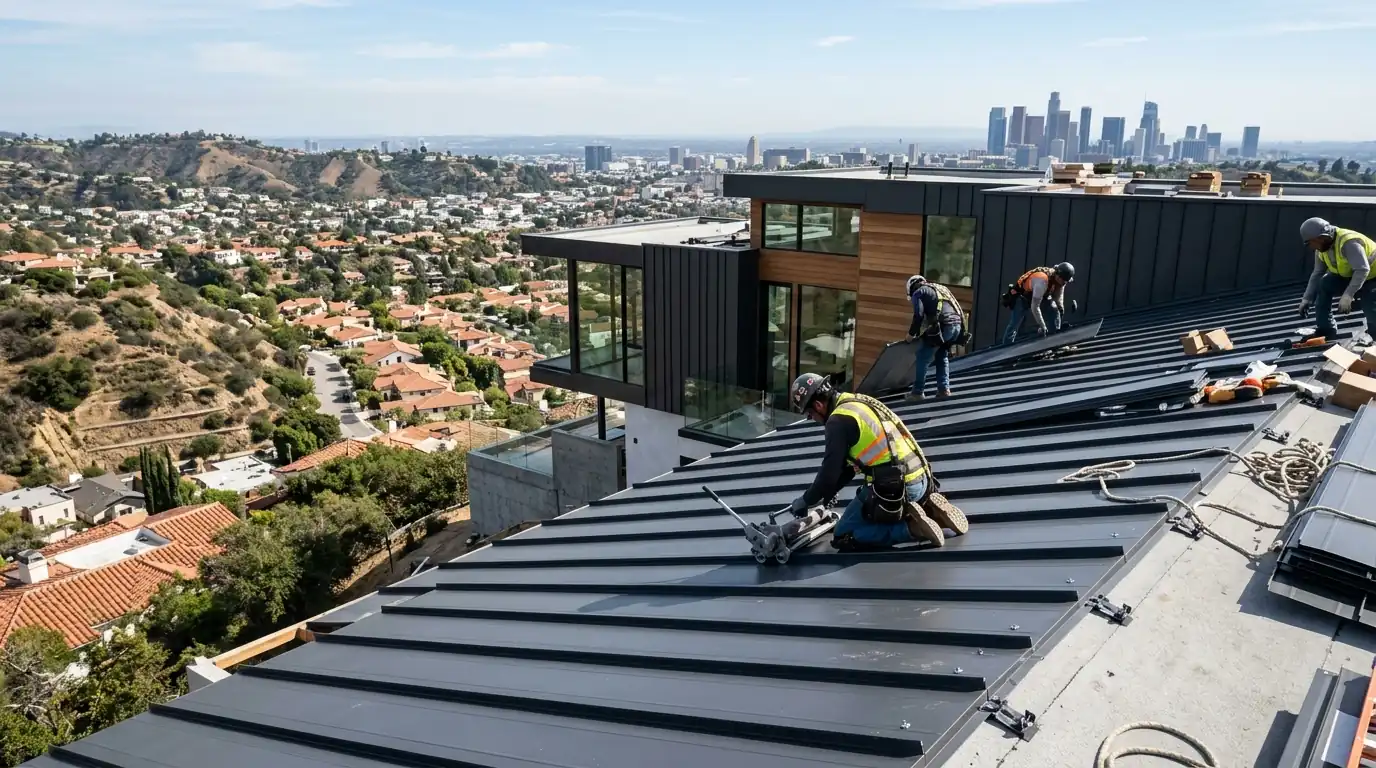
Standing seam panels run eave to ridge in one piece, held by concealed clips that let them expand and contract. We roll or order panels to length, install them over high-temperature underlayment, and finish ridges and edges with matching trim. It is the premium metal choice for homes and the most weather-tight. It also suits low-slope additions and porch roofs where shingle isn't allowed, and panels come in cool-roof finishes that keep the metal surface cooler through LA summers.
Corrugated and R-panel
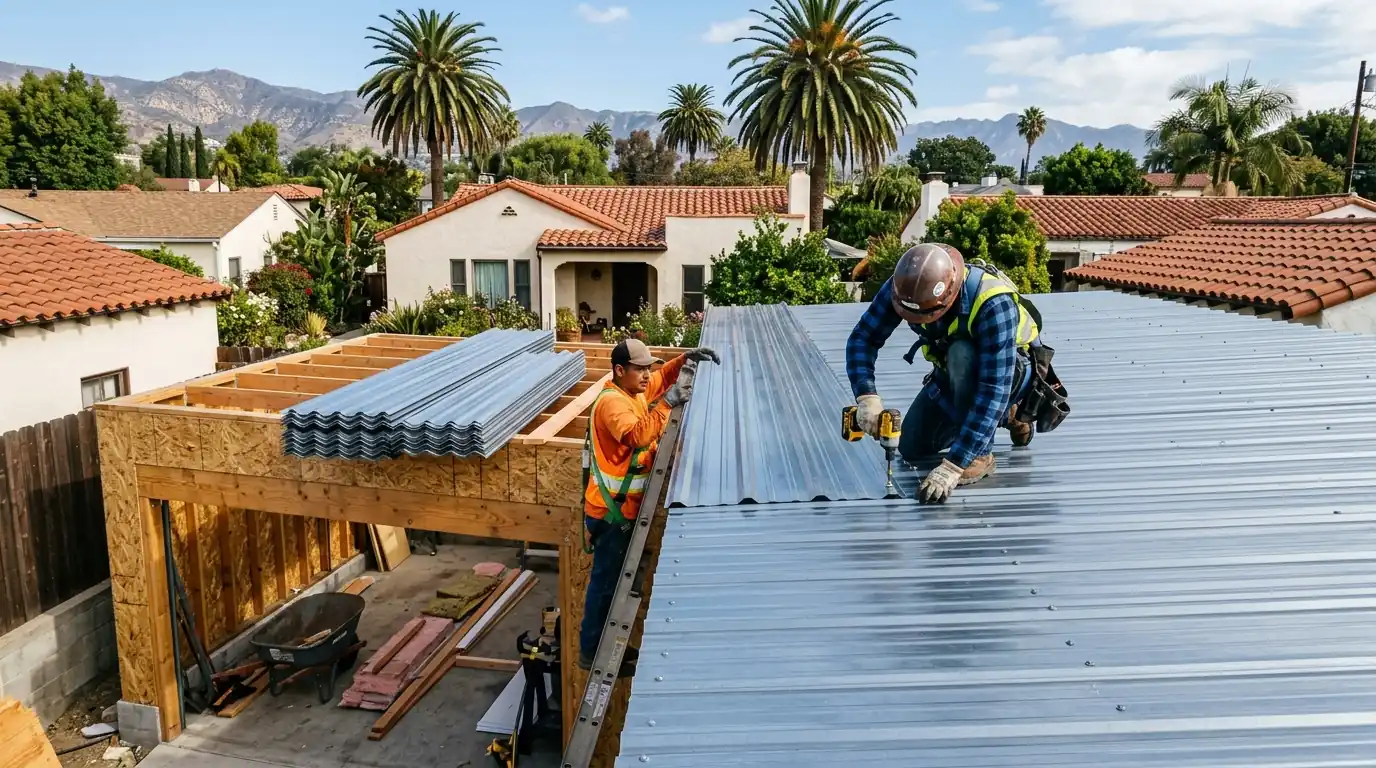
Exposed-fastener panels cost less and suit garages, workshops, sheds and patio structures. Screws with sealing washers go through the panel, and those washers need checking over the years. We use them where the budget and building call for it, not on main homes where standing seam performs better. On a garage or workshop that shares a wall with the house, we'll check how the new panels meet that wall, since the flashing there decides whether water ends up inside the house.
Metal roof over existing shingles
Where code allows and the single existing layer is sound, metal can go over shingles on battens or new underlayment, saving tear-off cost. We check the deck and the layer count first; with two layers already or a soft deck, the old roof comes off before metal goes on. An overlay also changes how the roof is vented, so we plan airflow under the new panels and at the ridge rather than trapping heat between the old roof and the new one.
Brands we install and service
The 2025 CAL FIRE maps kept most of the Santa Monica Mountains, the Hollywood Hills and the San Gabriel foothills inside the very high fire hazard zone. There the whole roof assembly, underlayment included, has to qualify as Class A, and metal over a rated underlayment is one of the most dependable ways to get there. That is why our metal quotes in the hills name the underlayment, not just the panel.
How long a metal roof takes
On a typical 2,000 square foot home, metal runs about five to ten working days, longer than shingle because panels and trim are measured, cut and fitted piece by piece.
Custom-ordered panels add lead time before work starts, and a tear-off adds time at the front.
How a metal roof goes on
Survey and measure
Roof shape, deck and layers are checked and measured.
Choose the system
Panel type, gauge, color and underlayment, in writing.
Permit and order
We pull the permit and order panels and trim.
Install
Underlayment, panels, flashing and trim, piece by piece.
Inspect and clean
Final inspection, metal shavings swept, walk-through.
Metal roofing questions
Straight answers to what people ask us most about this job.
Other ways to reach usOver a solid deck and underlayment it's little louder than other roofs, and LA rain is infrequent.
Cool-roof finishes reflect most of the sun, and a vented assembly keeps heat out of the attic.
If there is one sound layer and a solid deck, often yes. Two layers means tear-off first.
Many metal roofs reach Class A as an assembly with the right underlayment. We confirm it for fire zones.
Heavier gauges resist denting, and hail is rare in Los Angeles.
Standing seam takes clamp-on mounts with no holes. See clamp-on solar mounts.
Far longer than asphalt shingle when installed and maintained well, which is part of why it costs more up front.
Other roof replacement & installation jobs we handle
Cool-roof rated shingles
Asphalt Shingle Roof Installation.
Shake-profile stone-coated steel
Stone-Coated Steel Roofing.
Concrete Tile Roofing in Los Angeles
Concrete Tile Roofing.
Permit and inspection handling
Roof Replacement.
Sheathing over skip decking
Wood Shake Roof Conversion.