Silicone and acrylic roof coatings for Los Angeles flat roofs
A coating is a liquid-applied membrane rolled or sprayed over a sound flat roof. On the right roof it seals small cracks, reflects sun and buys years before a tear-off. Over a wet roof it traps the water, so we test first.
- Answered 24/7
- Core tested first
- Cool-roof rated
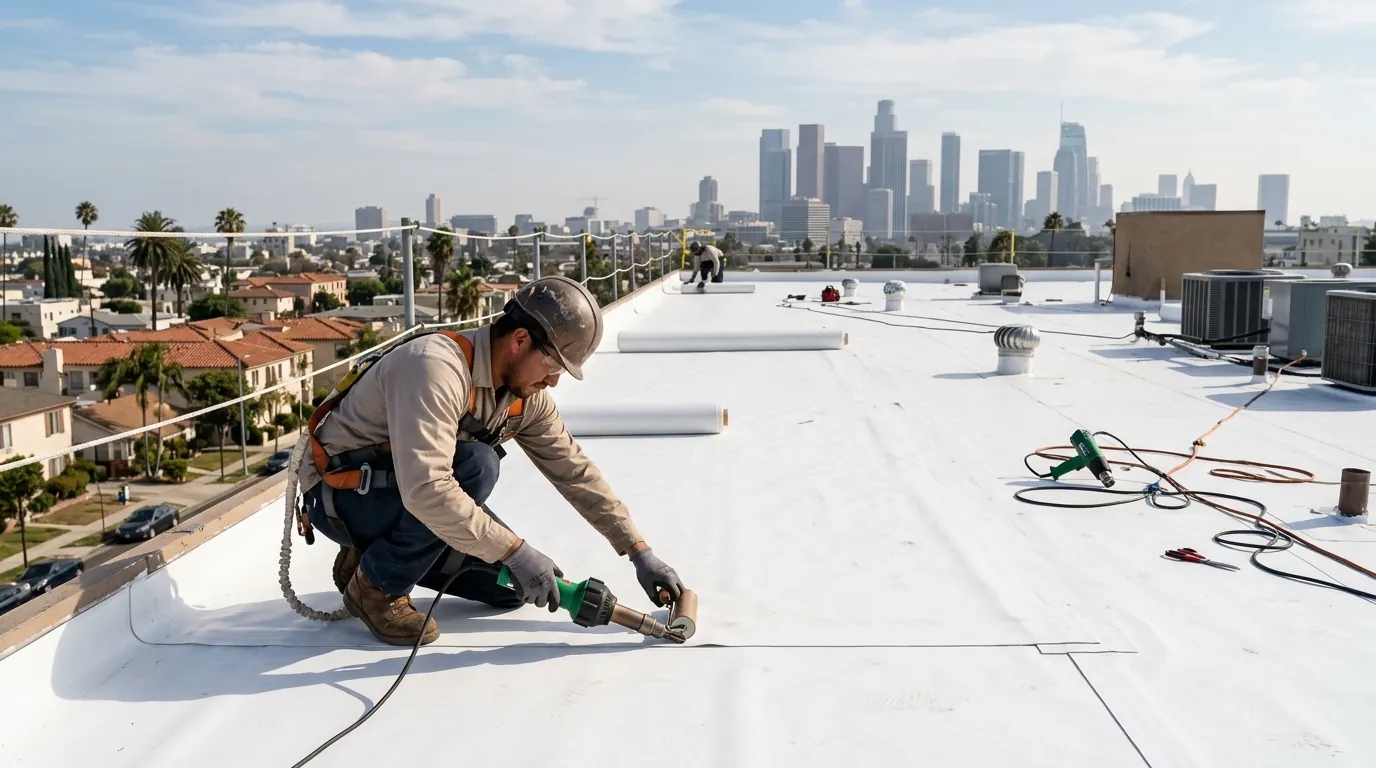
Roof coating in Los Angeles is a liquid membrane, usually silicone or acrylic, applied over a flat or low-slope roof that's still dry and bonded underneath. It seals minor cracks and seams and reflects heat, but only on a sound roof, so we core and moisture-check the roof before any quote.
Updated September 2026
A coating renews the surface, not a wet roof
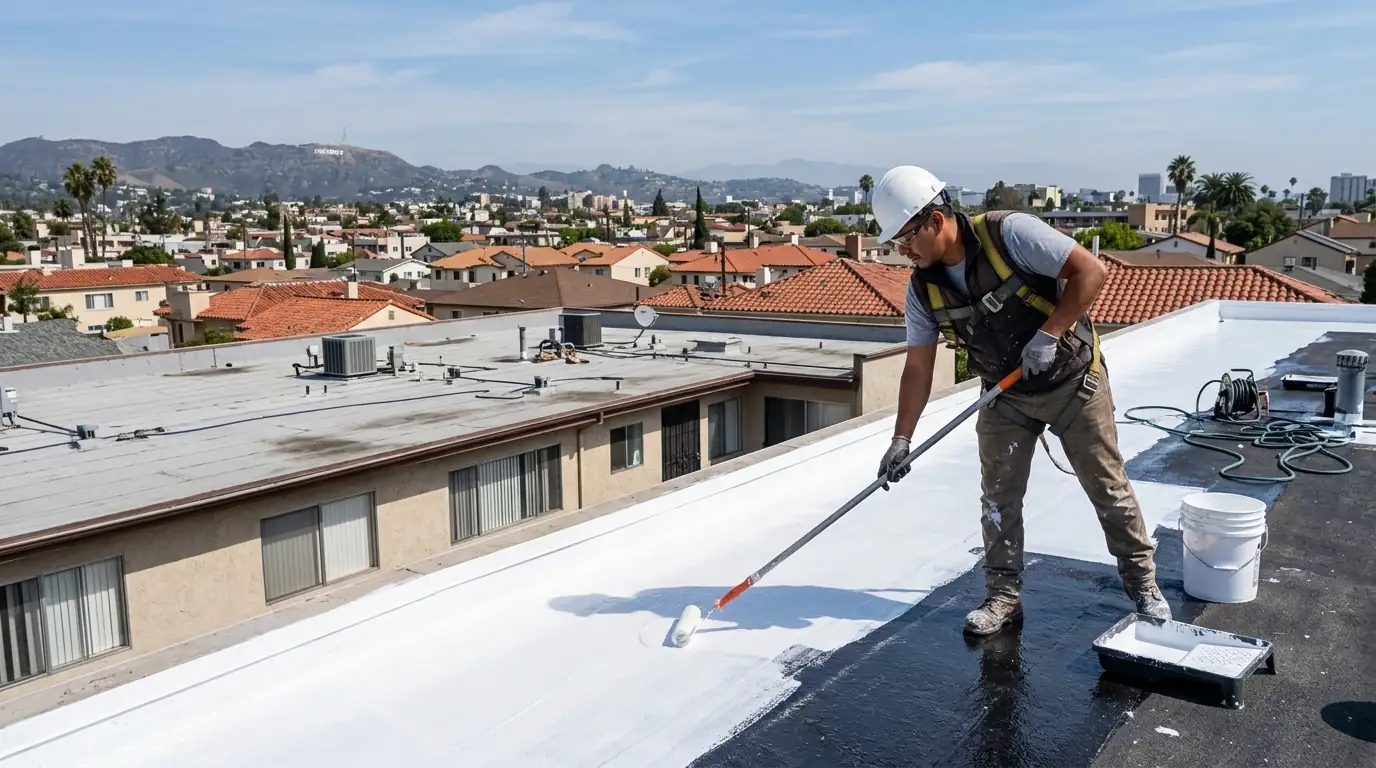
Coatings work on modified bitumen, built-up, metal, foam and many single-ply roofs whose surface has aged but whose layers are still dry. The coating bonds to the old surface, bridges small cracks and adds a bright reflective top. It doesn't fix wet insulation, split decks or large blisters.
Preparation decides how long a coating lasts: power washing, repairing seams and blisters, priming where needed, and applying the full wet thickness in two coats. If the cores show wet layers, we will point you to repairing the wet areas or a new roof instead.
What a roof coating costs depends on
Coatings cost less than replacement, which runs $8-$14 per sq ft for flat roofs in published LA ranges. The coating price moves with:
- Roof size
Material and labor scale with square footage.
- Prep and repairs
Seams, blisters and flashing fixed first add time.
- Coating type
Silicone costs more than acrylic per gallon.
- Thickness
Thicker coats and longer warranties need more material.
- Access
Hoisting to taller buildings adds setup.
Coating, re-cover or replacement?
The honest answer depends on the cores. For full replacement, see single-ply TPO and PVC roofs.
| Option | When it fits | Relative cost | Main tradeoff |
|---|---|---|---|
| Coating | Dry, bonded roof with a worn surface | Lowest | Only as good as the roof below |
| Re-cover | One dry layer, sound deck | Middle | Allowed once before tear-off |
| Tear-off and replace | Wet layers or two roofs already | Highest | Longest disruption |
Which coating goes on which roof
Silicone roof coating
Silicone resists standing water and UV better than most coatings, which makes it the usual pick for flat roofs with minor ponding. It goes on in one or two thick coats and stays flexible in heat. The tradeoff: little sticks to silicone later, so future recoats are silicone too. It also bonds to most aged single-ply, foam and modified bitumen roofs after cleaning, so it covers the widest range of existing flat roofs we're asked to renew.
Acrylic elastomeric coating
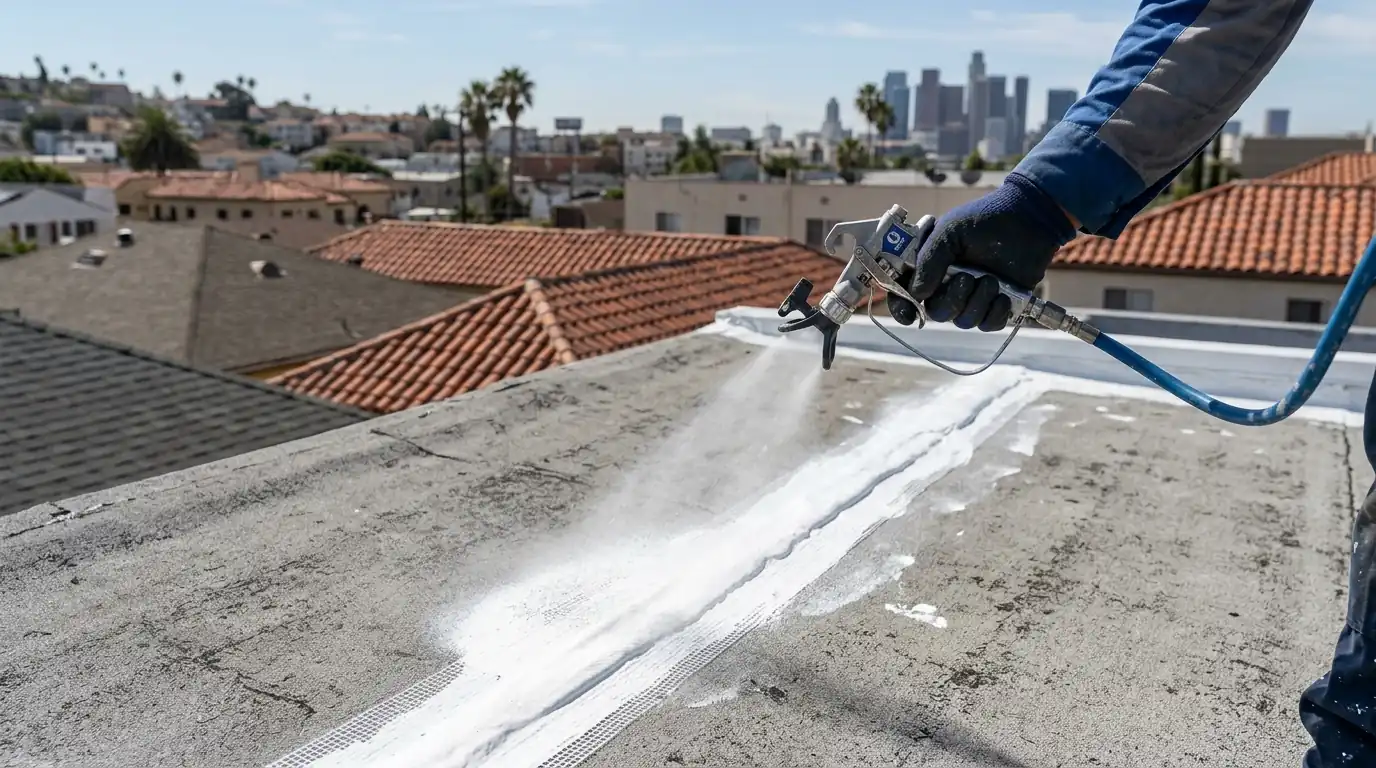
Acrylic costs less, cleans up with water and dries to a very reflective white. It needs a roof that drains well, since standing water softens it over time, and it can't go on if rain is due before it cures. It suits low-slope roofs and metal. Acrylic suits metal roofs on garages and outbuildings, where it bridges seams and fastener heads, and it can be tinted when a bright white isn't wanted on a slope that's visible from the street.
Cool roof coating for Title 24
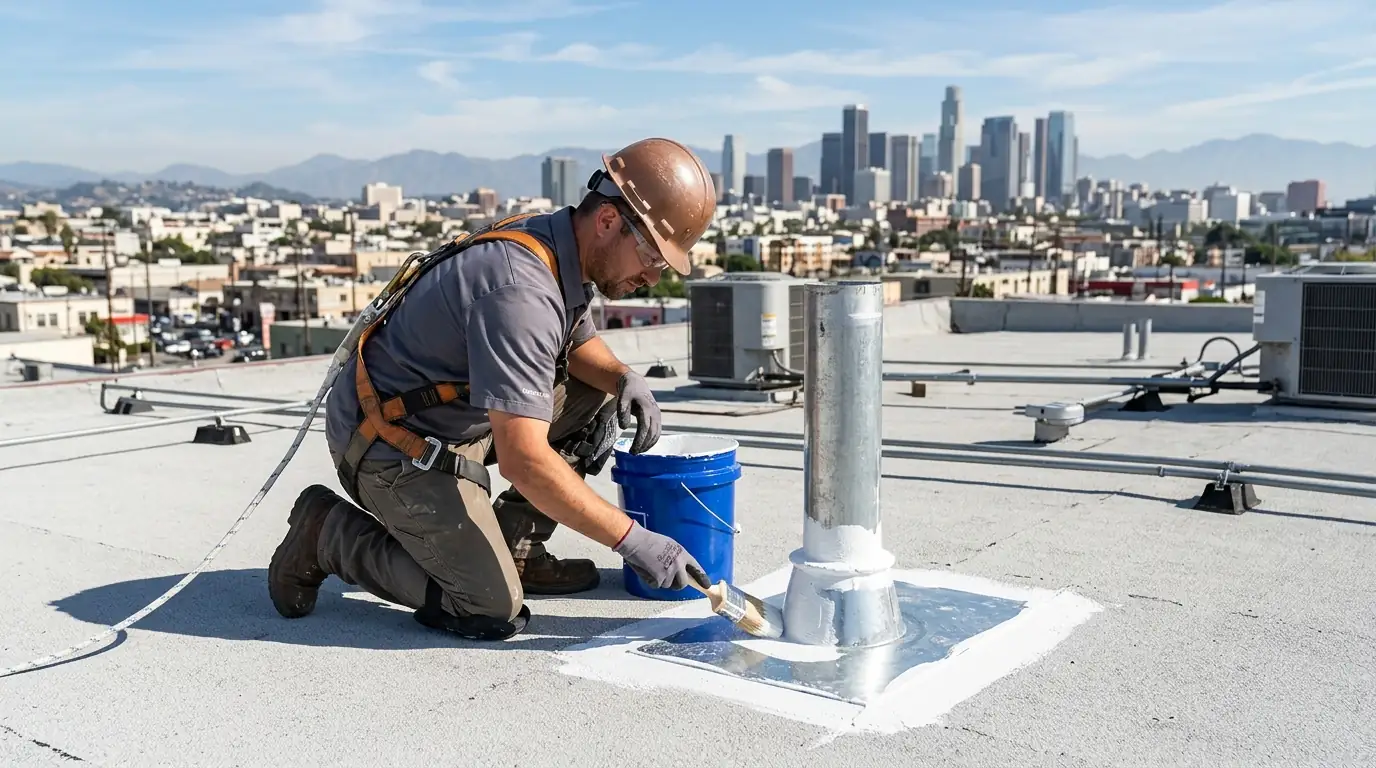
White coatings listed by the Cool Roof Rating Council reflect most of the sun's heat and keep the roof surface far cooler. We use rated products so the finished roof can meet California's cool-roof requirements where they apply, and we leave the rating sheet with your records. A coating also slows the aging of the membrane underneath by blocking UV, so the roof below lasts longer as well as running cooler, which is where much of the value comes from.
Brands we install and service
What a coating job includes
Skipped prep is why coatings peel, so every step is written into the scope.
- Cores and a moisture check before any quote
- Power washing and debris removal
- Blisters, seams and flashing repaired first
- Primer where the product and surface call for it
- Reinforcing fabric at seams and penetrations
- Two coats to the full wet thickness
- Rating sheet and product records left with you
California Title 24 requires cool roofing materials in the Los Angeles climate zones 8 through 10, and a coating is one of the simplest ways to bring an existing low-slope roof up to that reflectivity. Rated cool-roof materials can add 10-15% to material cost over standard products, a premium worth weighing on a flat roof over living space, where the heat goes straight into the rooms below.
How a coating job runs
Core and test
We cut cores and check for wet layers before quoting.
Clean the roof
Power washing and debris removal so the coating bonds.
Repair and reinforce
Seams, blisters and penetrations get fabric and repairs.
Apply in coats
Two coats to full thickness, cured between.
Check and record
Thickness is checked and product records handed over.
Roof coating questions
Straight answers to what people ask us most about this job.
Other ways to reach usYears, depending on thickness and ponding, and recoating later costs less than the first application.
Only after the leak is repaired and the layers below are dry. Coating a wet roof traps the water.
Silicone for roofs with some ponding; acrylic for roofs that drain well and where budget matters.
It reflects much of the sun's heat, lowering the roof temperature and the heat below. See how cool roof ratings work.
We don't recommend it. Coatings are for flat and low-slope roofs, metal and foam.
It is often handled differently from a re-roof. We check whether your scope needs one and pull it if so.
Yes, and foam must be coated to survive UV. See foam roofs and their recoats.
Other flat & low-slope roofing jobs we handle
Metal mobile home roof coating
Mobile Home Roofing.
Cold-applied modified bitumen
Torch Down Modified Bitumen Roofing.
Hot mop built-up roof replacement
Hot Mop Built-Up Roofing.
Foam roof recoating
Spray Foam Roofing.
Retail and office buildings
Commercial Roofing.