How your roof's age and condition affect home insurance in California
Insurers in California have been tightening up, and the roof is one of the first things they look at. Here's what they tend to ask about, what you can do, and how a roof inspection helps.

By Sadie Yancey, Roofing Guides Editor · Updated September 2026
California insurers often ask about a roof's age, material and condition when writing or renewing a policy, and older or worn roofs can make coverage harder to keep. A current inspection with photos, a Class A roof and ember-resistant vents can help, and state rules require insurers to recognize certain wildfire mitigation.
Why insurers care about the roof
The roof is the part of the house most exposed to wind, rain and embers, and its age and condition say a lot about the claims a home might produce. That's why applications and renewals often ask when the roof was replaced and what it's made of.
Some insurers use aerial imagery to check roofs, and some ask for photos or an inspection.
What tends to raise questions
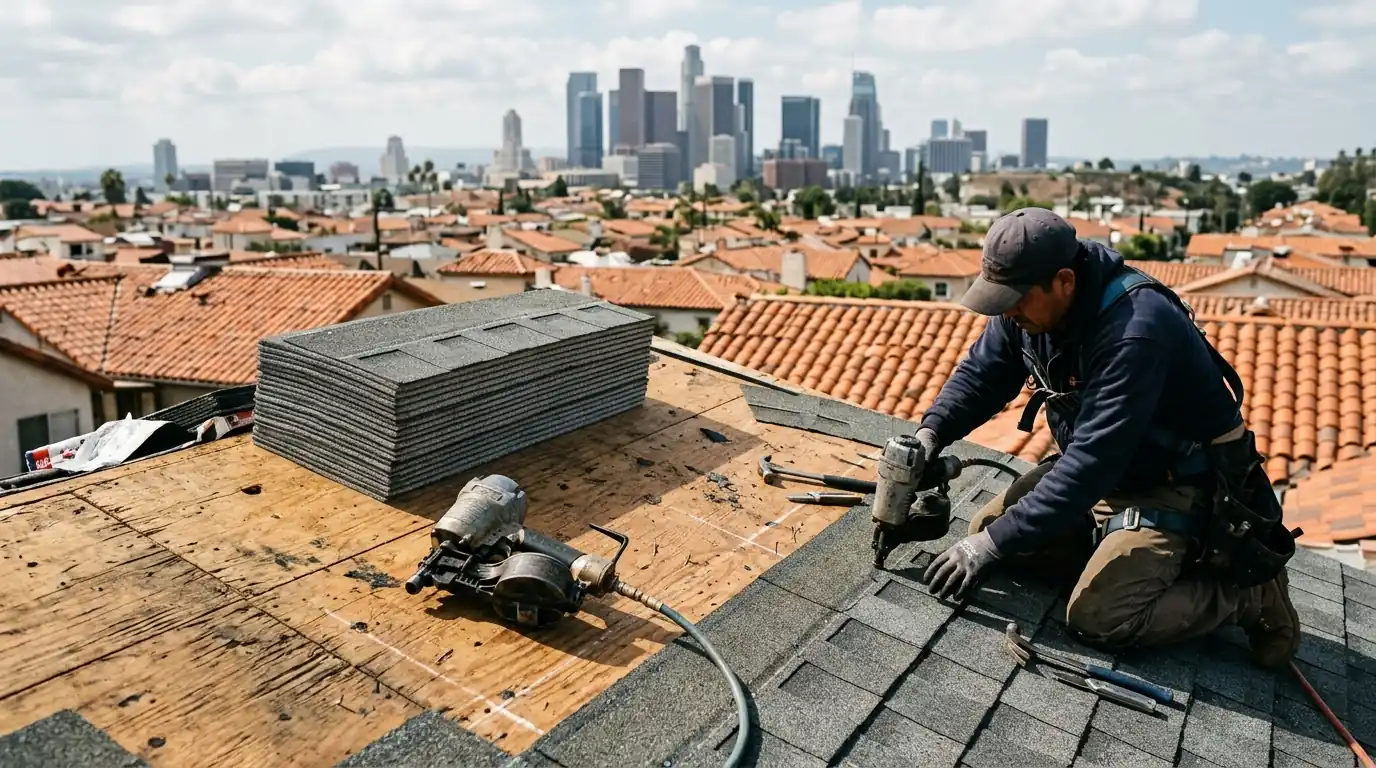
Roofs past the typical life of their material, visible wear such as curling shingles or missing tiles, patched areas, wood shake roofs and roofs with known leaks tend to draw the most attention.
Wood shake is a particular concern in fire-prone areas, and in many parts of Los Angeles it can't be used on re-roofs at all.
Wildfire mitigation and discounts
California's Safer from Wildfires rules require insurers to recognize specific home-hardening steps when they price policies, including a Class A fire-rated roof, ember- and fire-resistant vents and enclosed eaves, along with steps around the property.
Ask your insurer which measures it counts and what proof it needs, and see our wildfire roof hardening work for the roof side of the list.
How an inspection helps
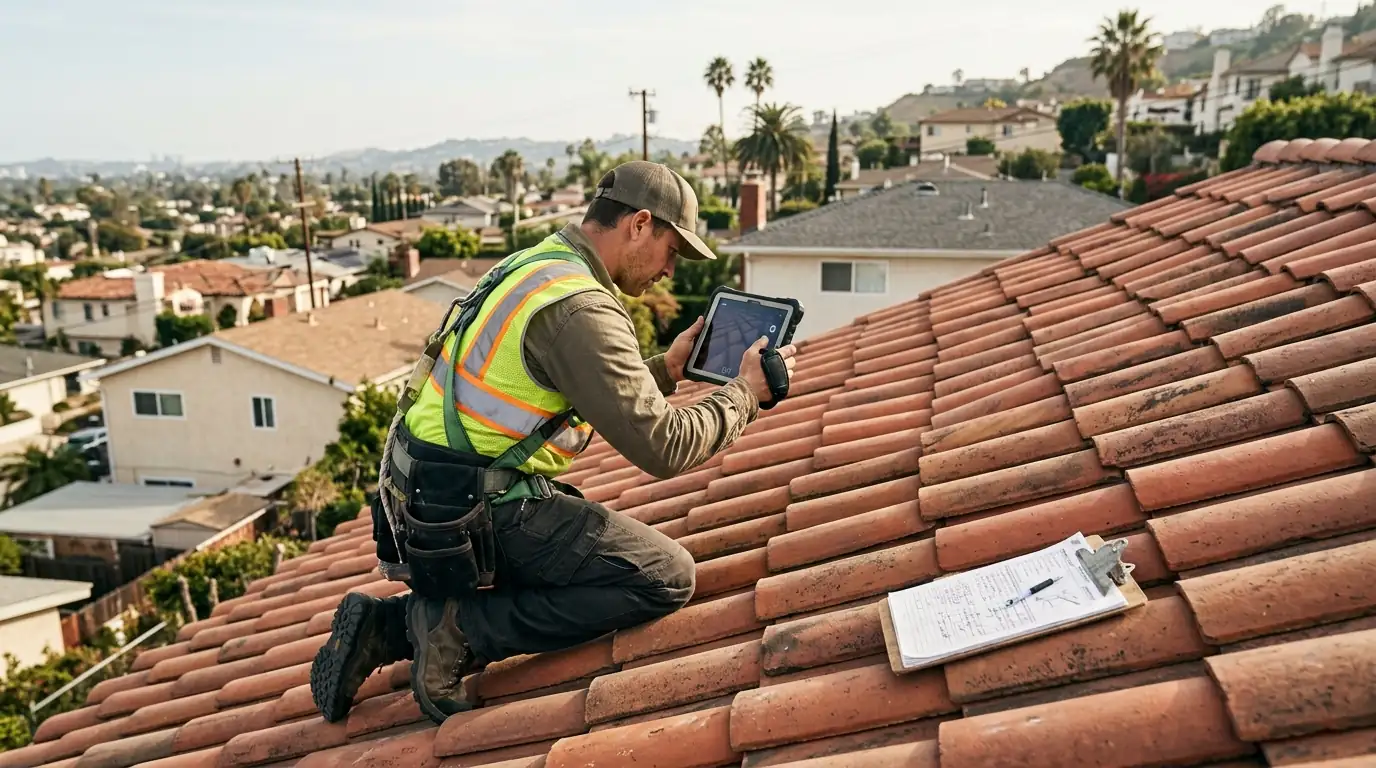
A recent inspection gives you an honest picture of the roof's condition and a set of dated photos. If the roof is sound, that record can answer an insurer's questions; if it isn't, you know what to fix before it becomes a problem.
Our roof inspections and certifications include photos of each slope and a written summary.

Need a roof report for your insurer?
Call and we'll inspect the roof and photograph every slope.
Repair or replace?
If an insurer flags a few specific problems, targeted repairs may be enough. If the roof is near the end of its life, replacing it may make more sense than repairing it for one more renewal.
Either way, get the insurer's concern in writing so the work addresses exactly what they asked about.
Keep good records
Keep the permit, the final inspection sign-off, the material specs and photos from your last re-roof. Those documents answer most insurer questions about age and material in minutes.
If you don't have them, the permit history for your address can often fill in the date.
Where to get coverage help
If you're struggling to find coverage, the California Department of Insurance has consumer resources, and the FAIR Plan exists as a last-resort option for property owners who can't find coverage elsewhere.
A roofer can't tell you what an insurer will decide, but a sound, documented roof helps your case.
Roof and insurance questions
Quick answers to the questions this topic raises most.
Other ways to reach usRoof age and condition are common factors, but each insurer decides differently. Ask yours what it requires.
California rules require insurers to recognize certain mitigation, including Class A roofs. How much it changes depends on the insurer.
Yes. We inspect, photograph each slope and summarize the condition in writing.
It often is in fire-prone areas, and many parts of Los Angeles no longer allow it on re-roofs.
Only if it's near the end of its life or the insurer asks for specific fixes.
The permit, final inspection, material specs and photos from your last re-roof.
More guides for Los Angeles roofs
Class A roofs in fire zones in Los Angeles
Fire ratings, hazard zones, the 50% rule, vents and eaves.